An Intermediate Bulk Container (IBC) is a rigid, heavy-duty container engineered primarily for liquids, semi-solids, and high-viscosity fluids. In contrast, a Flexible Intermediate Bulk Container (FIBC)—commonly known as a bulk bag or jumbo bag—is a flexible container woven from polypropylene fabric, designed specifically for dry, flowable bulk solids.
Choosing the right system impacts operational safety, regulatory compliance, and total logistics costs. Below, EPP Vietnam breaks down the technical specs, electrostatic safety profiles, and financial metrics of IBC and FIBC containers to help you select the ideal packaging for your global supply chain.
What is an IBC?
An Intermediate Bulk Container (IBC)—often referred to as an IBC tote, IBC tank, or pallet tank—is a reusable, industrial-grade container designed for the transport and storage of bulk liquids, semi-solids, pastes, and granulated materials.

A stackable arrangement of industrial Intermediate Bulk Containers (IBC)
Standard rigid IBCs typically consist of a heavy-duty blow-molded inner bottle made from high-density polyethylene (HDPE), enclosed within a protective galvanized steel tubular cage, mounted on a built-in pallet (steel, plastic, or wood).
- Standard Capacity: Usually ranges from 500 to 3,000 liters (130 to 790 US gallons), with 1,000 liters (275 gallons) being the global standard.
- Tare Weight: Heavy (~ 50 kg to 65 kg) when empty for standard rigid units).
- Primary Handling: Handled exclusively via forklifts or pallet jacks utilizing the integrated bottom pallet base.
- Main Strengths: High structural integrity, superior stackability when full, and fluid discharge via built-in bottom valves (butterfly or ball valves).
What is an FIBC?
A Flexible Intermediate Bulk Container (FIBC)—commonly known as a bulk bag, jumbo bag, or super sack—is a large, standardized flexible container constructed from woven polypropylene (PP) fabric. It is engineered specifically for dry, flowable bulk solids such as powders, granules, flakes, and small pellets.
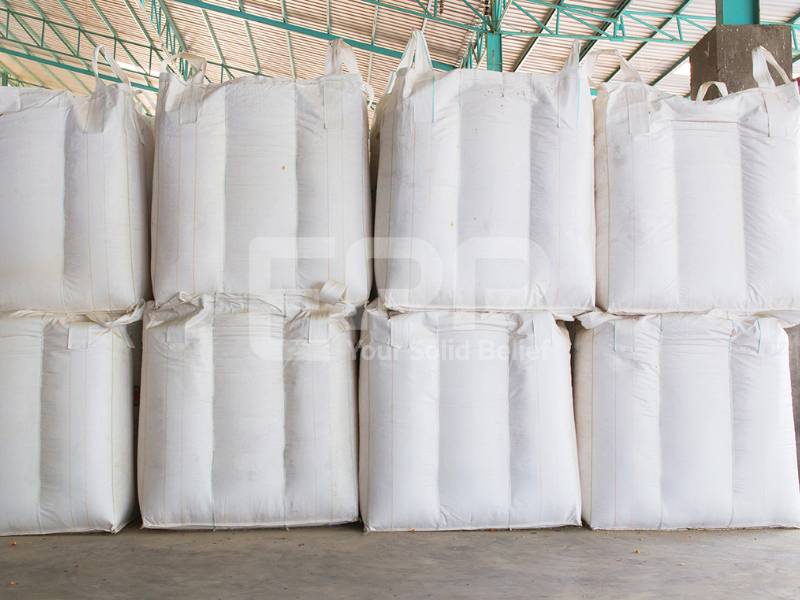
A organized array of form-stable bulk bags featuring internal baffles and reinforced lifting loops.
FIBCs are engineered to hold significant weight while maintaining an exceptionally low tare weight. They are designed with integrated lifting loops, eliminating the need for underlying pallets during crane or forklift maneuvers.
- Standard Capacity: Measured by weight rather than volume, typically featuring a Safe Working Load (SWL) between 500 kg and 2,000 kg (1,100 lbs to 4,400lbs).
- Tare Weight: Extremely low (~ 2 kg to 5 kg per bag).
- Primary Handling: Lifted from the top using forklift tines or crane hooks attached to sewn lifting loops (corner loops, cross-corner loops, or single/double stevedore straps).
- Main Strengths: Fully collapsible when empty (saving up to 80% return freight space), highly customizable top/bottom spouts, and cost-effective per metric ton of material handled.
What is the Difference Between IBC and FIBC?
The table below highlights the core technical, operational, and pricing differences between Rigid IBC containers and Flexible FIBC bulk bags:
IBC and FIBC: Which Products Can They Handle?
1. Products Suited for Rigid IBCs (Liquids & Viscous Fluids)
- Chemicals & Solvents: Acids, alkalis, industrial solvents, cleaning agents, and liquid fertilizers.
- Food & Beverage Fluids: Liquid sugars, fruit concentrates, syrups, vegetable oils, and dairy ingredients.
- Petrochemicals & Lubricants: Motor oils, hydraulic fluids, additives, and liquid resins.
- Pharmaceutical Intermediates: Bulk liquid active pharmaceutical ingredients (APIs).
2. Products Suited for Bulk Bags (Dry Flowable Solids)
- Chemicals & Plastics: Plastic resin pellets, masterbatches, synthetic rubber flakes, sulfur, and dry chemical additives.
- Food & Agriculture: Flour, sugar, starch, coffee beans, grains, animal feed, and spices. Learn more about food-grade applications at Flour bag packaging.
- Construction & Minerals: Cement additives, sand, gravel, limestone, silica, and crushed ores.
- Moisture-Sensitive Goods: Materials requiring outer barriers against ambient moisture. Discover technical barrier benefits at Waterproof jumbo bags.
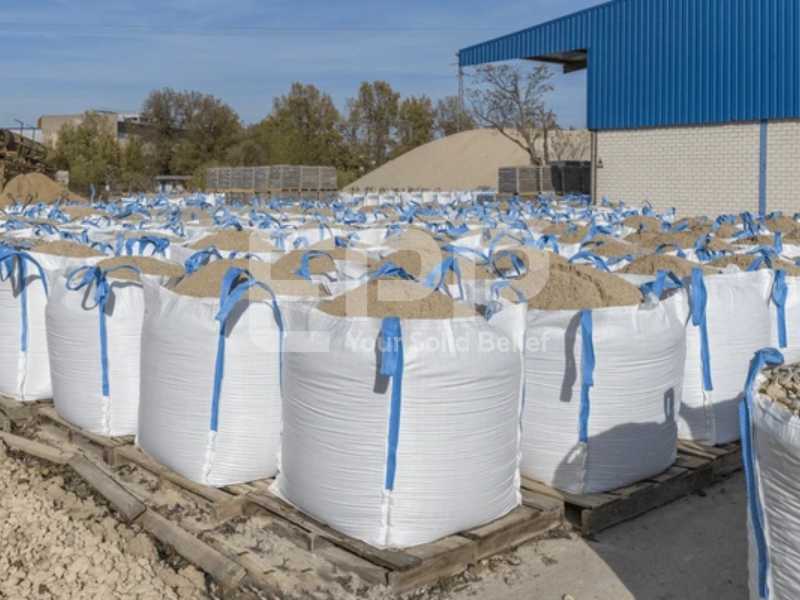
Heavy-duty super sacks filled with construction material
Regulatory Standards and Electrostatic Safety Concerns
Operating bulk containment systems on global supply chains requires compliance with mechanical, hygienic, and electrostatic safety standards:
IBC Regulatory Standards (UN Certification)
The most critical regulation for IBCs is the United Nations (UN) certification. Any rigid IBC used for transporting materials classified as Dangerous Goods (Hazardous Materials) must bear a specific UN marking (e.g., 31HA1/Y).
- Testing: UN-certified IBCs must pass stringent tests, including vibration, drop, leak, hydraulic pressure, and stacking tests.
- Compliance: This certification ensures the container meets international standards for integrity and safety, mandatory for compliance with regulations like the U.S. Department of Transportation (USDOT) Hazardous Materials Regulations.
Essential Safety Tips for Chemical Bulk Bags (FIBCs)
While IBCs handle most hazardous liquids, specialized chemical bulk bags handle hazardous powders and granules. Safe handling requires adherence to specific protocols:
- Static Control: Under IEC 61340-4-4 Standards,When handling flammable powders or operating in explosive atmospheres, Type C (Conductive, requires grounding) or Type D (Static Dissipative, no grounding required) FIBCs must be used. A standard Type A bag creates a static hazard.
- Safe Working Load (SWL): Need to follow ISO 21898:2024 and never exceed the bag’s stated SWL. For hazardous goods, a 6:1 Safety Factor bag is required, ensuring it can withstand six times its rated load during testing.
- Structural Inspection: Always inspect the lift loops, seams, and fabric for signs of wear or damage before filling. Never reuse a damaged bag for hazardous materials.
- Proper Discharge: Utilize the bag’s discharge spout and appropriate discharging stations to ensure the controlled, dust-free release of contents, minimizing worker exposure to chemical powders. Customer can find the fibc supplier on many B2B platform such as Alibaba.com to get the perfect bulk bags for their applications.

Type C conductive fabric with carbon threads
How to Choose Between IBC and FIBC for Your Operations?
To systematically choose between an IBC and FIBC, evaluate your supply chain against four operational criteria:
- State of Matter: If the product is liquid, paste, or semi-solid, a rigid IBC is required. If the material is a dry powder, granule, or flake, a jumbo bag offers the most cost-effective solution.
- Empty Storage & Return Logistics (TCO): If your operation involves long-distance, one-way international export where returning empty containers is unfeasible, FIBCs significantly reduce return shipping costs due to their collapsible nature (10 to 15 folded FIBCs occupy the spatial footprint of 1 empty rigid IBC).
- Plant Handling Infrastructure: Consider your filling and discharge stations. Does your facility use liquid pumps and bottom-valve discharge connections (suited for IBCs) or overhead hoppers, spout untying systems, and crane lifting hooks?
- Combustible & Hazardous Risks: Evaluate whether explosive dust clouds or flammable solvent vapors are present during filling. Match the hazard profile with a UN-certified IBC or a static-control big bag(Type C, Type D, or FRAS Type C).
Frequently Asked Questions (FAQs) about IBC and FIBC
Is an IBC always a rigid container?
No, not exclusively. While the standard 1,000-liter bottle-in-a-cage design is a Rigid IBC, there are also Flexible IBCs (which is the technical industry name for FIBC bulk bags) and Folding/Collapsible IBCs (rigid plastic or metal boxes that fold flat when empty and utilize replaceable liquid liners).
Can FIBC bags be used to transport liquids like an IBC?
Standard bulk bags cannot carry free-flowing liquids because the woven polypropylene fabric is porous and lacks hydraulic wall support. However, specialized Liquid FIBCs fitted with heavy-duty, multi-layer form-fit polyethylene (PE) or aluminum foil barrier liners (often supported by external stabilization frames) can carry non-hazardous, high-viscosity liquids or pastes.
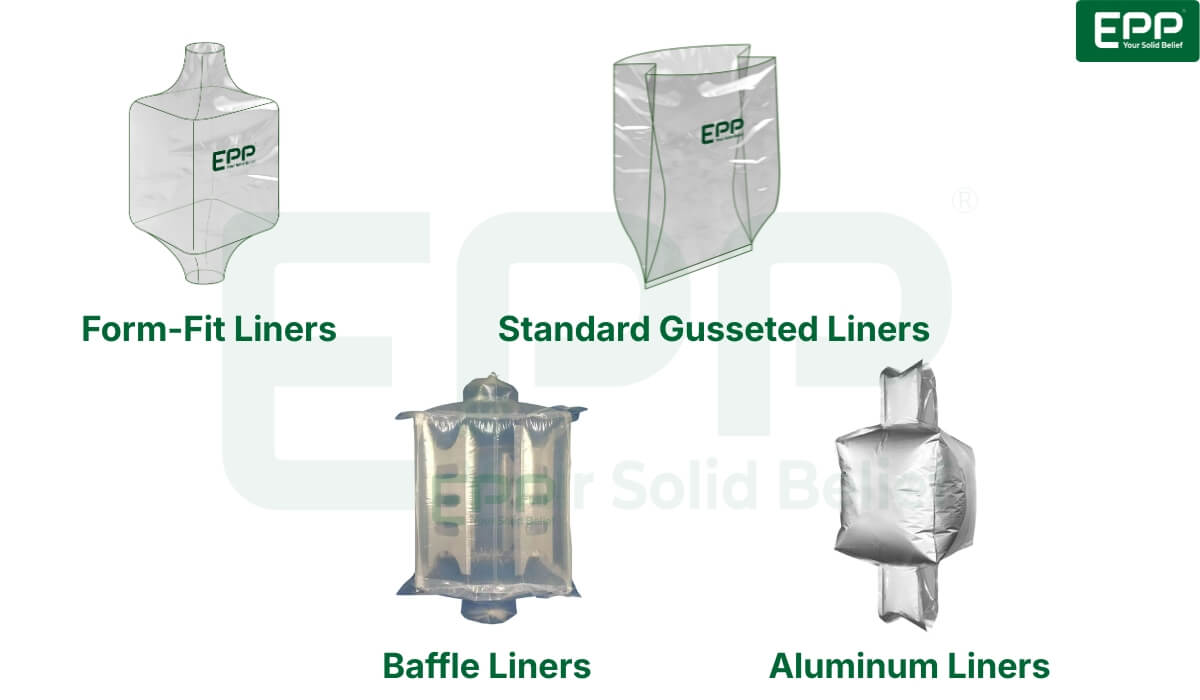
Some common types of FIBC liner
Which is easier to store when empty: IBC or FIBC?
FIBCs are substantially easier and cheaper to store when empty. An empty rigid IBC maintains its full solid frame (1.2 m³ per unit). In contrast, empty jumbo bags are completely collapsible; up to 10 to 15 folded super sacks can be compressed and palletized within the spatial footprint of a single empty rigid IBC.
What is the lifespan difference between IBC and FIBC?
-
Rigid IBCs are built for long-term multi-trip reuse, with typical service lifespans ranging from 2 to 5 years, provided the inner HDPE bottle is periodically reconditioned or replaced and the frame passes mandatory UN inspection every 2.5 years.
-
Bulk Bags are primarily engineered as single-trip containers (SF 5:1) that are recycled after one use. However, heavy-duty multi-trip FIBCs engineered with a Safety Factor of 6:1 can be reused for a limited number of closed-loop cycles, subject to strict inspection for fabric degradation or tear damage.
Conclusion: Optimizing Your Supply Chain with the Right Bulk Packaging
Choosing between an IBC and FIBC system comes down to a clear evaluation of your material’s physical state, plant handling infrastructure, static safety requirements, and global freight economics. While rigid IBC totes remain the industry benchmark for liquid and fluid containment, flexible bulka bags offer unprecedented cost efficiency, low tare weight, and massive empty-storage savings for dry granules, powders, and minerals.
Navigating the technical complexities of industrial bulk packaging requires more than just buying off-the-shelf bags—it demands a tailored supply chain solution. With over 20 years of expertise in global packaging sourcing, EPP Vietnam serves as a trusted partner connecting international enterprises with Vietnam’s premier, certified FIBC manufacturing facilities.
Website: epp.vn
Alibaba website: https://eppvietnam.trustpass.alibaba.com/
Email: [email protected] Hotline/ Whatsapps: +84 986 002 888