
As industrial supply chains prioritize decarbonization and circular material procurement, post-industrial and post-consumer Flexible Intermediate Bulk Containers (FIBCs) have transitioned from waste disposal costs into valuable raw material streams. Known across international markets as super sack scrap or bulk bag waste, pp jumbo bag scrap represents a homogenous, high-tenacity polypropylene feedstock highly sought after by recyclers, plastic compounders, and industrial extruders worldwide.
Understanding how to evaluate, grade, and source this material is essential for procurement teams seeking to lower raw material overhead while achieving recycled content compliance.
What is PP Jumbo Bag Scrap?
PP jumbo bag scrap refers to recovered Polypropylene (PP) material derived from used or off-spec Flexible Intermediate Bulk Containers (FIBCs). These heavy-duty industrial sacks are originally engineered from woven PP tapes to safely transport bulk payloads ranging from 500 kg to over 2,000 kg across agricultural, mineral, and chemical logistics.
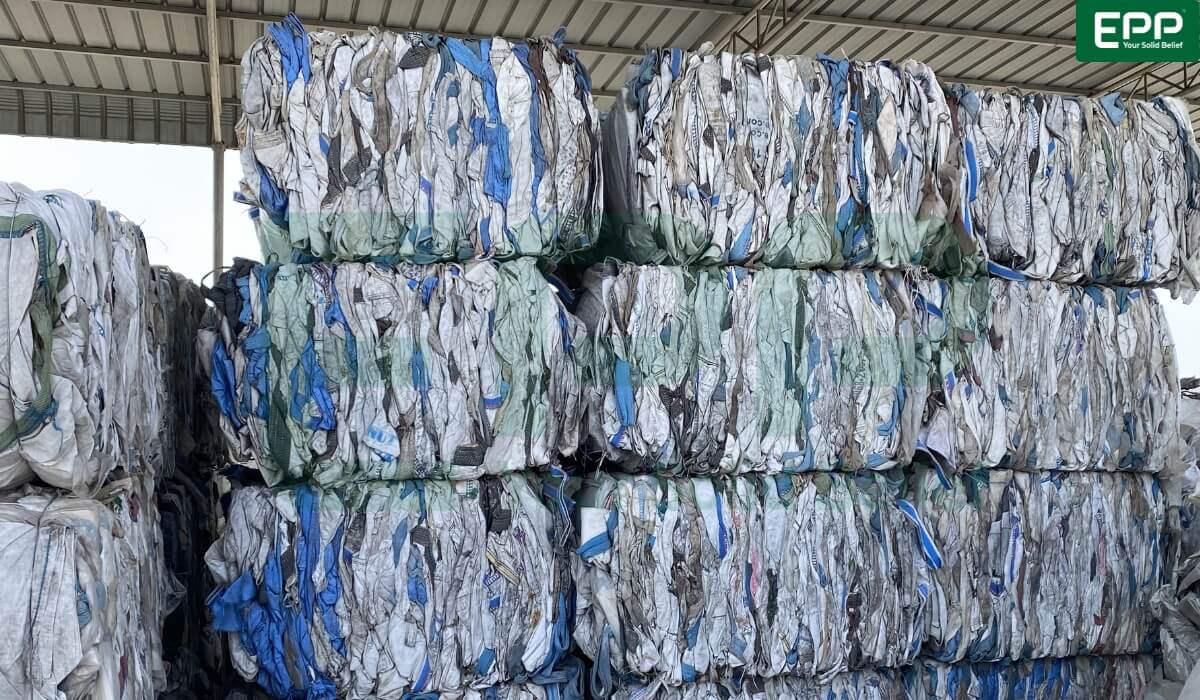
Hydraulically baled polypropylene FIBC scrap stacked for industrial recycling and export
Once a bulk bag reaches the end of its functional service life or is discarded during manufacturing quality assurance, it is collected, sorted, and hydraulically compressed into export bales. The resulting scrap stream consists primarily of the woven body fabric, lifting loops, discharge spouts, and occasionally inner Polyethylene (PE) liners.
Because FIBC fabric is manufactured using virgin PP homopolymer resins to maintain structural integrity, the resulting scrap offers chemical purity and tensile performance superior to mixed post-consumer municipal plastic waste.
Key Technical Features of PP FIBC Scrap
The commercial demand for pp jumbo bag scrap stems directly from the mechanical properties embedded during the original bag extrusion process:
- High Tensile Retention: Because original FIBCs are woven from oriented PP tapes designed to meet strict 5:1 or 6:1 Safety Factor (SF) ratios, shredded scrap retains exceptional tensile strength. This minimizes polymer degradation during re-pelletization.
- Predictable Melt Flow Rate: FIBC body fabric is extruded from high-tenacity PP tape resins with a typical Melt Flow Index (MFI) ranging between 2.0 g/10 min and 4.5 g/10 min (measured at 230°C under a 2.16 kg load), making it well-suited for extrusion compounding and heavy-duty molding.
- Low Moisture Absorption & Chemical Stability: Polypropylene exhibits inherently low water absorption. This speeds up mechanical drying times during friction washing and preserves polymer purity.
- Residual UV Stabilization: Original industrial bulk bags incorporate anti-UV masterbatch to protect cargo from sunlight degradation. This residual stabilization transfers into the scrap, extending the outdoor weatherability of end-use recycled products.
Material Grading Standards for FIBC Scrap
To ensure seamless reprocessing through commercial extruders and avoid screen-clogging contaminants, pp jumbo bags scrap is categorized into clear commercial grades:
| Scrap Classification | Material Composition & Origin | Contamination & Moisture Limits |
| Grade A (Post-Industrial / PIR) | Factory loom off-cuts, unprinted production rejects, clean white woven tapes. | Zero chemical or dirt contamination; 100% PE-liner free. |
| Grade B (Washed Post-Consumer / PCR) | Single-use agricultural or food FIBCs (grains, sugar, fertilizer). | Light surface printed ton bags; Washed & de-lined; <2 % moisture. |
| Grade C (Unwashed Industrial Waste) | Mining, construction, or heavy chemical transport Bulk bags. | Residual mineral dust or heavy printing ink; Requires heavy melt filtration. |
Knowing whether to process used jumbo bags into pellets or deploy intact packaging depends heavily on your operational goals. For a comprehensive comparison on evaluating pre-owned units versus new packaging, review EPP Vietnam’s analysis on used bulk bags vs. new bulk bags.
Industrial Applications of Reprocessed PP Jumbo Bag Scrap
Once processed through mechanical shredding, friction washing, and thermal pelletization, pp jumbo bag scrap yields high-value recycled polypropylene (r-PP) pellets that serve as vital feedstock across multiple global industries:
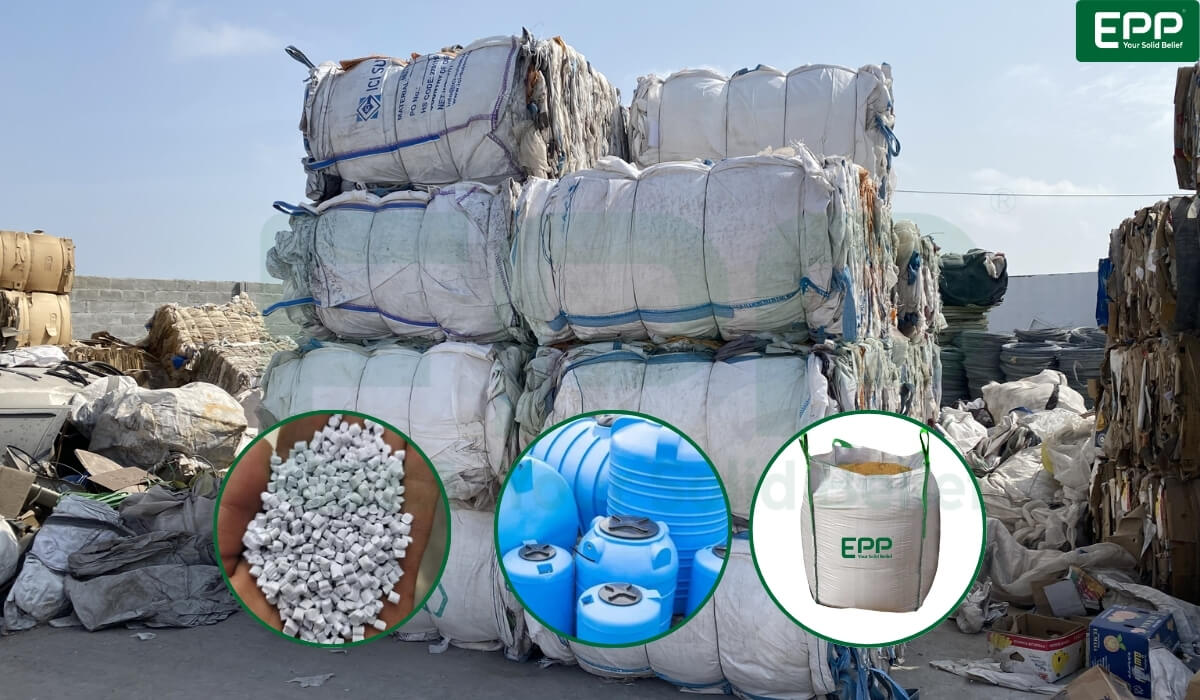
Application of recycled PP jumbo scrap
1. Closed-Loop Packaging
High-purity Grade A scrap pellets can be re-introduced at controlled ratios alongside virgin PP resin to manufacture eco-friendly industrial sacks and non-food-grade bulk containers. Facilities seeking guidance on circular recovery programs can consult EPP Vietnam’s operational tips for big bags recycling and reusing. The resulting bags can still include features like breathable, anti-static, and dust-proof options, aligning with modern sustainability goals.
2. Durable Industrial and Construction Components
Industrial Containers: The scrap’s durability allows it to be molded into rigid containers, storage tanks, bins, and industrial buckets used for storage and transport in challenging manufacturing environments.
Construction Materials: The reprocessed material is compounded into products like geomembranes, industrial piping, reinforcing fibers for concrete, plastic timber, and durable fencing, leveraging its strength and moisture resistance for long-term outdoor use.
3. Automotive and Consumer Goods
Automotive Components: The robustness of the rPP is ideal for non-critical, heavy-duty parts in the automotive sector, such as battery housings, inner fender liners, trays, and various internal trim components where durability and cost-effectiveness are paramount.
Consumer Products: Recycled PP pellets are widely incorporated into a range of everyday injection-molded items, including household articles, durable plastic furniture, garden tools, and rigid packaging due to their versatility and excellent moldability.
4. Primary Feedstock (Recycled Pellets)
For many plastic converters, clean pp jumbo bag scrap serves as their primary commercial feedstock. The consistent polymer composition allows extruders to run high-throughput pelletization lines with predictable filter screen performance.
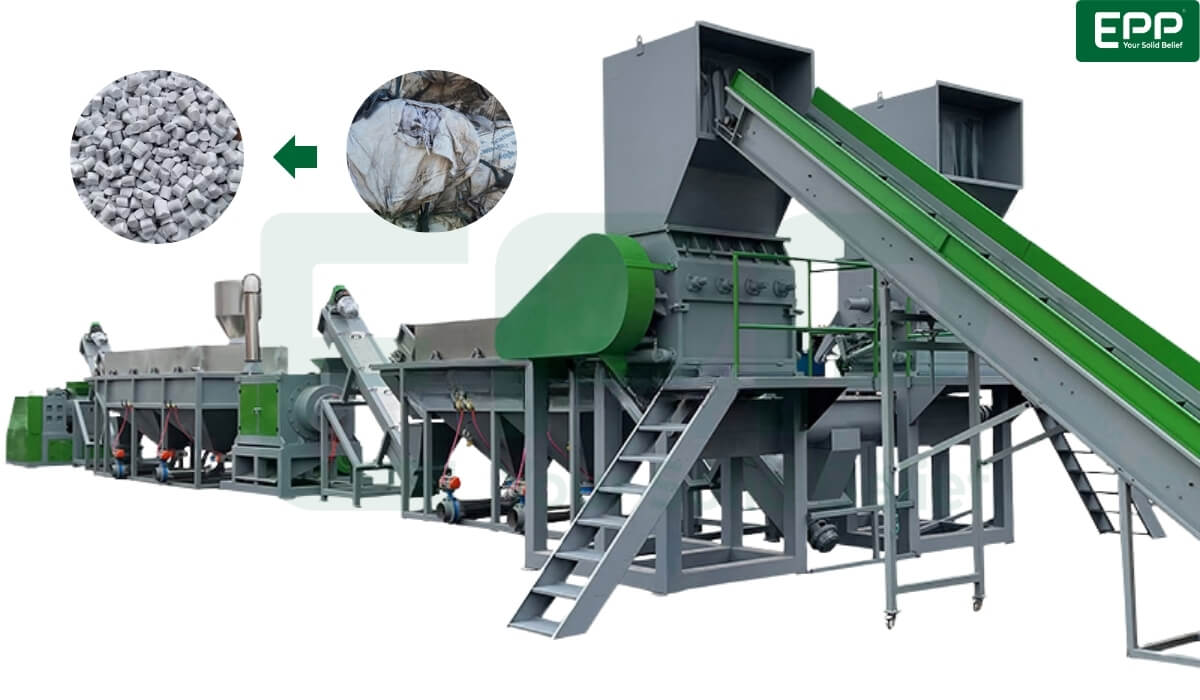
Industrial shredding and extrusion machinery transforming dirty FIBC scrap into recycled PP pellets
Industrial enterprises seeking standard high-capacity packaging options can review EPP Vietnam’s technical guide on used 2 ton jumbo bags.
Where to Buy PP Jumbo Bag Scrap?
Sourcing high-quality PP jumbo bag scrap is a strategic decision for manufacturers aiming to control costs and meet sustainability mandates. The quality of the scrap—its purity, consistency, and degree of contamination—directly impacts the final rPP pellet and subsequent product performance. When selecting a supplier, prioritize those who offer:
- Strict Sorting and Cleaning Processes: Suppliers who invest in thorough sorting, washing, and drying ensure the scrap is clean of contaminants (like paper, residual contents, and non-PP plastics).
- Consistent Grading: Reputable buyers often grade the scrap (e.g., Grade A white, Grade B colored/mixed) to allow manufacturers to choose the appropriate quality for their application.
- Certifications and Compliance: Partnering with suppliers who adhere to waste management and recycling standards ensures legal and ethical sourcing.
The global demand for high-grade plastic scrap means reliable sourcing partners are invaluable.
FAQ About Wholesale Bulk Bag Scrap
Can PP jumbo bag scrap be recycled back into new FIBCs?
Yes. High-purity Grade A post-industrial scrap can be re-pelletized and blended with virgin polypropylene resin at controlled ratios to manufacture closed-loop industrial bulk bags without compromising safety factors.
What is the minimum container payload weight for exported scrap bales?
Utilizing industrial high-pressure hydraulic balers, Supplier achieves high compression density to load between 22 and 25 Metric Tons per 40ft HC container, minimizing ocean freight costs per kilogram.
Are PE inner liners included in the PP scrap bales?
No. Standard Grade A and Grade B FIBC scrap bales are thoroughly de-lined to remove Polyethylene (PE) film liners, preventing cross-polymer contamination during re-pelletization.
Should buyers request pre-shipment samples for MFI testing?
Yes. Buyers should always request representative sample bales or shredded flake samples to verify MFI, purity, and ash content prior to confirming full container dispatch.
PP Jumbo Bag Scrap serves as a high-pacity, homogeneous polypropylene feedstock essential for circular manufacturing. Through standardized commercial grading—spanning clean Grade A post-industrial off-cuts to washed Grade B/C post-consumer sacks—reprocessors can convert this material into high-grade recycled polypropylene (r-PP) pellets for closed-loop packaging, heavy-duty pallets, drainage systems, and automotive components.
Elevate Your Global Packaging Efficiency with EPP Vietnam!
Partner with a master supply chain orchestrator to secure high-performance, 100% virgin PP bulk bags engineered for maximum payload safety, circular recyclability, and factory-direct cost savings. Contact EPP Vietnam’s packaging engineers today to request technical specifications and custom wholesale quotes for your facility.
Website: epp.vn
Alibaba website: https://eppvietnam.trustpass.alibaba.com/
Email: [email protected] Hotline/ Whatsapps: +84 986 002 888

Hello sir, may I know the quantity you need? If there any information you want to know, please contact us via email at [email protected]