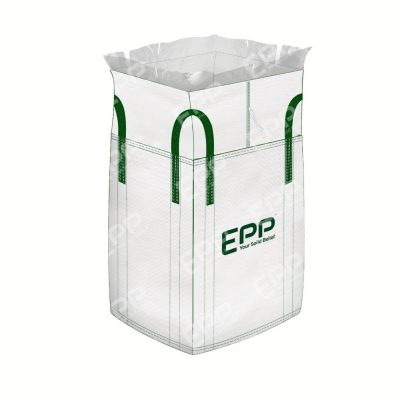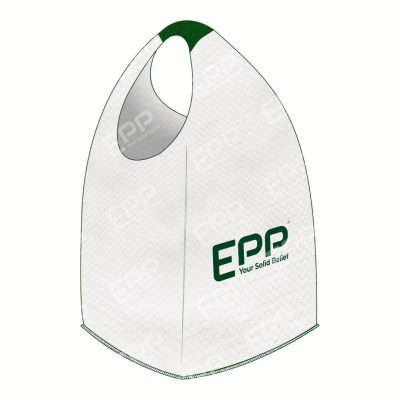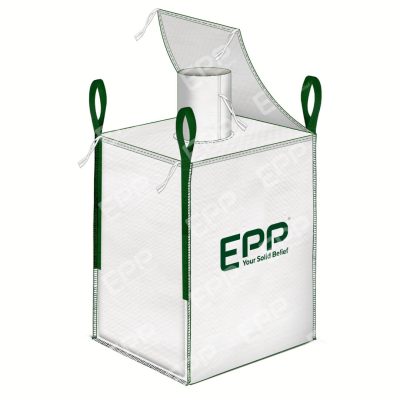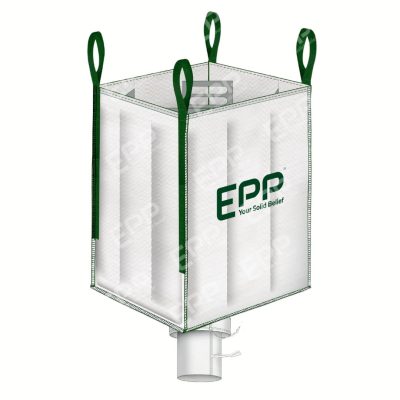


Transporting cement overseas comes with a major challenge: humidity can compromise the entire shipment. To eliminate this risk, EPP Vietnam designs cement bulk bags equipped with advanced moisture barriers and leak‑proof seams. Crafted from 100% virgin polypropylene, these bags deliver exceptional strength and durability, ensuring your cement remains completely dry and arrives safely at its destination without any product loss.
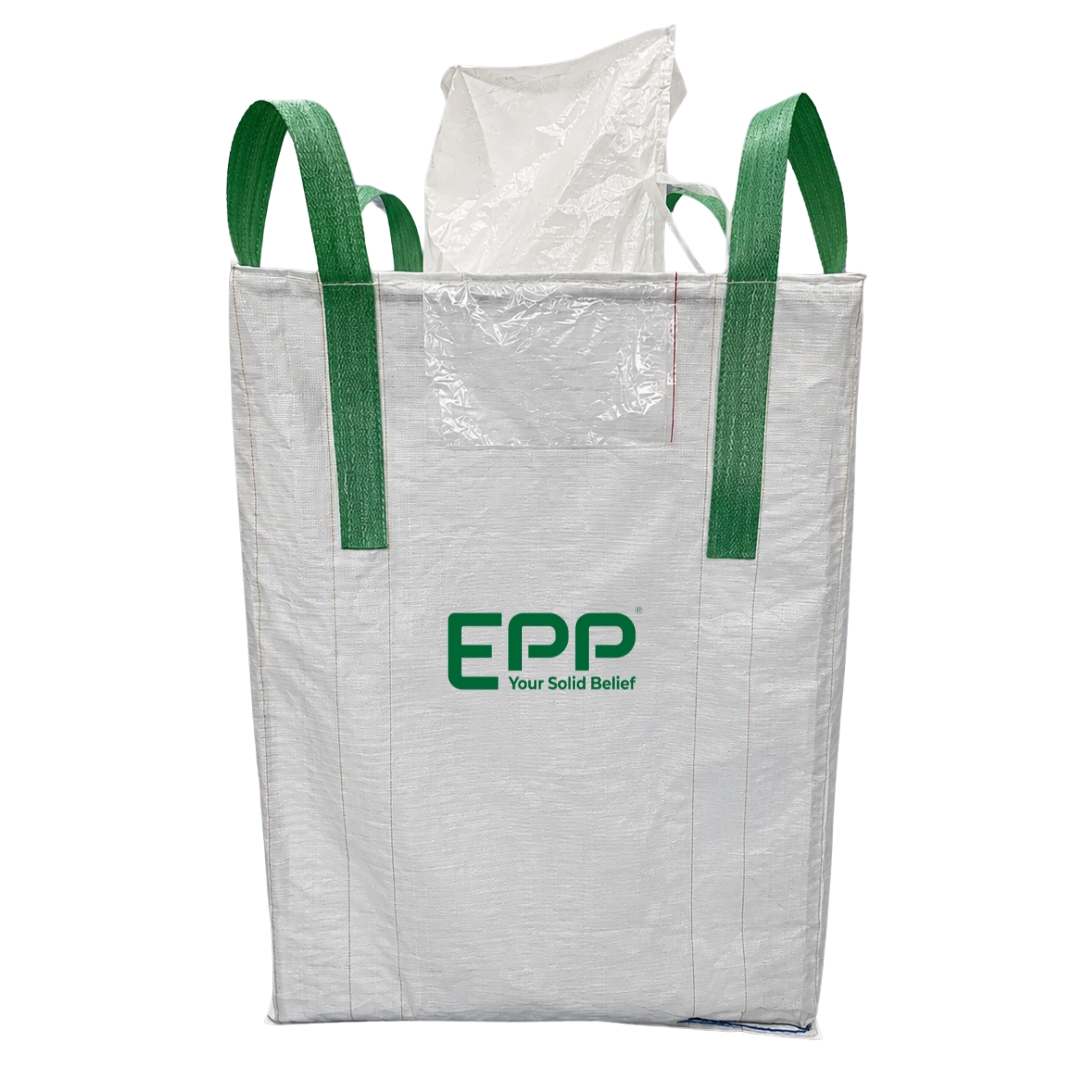
Cement jumbo bag designed for stable industrial transport
Specification of Cement bulk bags
Understanding the technical specification of super sacks of cement is essential for any business dealing in bulk materials. From the UV-stabilized woven polypropylene fabric to the precision of discharge spouts, every detail contributes to a more efficient, safer, and cost-effective supply chain.
| NAME | Cement jumbo bags for export |
| BAG TYPE | Type A big bag |
| CEMENT BIG BAG SIZE | 90x90x120 cm / 90x90x110cm ( +/-15mm) (35″x35″x42″) |
| BODY MATERIAL | PP WOVEN FABRIC + ANTI UV+ UNCOATED INSIDE+ 180gsm to 220gsm |
| LOOP BELT | 4 LOOPS, WIDTH: 70mm, HEIGHT: 300mm (With or without Stevedore straps) |
| INLET | DIA 450XH500, WHITE COLOR, LAMINATED INSIDE |
| INNER LINER | HDPE / LDPE 80 Mic – 100 Mic form-fit liner |
| SAFETY FACTOR | 5:1 |
| SWL | From 1000kg to 2000 kg |
| BAG TOTAL WEIGHT | 1.8 kg |
| DOCUMENT POCKET | PP+ PE, A4 size |

Why Cement jumbo bags is important for cement export
Exporters use a jumbo bag cement setup because cement naturally absorbs water from the air. If sea humidity crawls inside the bag during a 30-day ocean voyage, the cement reacts, lumps up, and becomes useless. By using a heavy-duty jumbo bag cement design with an inner polyethylene (PE) liner, you completely seal the powder away from wet ocean air and rain.
Port cranes move fast, and they require uniform packaging to load large ships quickly. Heavy-duty jumbo bags for cement feature large top loops so crane operators can lift 1 to 1.5 tons at a time instantly. This updates your old logistics system, replaces slow manual labor with 50kg paper bags, and cuts your total loading times by up to 50%.
Advantages of Cement Bulk Bags
Using cement bulk bags offers numerous benefits that enhance operational efficiency and reduce costs. Here are some key advantages:
1. Cost-Effectiveness
Purchasing cement in FIBC bags can lead to substantial savings. Buying in larger quantities often reduces the price per ton compared to smaller bags. This cost-effectiveness is especially beneficial for contractors managing large projects that require significant volumes of cement.
2. Efficient Handling and Transport
Cement big bag is designed for easy handling and efficient transport. Their robust construction allows for quick loading and unloading using forklifts or pallet jacks, reducing labor costs and improving overall productivity. This ease of handling is crucial on construction sites where time is of the essence.
3. Space-Saving
When properly stored, cement in bulk bags optimizes space usage. Their stackable design allows for efficient use of vertical space in warehouses or on construction sites. This not only helps in managing inventory effectively but also minimizes the physical footprint required for storage.
4. Quality Preservation
High-quality cement ton bags protect the cement from moisture and external contaminants. This is vital, as cement can absorb moisture, leading to clumping and loss of quality. Properly sealed bulk bags help maintain the integrity of the cement, ensuring it remains usable for longer periods.
5. Versatility
Jumbo bags for cement can be used in a variety of applications, from large construction projects to smaller DIY jobs. Their versatility makes them suitable for different types of cement, including Portland cement, ready-mix cement, and specialty blends.
6. Environmental Benefits
Using cement bulk bags reduces packaging waste. By opting for bulk over individual bags, companies can significantly decrease the amount of plastic waste generated, contributing to more sustainable practices in the construction industry.
EPP VIETNAM cement super sacks with high strength
Important Tips for Loading Cement Bulk Bags
Properly filling and handling cement ton bags is essential to prevent site accidents and keep your logistics moving smoothly. Follow these practical field safety rules:
-
Use the Right Machinery: Always deploy heavy-duty forklifts, overhead cranes, or specialized filling hoppers to handle a loaded jumbo bag cement. Regularly service your machinery to ensure operators maintain full lifting control and prevent dangerous tipping hazards.
-
Stick to Weight Limits: Always fill your Portland cement bulk bags exactly to their rated capacity. Overloading a bag puts dangerous stress on the woven fabric and lifting loops, which can cause sudden tears, spills, or personal injuries.
-
Keep the Load Balanced: Make sure the cement fills the bag evenly on all four sides. An uneven load creates weak stress points that distort the bag’s shape; giving the bag a gentle shake during the filling process helps settle the powder uniformly.
-
Inspect Before Every Fill: Check your cement big bags for any signs of wear, fraying, or holes before filling them up. Look closely at the structural seams and top lifting loops to ensure the container is 100% safe to carry heavy materials.
-
Seal the Openings Securely: Once the bag is full, tie or stitch the top filling spout immediately. Properly sealing your bags stops product spillage during bumpy transit, blocks out wet air, and prevents hazardous cement dust from escaping into the workspace.

FAQ About Cement Bulk Bags
How to Load Cement on Bulk Bags?
To fill cement into bulk bags, position the bag securely on a flat surface. Use a funnel or chute to pour cement evenly, ensuring it doesn’t exceed the weight limit. Seal the bag tightly, inspect for damage, and store in a cool, dry place to maintain quality.
What are the popular cement jumbo bags for bulk shipping?
For open bulk vessels, EPP Vietnam’s research shows that the best option is an FIBC bag with an internal plastic liner that holds 1 ton or 1.5 tons. The thick inner liner is absolutely necessary to keep changing sea humidity and saltwater spray from damaging the dry powder.
What are the best FIBC bags for cement container shipping?
For normal ocean containers, exporters choose 1-ton, 1.2-ton, or 1.5-ton bags (with or without liners). These bags are placed onto sturdy wooden or plastic pallets, making it easy to stack them two-layers high to maximize your container space.
Where to buy super sacks of portland cement?
You can buy heavy-duty cement super sacks for sale directly from EPP Vietnam – a leading FIBC supplier from Vietnam. Our modern factory is fully certified under ISO 9001:2015 and ISO 21898, meaning every bag we ship is safe, reliable, and built to handle the toughest industrial jobs.
How to Source Cement Jumbo Bags at Wholesale Rates?
To source cement jumbo bags at competitive wholesale rates, you must connect directly with industrial FIBC supplier located in global production hubs like China, India, and Vietnam. Sourcing from Vietnam offers distinct financial and operational advantages because the country features low production overhead, stable quality, and many Free Trade Agreements.
Conclusion
Optimizing your international logistics requires deploying high-strength, moisture-resistant packaging that mitigates transit loss. Sourcing cement bulk bags from a qualified partner ensures structural safety and product preservation over long trade routes. EPP Vietnam delivers rugged, industry-certified cement ton bags and 1 ton cement bags engineered precisely with sift-proof seams and defensive polyethylene liners to keep your large-scale global operations moving smoothly.
Contact the engineering team at EPP Vietnam today to request a precise technical drawing and commercial quote within 24 business hours!
Website: epp.vn
Alibaba website: https://eppvietnam.trustpass.alibaba.com/
Email: [email protected] Hotline/ Whatsapps: +84 986 002 888