
How are industrial super sacks lifted? Industrial super sacks are designed to store and transport bulk dry materials safely and efficiently. Because a filled super sack can weigh anywhere from several hundred kilograms to two metric tons, correct lifting methods and equipment are essential to protect workers, preserve product integrity, and avoid costly accidents. This article explains what super sacks are, the standard lifting methods, practical step‑by‑step guidance for each method, and real-world best practices for a cement company that stores cement in FIBCs.
What is industrial super sacks?
Industrial super sacks, also known as FIBCs (Flexible Intermediate Bulk Containers) or big bags, jumbo bags, are woven fabric containers typically made from polypropylene, with one or more lift loops sewn into the top for mechanical handling. They come in many configurations—such as single-loop, two-loop, and four-loop designs—and may include features like filling spout, discharge spouts, liners, and UV protection depending on the application. FIBCs are commonly used in agriculture, chemicals, construction, and bulk food industries because they combine high load capacity with relatively low material cost and easy handling.
How are industrial super sacks lifted?
There are four common lifting methods for super sacks:
Forklift with adapter/spreader bar
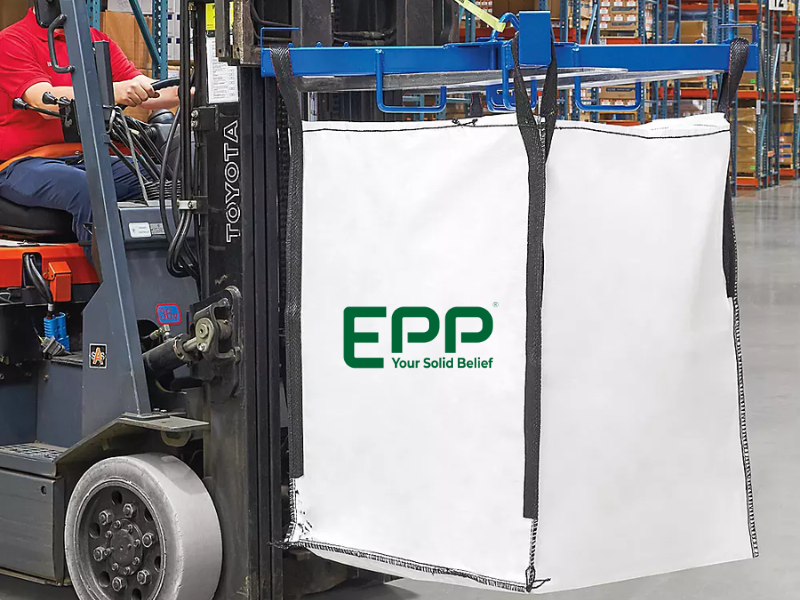
Using a forklift with an adapter or spreader bar is one of the safest and most efficient methods for lifting four-loop super sacks. The adapter attaches to the forklift tines and has hooks or a bar that engages all four lift loops simultaneously. The main advantages are reduced manual handling, even load distribution across loops, and protection of loops from the sharp edges of forks. Operators avoid repeatedly climbing on and off the forklift to attach loops, which reduces exposure to pinch points and slip hazards. Many facilities use purpose-built spreader bars that are rated for the expected maximum bag weight and include safety latches to secure the loops during transit.
Practical tips: ensure the adapter’s hook spacing matches the bag’s loop spacing; inspect adapters for wear or deformation; verify the forklift’s lift capacity exceeds the filled bag weight; and train operators to approach, lift, and lower loads smoothly to avoid dynamic shock loads.
Forklift directly to forks

Attaching a industrial super sack directly to forklift forks is a common practice when specialized adapters are not available, but it is less safe. In this method, the operator manually threads one or more loops over the forks or uses a sling to secure the bag. The method increases the risk of loop damage from fork edges, requires close operator contact with the load, and makes it easier for the bag to slip if not secured properly. Because of these hazards, direct-to-fork lifting is typically acceptable only for short moves or when the bag has reinforced loop protection and the operator follows strict safety procedures.
Practical tips: use edge protectors or sleeves over the forks; secure the bag with safety straps or chains to prevent slipping; never lift by fewer than the number of loops the bag is designed for; and keep all personnel clear while positioning and lifting.
Crane with spreader bar
Cranes or hoists used with a spreader bar lift super sacks vertically and are particularly useful in facilities with overhead handling systems or when moving bags between different elevation levels. A spreader bar keeps loops separated and reduces the angle at which each loop bears load, minimizing stress on stitching and fabric. This method is common in plants that integrate bulk bag unloading stations with suction or gravity discharge systems. As with any overhead lift, strict exclusion zones and communication protocols are required to protect workers below the load.
Practical tips: use certified spreader bars and slings rated above the bag’s maximum gross weight; perform pre-lift inspections; establish exclusion zones under suspended loads; and coordinate lifts with a signal person or tag line operator.
Fixed lifting frame
Fixed lifting frames are stationary structures installed at filling or unloading stations. They typically include built-in hoists and trolleys that allow a bag to be lifted, aligned, and lowered into an unloader or filling hopper with high repeatability. Fixed frames suit high-throughput operations where many bags are handled in the same place and reduce the need for mobile equipment. These systems often integrate with bag discharge equipment—such as massagers, vibrators, or vents—to maintain consistent flow of material and reduce bridging or rat-holing inside the bag.
Practical tips: schedule regular maintenance for hoists and trolleys; train staff on proper bag attachment and release sequences; ensure the frame capacity and mounting are engineered for the expected loads; and install safety interlocks where possible.
Advice on lifting industrial super sacks
Safety rules that apply across all methods include: always lift using all provided loops; never allow personnel beneath a suspended bag; use lifting equipment with smooth, non‑sharp contact surfaces; verify equipment load ratings exceed the bag’s gross weight; and inspect bag loops and lifting gear before every operation. Additionally, implement clear standard operating procedures and provide hands‑on training and refresher sessions. Maintain a preventive inspection log for adapters, spreader bars, slings, and hoists, and replace any components showing signs of wear or deformation.
Real practice for a cement company using industrial super sacks
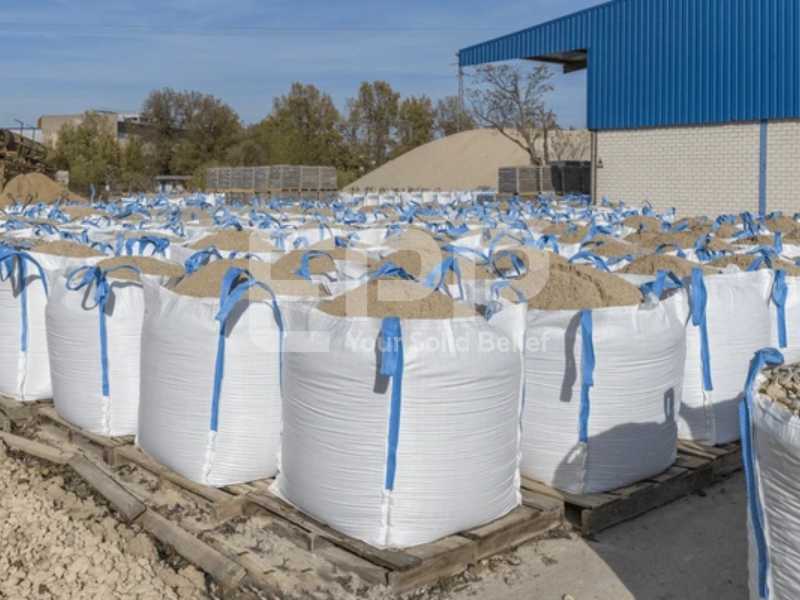
For a cement company storing cement in industrial super sacks, practical workflow design and rigorous controls are essential because cement is dense, abrasive, and sensitive to moisture. Best practices include:
- Use jumbo sacks specifically designed for cement: look for bags with inner liners or laminated fabric to reduce moisture ingress and reinforced loop stitching to handle abrasive loads.
- Specify four-loop designs and use forklift adapters or fixed lifting frames at both filling and discharge stations to minimize manual handling and protect loop integrity.
- Install bag unloader systems with massagers and vibrators to ensure consistent flow and reduce manual intervention during discharge; position dust collection or bagging hoods to limit airborne cement dust.
- Place pallets or load plates under industrial super sacks to prevent direct contact with wet or contaminated floors and to ease forklift engagement.
- Standardize the gross weight per bag and post that limit at handling points; ensure forklifts and cranes used in the plant are certified to handle the maximum bag weight plus a safety margin.
- Implement a moisture-control plan: store bags under shelter or in covered warehouses, and rotate inventory to avoid long-term exposure to humidity.
- Train operators on pre-lift checks that include loop integrity, stitching, and whether the bag fabric shows signs of abrasion or tearing. Log all inspections and any corrective actions taken.
Adopting these practices will reduce downtime, lower product loss from contamination or moisture damage, and improve workplace safety.
In conclusion, lifting industrial super sacks safely requires the right combination of bag design, certified lifting equipment, consistent procedures, and ongoing training. For cement producers and other heavy‑bulk handlers, investing in spreader bars, fixed frames, and dedicated unloader systems will pay dividends in efficiency and risk reduction. If you need high-quality FIBCs, lifting adapters, or expert advice on bulk bag handling and custom solutions, contact EPP Vietnam for product specifications, technical support, and tailored recommendations that meet your operational needs.
