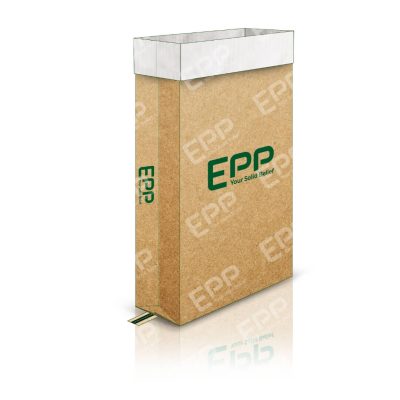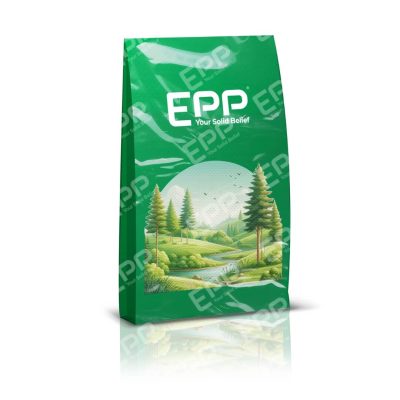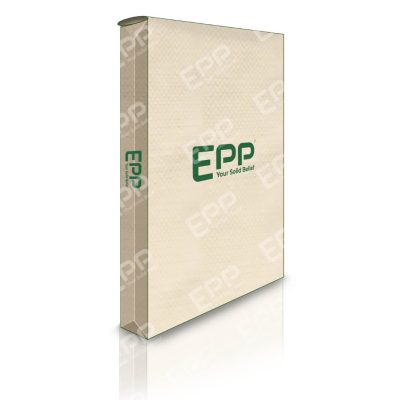
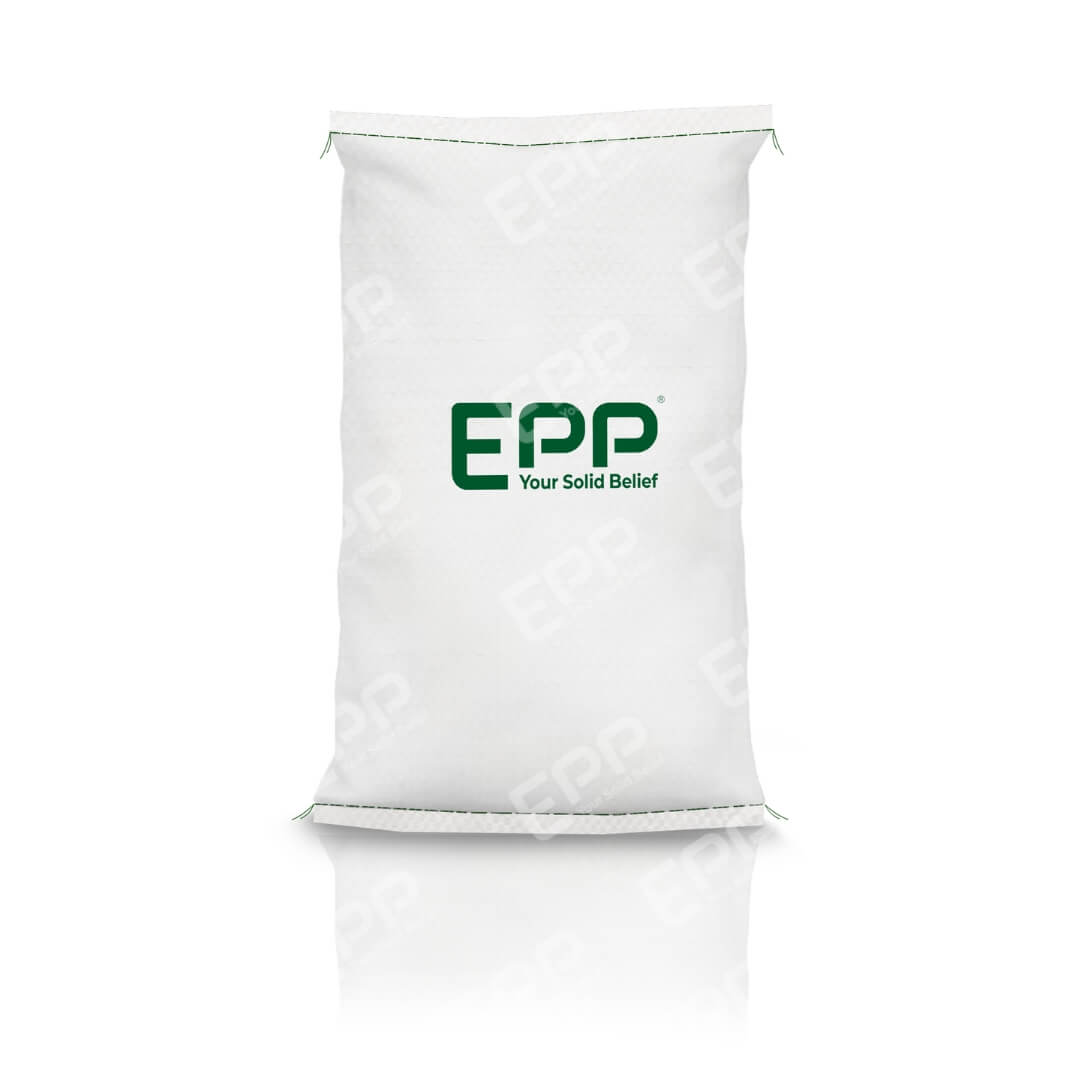




In global agriculture, construction, chemical processing, and food manufacturing, selecting the right bulk packaging directly impacts product integrity and shipping efficiency. PP woven bags—also widely known as woven polypropylene bags or polywoven bags—stand as the global industrial standard for high-strength, cost-effective, and tear-resistant packaging.

Manufactured by weaving polypropylene plastic tapes in two directions, a pp woven bag delivers an exceptional strength-to-weight ratio. As a premier manufacturer and exporter, EPP Vietnam produces custom-engineered woven polypropylene sacks designed to handle everything from micro-fine food ingredients to heavy construction debris.
What are PP woven bags specifications?
To ensure consistent performance across international supply chains, pp woven bag is engineered based on precise physical and material parameters:
| Specification Parameter | Technical Range & Standard Options |
| Harmonized System (HS) Code | 6305.33 (Sacks and bags used for packing goods, of man-made textile materials, non-FIBC) |
| Raw Material Composition | 100% Virgin Polypropylene (PP) resin (UV-stabilized upon request) |
| Fabric Density / Weight | 55gsm – 120gsm (Grams per Square Meter) based on load requirements |
| Weaving Structure | Circular woven (tubular, no side seams) or flat-woven |
| Fabric Surface Treatments | Un-coated (breathable), laminated (PP film coating), anti-slip textured, or corona-treated |
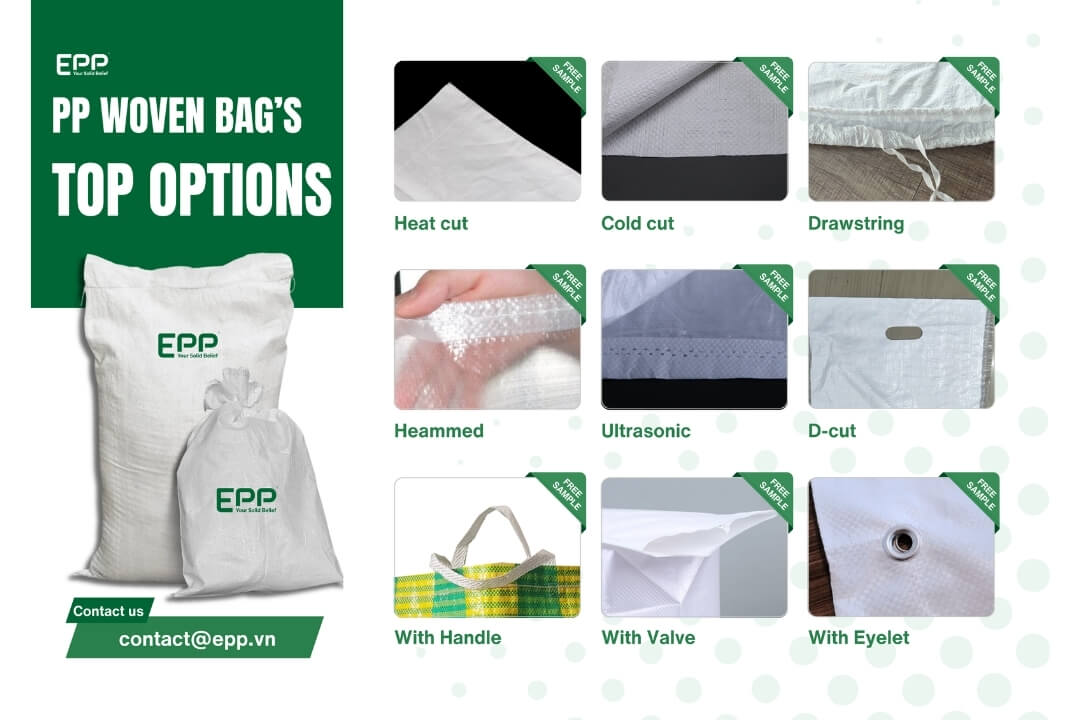
| Top Finish Options | Heat cut, hemmed top, easy-open stitch, or valve top for automated filling lines |
| Bottom Finish Options | Single folded single stitched, double folded single stitched, or double folded double stitched |
| Printing & Customization | PP woven printed bags with Up to 6-color flexographic printing |
What Are PP Woven Bags Uses?
1. Agricultural Crops & Grains
Bulk agricultural storage demands durability and moisture control. A high-density pp rice bag or specialized sacks for rice prevents grain spillage and preserves crop quality across ocean freight lines. Whether shipping in standard 25 kg pp bags or bulk 50kg pp bags, these woven sacks withstand rough handling during unloading.
For seed producers, dedicated agricultural seed bags prevent moisture ingress, while breathable poly grain bags and heavy-duty corn bags for sale ensure proper air circulation to avoid mold development.
2. Food-Grade Ingredients
Handling fine food-grade powders requires specialized dust containment and special standard BRCGS, FSSC 22000 or ISSO 22000.
-
Flour sacks: Micro-fine flour easily sifts through raw woven fabrics. Heavy-duty pp flour bags utilize single or double lamination combined with inner PE liners to ensure dust-proof, moisture-resistant containment.
-
Sugar Bags: Bulk pp sugar bags and laminated brown sugar bags prevent caking and clumping caused by high ambient humidity during sea transport.
3. Animal Feed & Livestock Nutrition
The animal nutrition industry requires durable bags that hold up under heavy warehouse stacking. High-strength chicken feed sacks and cow feed bags feature anti-slip fabric coatings, allowing fork truck operators to safely stack pallets three-to-four tiers high.
4. Fertilizers & Agricultural Chemicals
Fertilizers are hygroscopic and can degrade rapidly when exposed to air. Heavy-duty fertilizer sacks are constructed with inner PE liners. This dual-layer construction creates an airtight barrier that protects active chemical compounds from moisture and oxidation. For special chemical like coal or toxic materials EPP Vietnam offer UN PP woven bags certified by strict tests to meet the required durability.
5. Construction Materials, Sand & Cement
Building sites demand the highest level of puncture resistance:
-
Cement Plastic Bags: Specialized pp cement bags and cement sacks withstand high-temperature automated filling while resisting punctures on rugged job sites.
-
Woven Sand Bags: High-UV pp sand bags and woven polypropylene sand bags feature UV-stabilized inhibitors, ensuring the fabric won’t degrade when exposed to prolonged sunlight during flood control or construction projects.
-
Construction Waste Bags: Ultra-heavyweight construction waste bags handle sharp debris, concrete rubble, glass, and metal offcuts without tearing.
Types of PP Bags
1. By Weight Capacity: 50kg vs 25kg Standard Packaging
When sourcingPolypropylene woven sacks, capacity determines handling ergonomics and logistics costs. The two most common standard capacities are 50kg and 25kg:
-
50kg PP Bags (Universal Bulk Standard):
The worldwide standard for bulk agricultural and industrial commodity exports. Evaluating the 50 kg pp bag price reveals that 50kg packaging offers the lowest cost-per-kilogram of packaged material. Whether comparing a general pp woven bags 50kg price or a specialized 50kg pp cement bag price, 50kg bags maximize pallet load density and streamline bulk shipping logistics.
-
25kg PP Bags (Ergonomic & Retail Standard):
Ideal for manual handling, floor-level distribution, and retail-ready agricultural sales. While the initial 50kg bags price per ton of material is slightly more economical than 25kg bags due to lower bag production volume, 25kg sacks eliminate workplace heavy-lifting hazards and cater to smaller commercial buyers.
2. By Design & Functional Features
Depending on your product’s density, flow characteristics, and storage environment, EPP Vietnam manufactures multiple bag design configurations:
| Design Classification | Features & Operational Advantages |
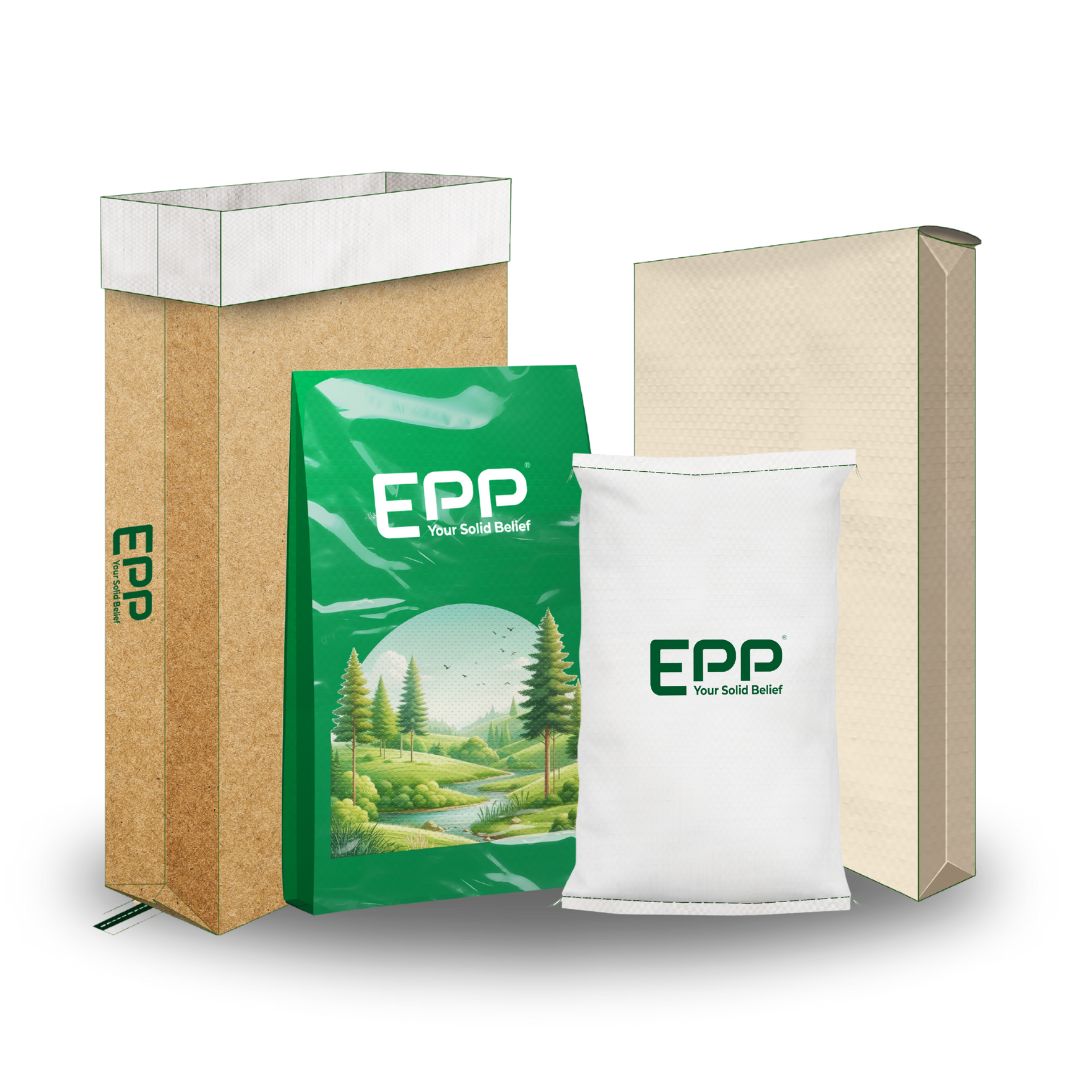
| Coated vs Un-Coated | Coated pp woven bags (laminated woven sacks/ moisture proof pp woven bags) feature a thin PP film layer for moisture resistance. Un-coated pp woven bags are breathable pp woven bags that allow natural airflow to prevent spoilage in fresh crops. |
| Liners & Moisture Barriers | PP woven bags with liner (lined pp woven bags with an inner PE bag) provide 100% moisture-proof containment for powders and sugar. PP woven sacks without liner are used for dry, coarse items. |
| Fabric Clarity | Clear pp bags (transparent woven bags) feature woven fabric made from transparent resin, offering direct product visibility for seeds and premium grains. |
| Top & Bottom Finishes | Options include heat cut pp woven bags (preventing fraying), hemmed top pp woven bags (reinforced opening), and easy open pp woven sacks for quick manual opening. |
| Structural Options | flat pp woven sacks,
gusseted bags for square palletizing double stitched PP woven sacks for extra seam strength on high-density loads Anti-slip pp woven bags feature textured surface weaves to prevent pallet slippage |
| Safety & Eco Features | Recycled PP woven bags made from recycled material (30%) is suitbale for Europe market |
Sourcing woven PP sacks directly from an experienced supplier ensures strict quality control, reliable delivery schedules, and competitive factory pricing.
What Are the Benefits of PP Woven Bags?
Upgrading your product packaging to high-grade woven polypropylene bags provides major operational advantages:
-
High Tensile Strength & Tear Resistance: Woven plastic tapes withstand rough handling, drop impacts, and sharp contents far better than multi-wall paper or standard PE bags.
-
100% Recyclable & Eco-Friendly: Polypropylene is a thermoplastic that can be melted down and re-extrinated into new industrial plastic products, supporting circular economy goals.
-
Superior Moisture & Weather Protection: Laminated layers and PE liners protect hygroscopic contents (like sugar and fertilizer) from rain, humidity, and atmospheric moisture.
-
Cost-Effective Bulk Packaging: Low tare weight keeps shipping costs minimal while providing exceptional strength per dollar spent.
 Frequently Asked Questions about PP Woven Bags
-
What is a PP woven bag ?
PP stands for Polypropylene. A pp woven bag is a flexible packaging container made by weaving extruded polypropylene plastic tapes into a strong, lightweight fabric tube.
-
What is the difference between a laminated PP woven bag and a bag with an inner liner?
A laminated pp woven bag has a thin layer of plastic melted directly onto the outer fabric to resist ambient moisture and dust. A pp bag with inner liner includes a separate, loose polyethylene (PE) plastic bag fitted inside, providing a complete, airtight moisture barrier ideal for fine powders or hygroscopic chemicals.
-
How does the 50 kg pp bag price compare to 25 kg bags in bulk sourcing?
Packing goods in 50kg sacks generally reduces your overall packaging cost per metric ton because fewer total bags and sewing operations are required compared to 25kg units.
-
Are PP woven bags reusable and recyclable?
Yes. Thanks to the durable nature of woven polypropylene, these sacks can be reused multiple times for storage or waste. Once they reach the end of their lifecycle, they can be recycled into new plastic pellets.
Ready to optimize your product packaging and secure competitive wholesale pricing on pp woven bags? Contact EPP Vietnam today to review technical specifications, order free samples, and receive a customized quote!