
Baffle bags, also known in the logistics industry as Q-Bags, are the high-performance solution for exporters who need to maximize space and ensure load stability. If you have ever filled a standard jumbo bag with a ton of material, you have likely seen it transform from a neat square into a rounded, bulging cylinder. This “belly effect” isn’t just an aesthetic issue; it is a logistical challenge that can lead to wasted shipping space, unstable stacks, and increased freight costs.
At EPP Vietnam, we have spent years helping global companies transition from basic packaging to engineered solutions. In this comprehensive guide, we will explore the Comparison of Standard FIBC Bags and Baffle Bags across every operational angle to help you decide which is right for your supply chain.
How Baffle Bags and Standard FIBC Bags are Built?
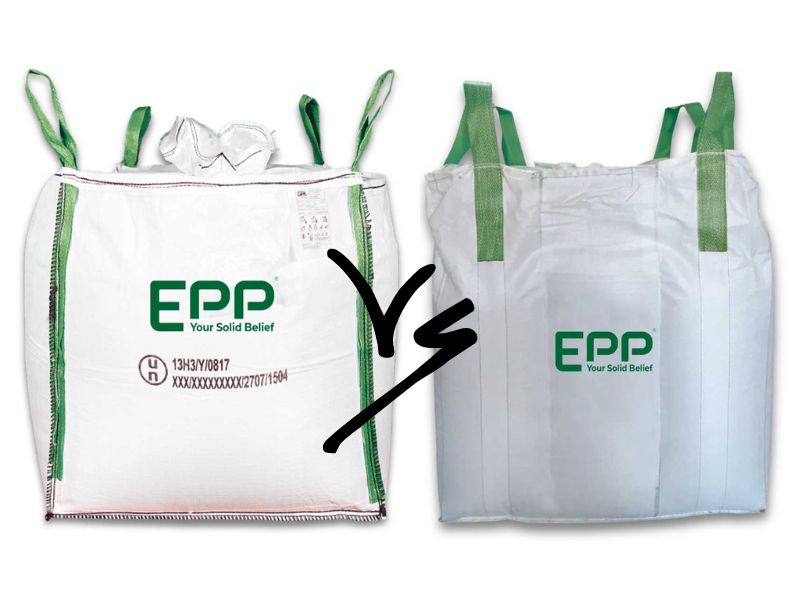
To understand why these two bags perform differently, we have to look at their internal architecture.
The Standard FIBC
A standard FIBC is a relatively simple construction. It usually consists of four side panels (or a single circular piece of fabric) sewn to a base. Because there is nothing holding the sides together internally, the flexible polypropylene fabric bows outward under the weight of the product. This creates a circular footprint that is significantly wider than the original pallet size.
The Baffle Bag
The baffle bag is an engineered upgrade. It features four internal fabric panels—called baffles—sewn across the four corners of the bag. These baffles act as internal “tensioners” or stays.
- Internal Stays: These panels are not solid walls; they have “flow holes” (apertures) cut into them.
- The Science: During filling, the product flows through these holes into the corners. However, the fabric panels prevent the outer walls from expanding outward, forcing the Big bag to maintain its cubic shape.
Shape Retention
The primary difference between these two bags is shape retention.
-
Standard FIBCs: Once filled, a standard bag will “bulge” by 10% to 15% on each side. A bag that starts at 90x90cm often ends up being 105cm or 110cm wide. This makes them difficult to fit into tight spaces or standard shipping containers without leaving “dead air” between them.
-
Baffle Bags: Because of the internal support, baffle bulk bags retain their square footprint. They remain 90x90cm even when loaded with 1.5 tons of pressure. This cubic shape is maintained from the bottom of the bag all the way to the top.
Storage and Transport
This is where the Comparison of Standard FIBC Bags and Baffle Bags turns into a discussion about your bottom line. Shipping containers are square, and your packaging should be too.
Shipping Efficiency
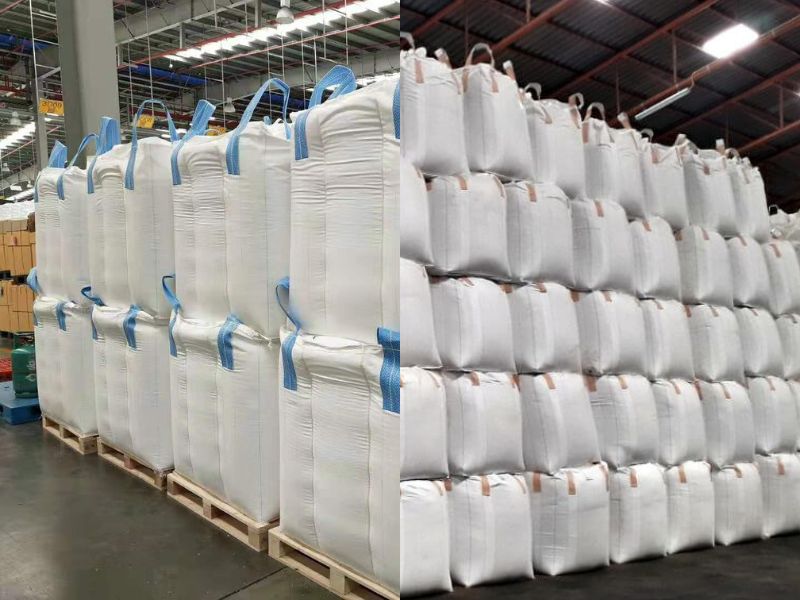
When you put rounded standard bags into a shipping container, the “bulge” creates gaps. You are essentially paying to ship empty air.
-
Standard Bags: Typically utilize only 75-80% of a container’s floor space.
-
Baffle Bags: Fit flush against one another like bricks, utilizing nearly 100% of the container’s footprint. Many of our clients fit 20% more product in the same container by switching to Q-bags.
Warehouse Stacking
Safety and space go hand-in-hand in the warehouse.
-
Stability: Standard bags create a rounded top and base, making them prone to “leaning” or slumping when stacked.
-
High Stacking: Baffle jumbo bags provide a flat, rigid surface. This allows for safe 3-high or 4-high stacking, effectively doubling your storage capacity without increasing your warehouse footprint.
Usage Scenarios
Not every product needs a baffle bag. Choosing the right one depends on your destination and material type.
-
Standard FIBCs are ideal for: * Low-cost domestic transport where space isn’t an issue.
-
Bulky, irregular materials like large rocks, scrap metal, or construction debris.
-
Products that will be emptied immediately upon arrival and don’t need to be stored in racks.
-
-
Baffle Bags are essential for:
-
International Exports: When you need to fit as much as possible into a 20ft or 40ft container.
-
Fine Powders: Chemicals, flour, sugar, or resins that tend to shift and flow easily.
-
Small Warehouses: When vertical stacking is the only way to manage inventory.
-
Cost Analysis
It is no secret that baffle bags have a higher unit price than standard bags. This is because they require more fabric (the baffles) and significantly more labor to sew the internal components.
However, you must look at the “Total Cost per Ton Shipped”:
If a baffle bag costs $2.00 more but allows you to fit 5 extra tons of product in a shipping container, the savings on freight costs far outweigh the extra cost of the bag. Most exporters find that baffle bags pay for themselves after the very first shipment.
Filling and Discharging
Some operations worry that internal panels will slow down production. Here is the reality:
-
Filling: Baffle bags fill very evenly because the product is guided into all four corners. This prevents the “lopsided” fill that sometimes happens with standard bags.
-
Discharging: For free-flowing pellets or grains, discharging is seamless. For “sticky” or fine powders, we recommend Net Baffles (made of mesh fabric). These ensure that 100% of the product discharges through the bottom spout without getting trapped in the corners.
7. Which One Should You Choose?
The decision depends on your material and your destination.
| Choose Standard FIBC If: | Choose Baffle Bags If: |
| You are moving low-value goods domestically. | You are exporting overseas in containers. |
| The product is very bulky or irregular (like large rocks). | You need to maximize warehouse rack or floor space. |
| You do not need to stack the bags. | You are using automated filling or palletizing lines. |
| Upfront unit cost is your only concern. | You want to reduce total “cost per ton shipped.” |
FAQ: What Customers Are Asking in 2026
Do baffle bags need special liners?
No, but you can get Baffle Liners inside a standard FIBC bag! If your product is moisture-sensitive (like milk powder), we can provide a plastic liner that is also shaped with internal baffles to maintain the square profile.
Can I use baffle bags for hazardous materials?
Yes. We can manufacture UN-Certified Baffle Bags for chemicals or minerals that are classified as dangerous goods. The internal baffles actually add to the bag’s structural integrity during drop tests.
Are baffle bags recyclable?
Absolutely. At EPP Vietnam, we use 100% Polypropylene (PP) for both the outer walls and the internal baffles, making the entire bag fully recyclable as a mono-material.
How do I know if my forklift can handle them?
Baffle big bags are actually easier for forklift operators. Because they don’t bulge, the lift loops remain in a predictable position, and the bags don’t brush against warehouse racking or other pallets.
Final Thoughts
While standard FIBCs are a great economical choice for simple tasks, baffle bags are the undisputed winner for anyone looking to optimize their supply chain. By maintaining a square shape, you gain safety, stability, and—most importantly—significant savings on your freight bills.