



| Technical Parameter | Engineering Specification & Customization Options |
| Standard Sizes (W x L x H) |
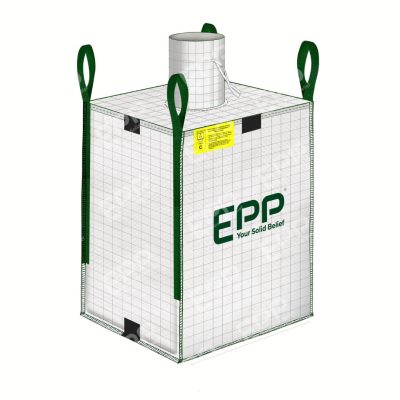
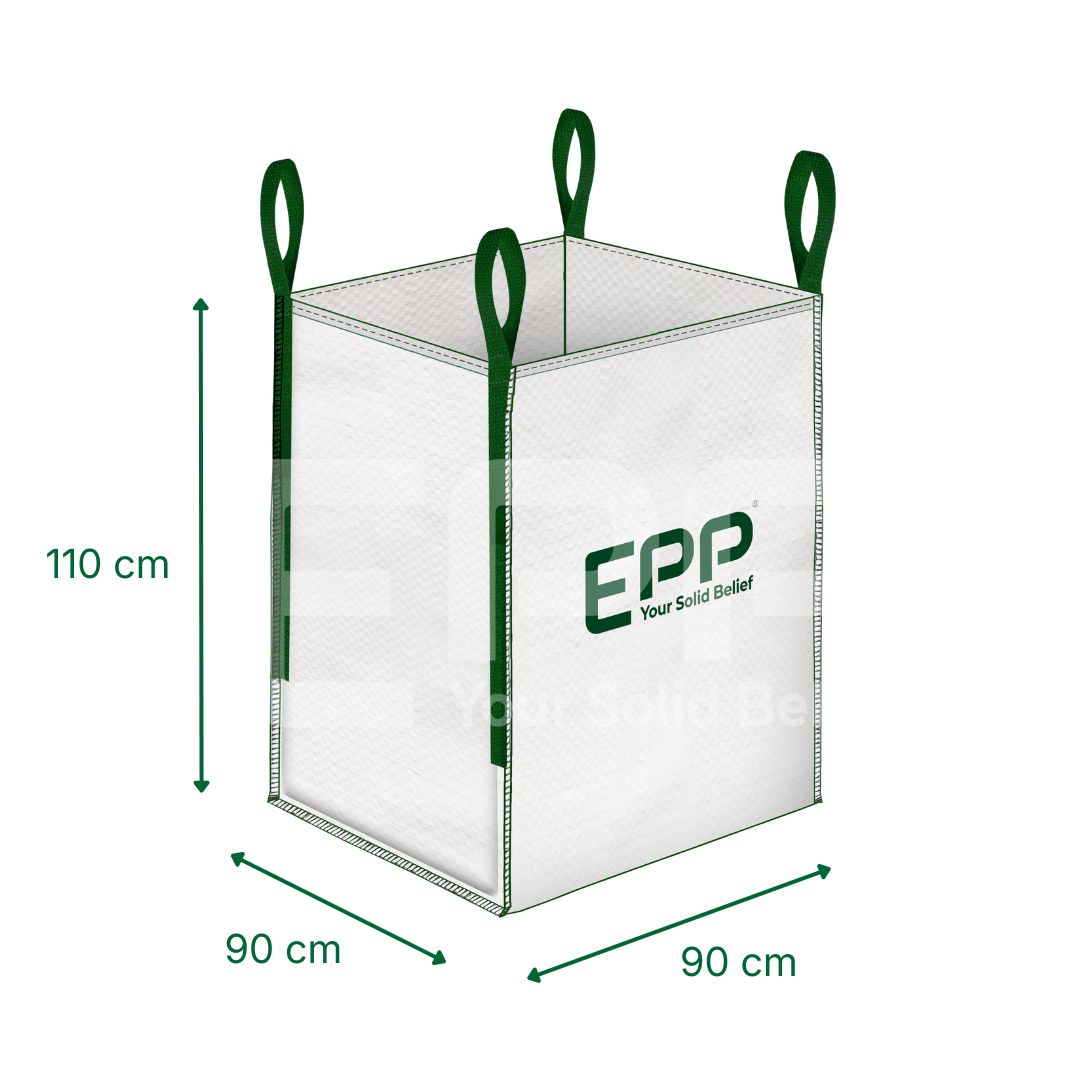
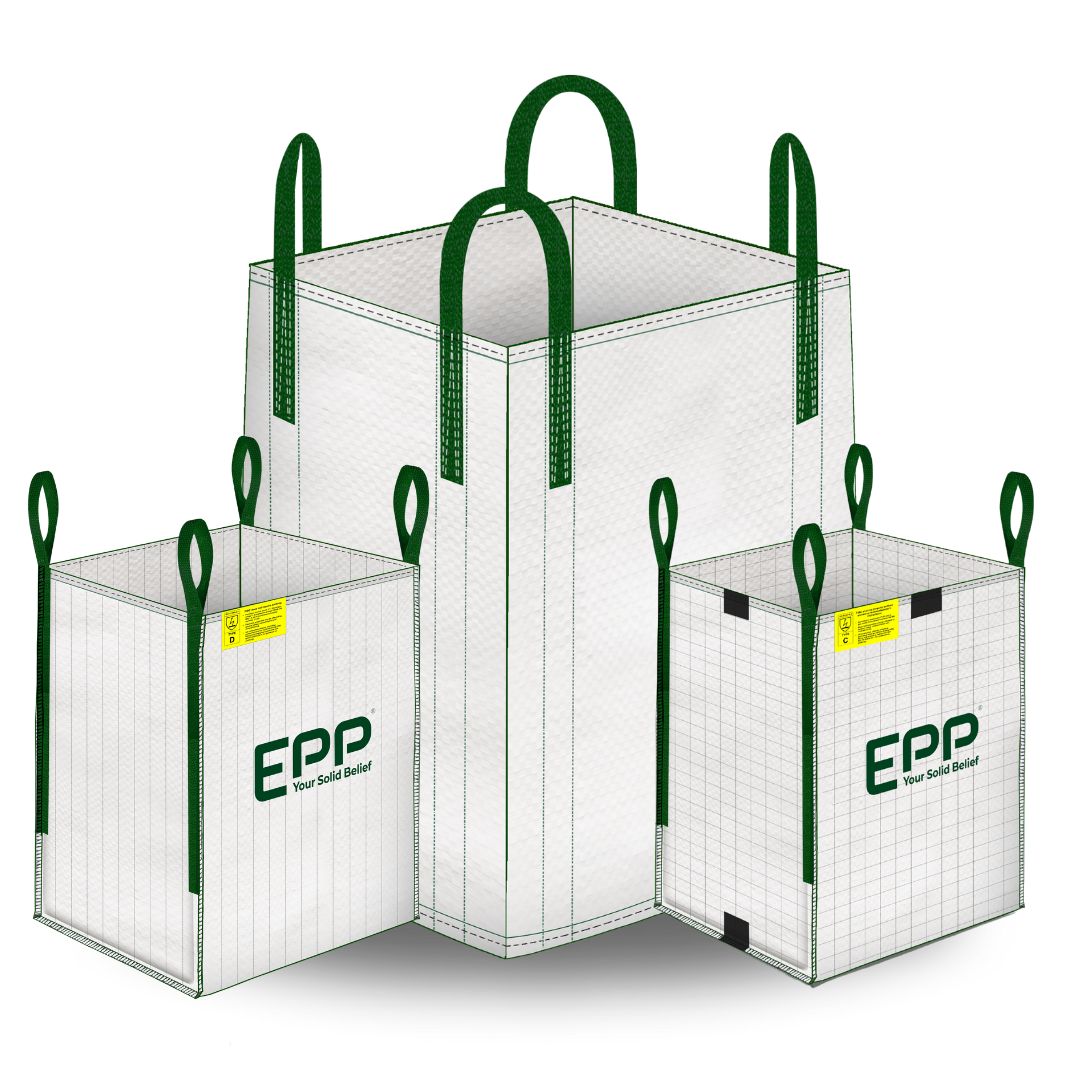
90 x 90 x 110cm (approx. 35″ x 35″ x43″) (general dry goods, chemical powders, and agricultural feeds) 90 x 90 x 90 cm (approx. 35″ x35″ x 35″) (tonne bags of slate, sand or stone) 100 x 100 x 120cm (39″ x 39″ x 47″) (wood pellets, agricultural hulls, or lightweight plastics) |
| Safe Working Load (SWL) | Rated for 1000 kg bags up to heavy-duty 1.5 ton bulk bags |
| Material Base | PP woven fabric (140 GSM to 220 GSM) |
| Safety Factor (SF) | 5:1 (Single-trip ) or 6:1 (Multi-trip reusable 1 tonne bulk bags) |
| Construction Style | U-panel, 4-panel, Tubular (Circular), or Baffle Bags (Q-Bags) |
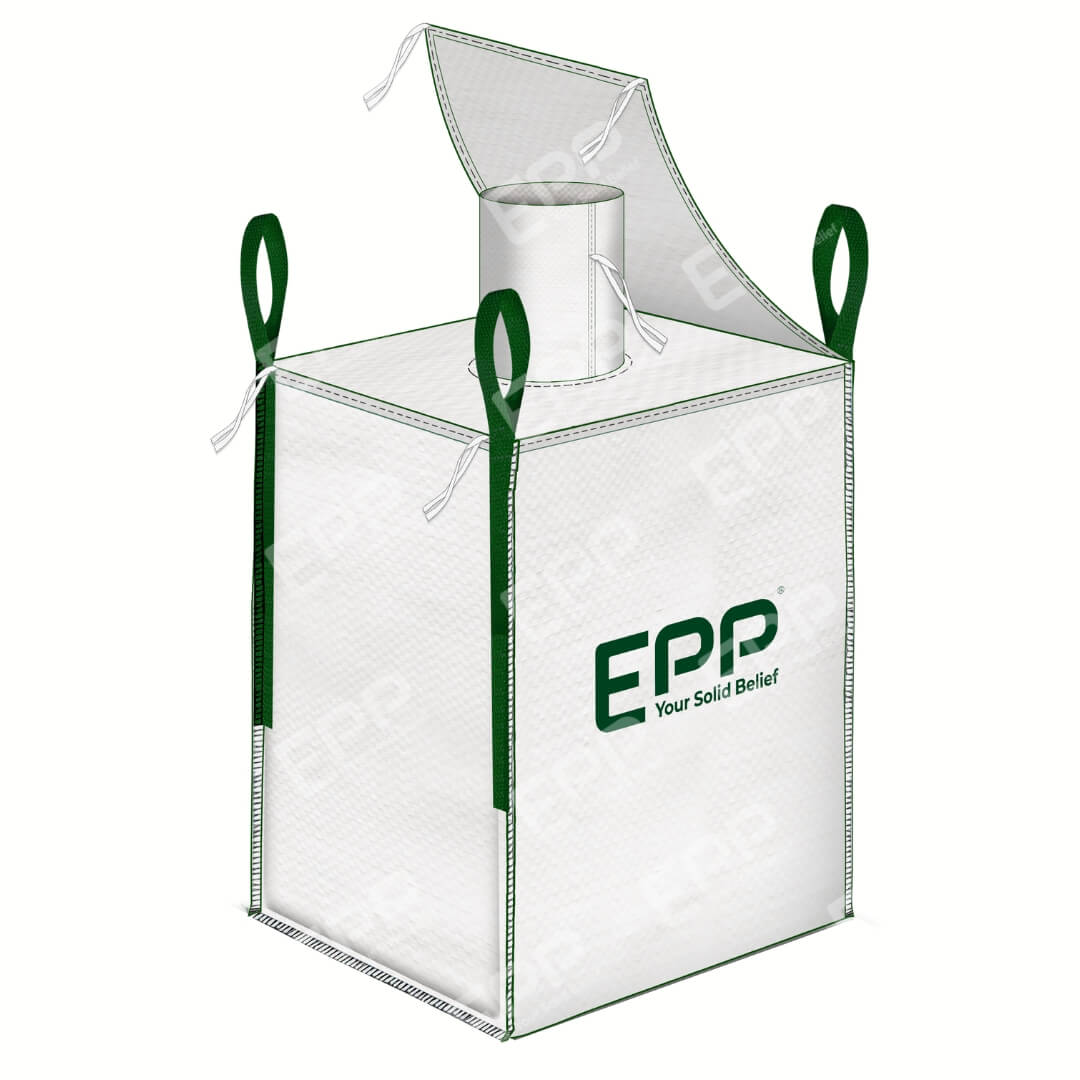
| Top & Bottom Configurations | Open top, duffle top, filling spouts, and flat bottoms or customizable discharge spouts |
| Lifting Systems | 4 reinforced corner loops, cross-corner loops, or single/double stevedore straps |
| Protection Upgrades | Co-extruded PE inner liners, laminated coatings, or dust-proof sift-resistant seams |
Features of 1 Ton Bags
Our heavy-duty 1 ton white bags and one ton tote bags are designed with industrial-grade features that protect your cargo and simplify handling across global supply lines:
-
UV-Stabilized fabric: Prevents structural degradation, fabric fraying, and sudden tearing when bags are exposed to direct sunlight on job sites or during outdoor staging.
-
Sift-Proof & Moisture Barriers: To keep fine powders contained and moisture-sensitive goods protected, bags can be upgraded with dust-proof felt seams, exterior lamination, or co-extruded PE inner liners.
-
Heavy-Duty Lifting Loops: The loops are heavily stitched deep into the body fabric to withstand the intense dynamic forces of crane, forklift, and stevedore operations.
-
Optimal Space Efficiency (Baffle/Q-Bag Styles): Internal fabric panels (baffles) prevent the wholesale big bags from bulging into a rounded shape after filling, allowing them to remain square. This feature maximizes ocean container space by up to 25% and improves stacking stability.
Factors Affecting 1 ton bag price
When procuring bulk packaging, the final overall 1 ton bulk bags cost is influenced by a combination of material choices, engineering styles, and shipping logistics. EPP Vietnam works dynamically to optimize your specifications so you secure the absolute best 1 ton polypropylene bags price:
-
GSM Weight & Load Capacity: A bag constructed to safely handle a standard 1 ton super sack requires less raw material than one engineered to carry 1.5 ton bulk bags. Heavy-density fabrics increase the baseline cost.
-
Sewing Complexity & Top/Bottom Styles: A simple open-top, flat-bottom bulk bag 1 ton style is the most cost-effective. Adding complex features—like duffle tops, discharge spouts, or internal baffles—directly impacts your final bulk bags 1 ton quote.
-
Specialized Fabric Weaves: Standard 1 ton sand bags price are lower because sand can use basic, uncoated fabric. However, moisture-sensitive goods like wood pellets or specialized agricultural feeds require more complex designs, such as a 1 cubic yard super sack or 1 yard super sack with heavy lamination or PE liners, shifting the pricing matrix.
-
Order Volumes (MOQ): When searching for cheap 1 ton bulk bags for sale or looking at 1 tonne bulk bags for sale, ordering full container loads (FCL) allows us to secure lower material costs from our manufacturing network, driving down the unit cost.
Frequently Asked Questions (FAQ)
-
What is the difference between a 1 ton super sack, a 1 cubic yard bag of soil, and a standard 1000kg big bag?
A 1-ton bag refers strictly to a weight capacity (1000kg), whereas a cubic yard refers to volume (approx. 764 liters). Depending on bulk density, a dense material like gravel needs a smaller 90 x 90 x 90cm bag to weigh 1 ton. Conversely, lightweight topsoil requires a larger 1 yard bulk bag (approx. 100 x 100 x 100 cm) to reach the same weight.
-
Why is sourcing 1 tonne bulk bags from EPP Vietnam safer than buying cheap local retail sacks?
Buying from local retail surplus often means getting uncertified, degraded bags. EPP Vietnam enforces a strict quality-gate system. Every production run undergoes rigorous tests (cyclic top-lift, load-to-destruction, and UV exposure) at certified laboratory facilities to ensure safety compliance (ISO 21898).
-
Are these 1 ton big bags reusable?
It depends entirely on the Safety Factor (SF) rating. Standard bags rated at 5:1 SF are engineered for single-trip utility. Reusing them poses safety risks. For multi-trip operations, we source heavy-duty 6:1 SF bags designed to be safely filled, transported, and emptied multiple times.
-
What is the minimum order quantity (MOQ) when sourcing 1 ton bags wholesale through EPP Vietnam?
To ensure ocean freight cost efficiency, our standard MOQ is one 20 feet container. However, we can accommodate mixed-product containers containing various bag dimensions and structures to help optimize your inventory layout.
-
How do customization features like loops, spouts, and liners affect the shipping volume of empty 1 ton bags?
Standard flat-packed bags compress efficiently, allowing up to 250–350 bags per pallet. Adding thick PE liners, rigid baffles, or heavy-duty spouts increases the physical bulk of the empty bags, which slightly reduces the total quantity that can be consolidated into a single 20ft or 40ft container.

Why Choose EPP Vietnam as Your B2B Bulk Bag Partner?
When you source one tonne bags for sale through EPP Vietnam, you are not just buying product—you are securing a worry-free supply chain. We bridge the gap between regional manufacturers and global buyers:
Contact Our B2B Sourcing Specialists Today to request product samples, get a prompt custom quote, or discuss custom sizing options for your bulk logistics.