

Transporting and storing bulk minerals like rock salt, highway de-icing grit, and industrial chemical salts presents severe logistics challenges. Due to salt’s high bulk density and moisture-absorbing (hygroscopic) nature, standard sacks or uncontained bulk shipping often result in material clumping, severe bag tearing, or corrosive brine leakage during ocean transport.
EPP Vietnam’s Rock Salt Bulk Bag provides a high-strength, moisture-sealed Flexible Intermediate Bulk Container (FIBC) packaging solution engineered to withstand extreme physical stress, protect product integrity, and optimize global freight handling.
What Is a Rock Salt Bulk Bag?
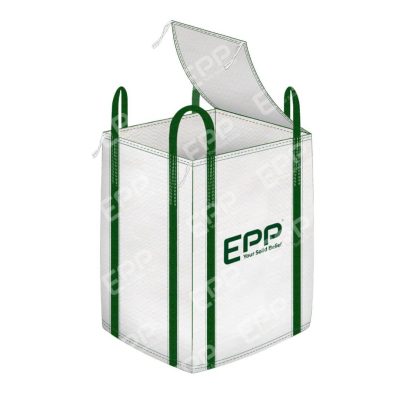
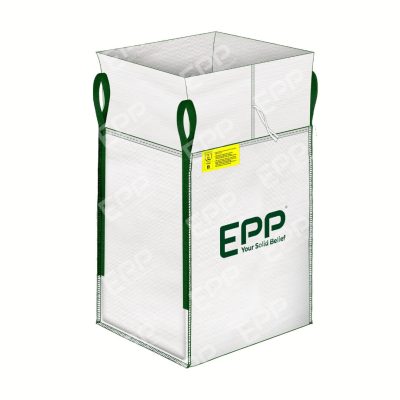
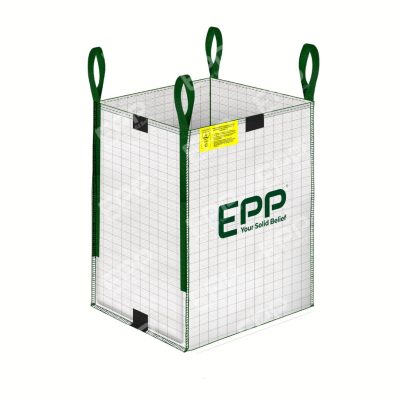
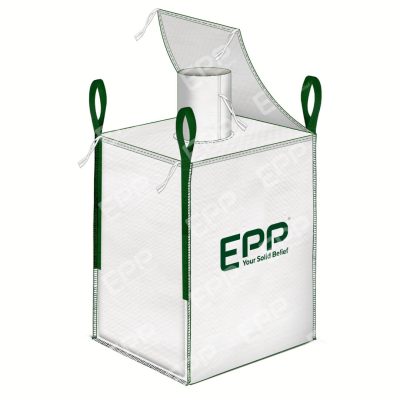
A rock salt bulk bag (also referred to as a salt big bag, grit salt bulk bag, or bulk salt bag) is a heavy-duty FIBC specifically engineered for storing, transporting, and deploying high-density industrial salt, de-icing grit, and water-treatment chemical compounds. Constructed from 100% virgin woven polypropylene (PP) fabric, these industrial sacks are manufactured to support standard payloads ranging from 1,000 kg (1 tonne) to 1,500 kg.

Because rock salt is extremely heavy (with a bulk density typically exceeding 1,200 kg/m³) and highly moisture-absorbent, standard packaging tears easily or allows water ingress. Specialized salt FIBCs prevent material degradation by using reinforced lifting structures, heavy fabric weights, and integral moisture-barrier liners to maintain free-flowing salt across long transit cycles.
Technical Specifications for Salt Big Bags
Matching fabric density, lamination coatings, and seam seals to your specific salt grade prevents bag failure, salt caking, and chemical leakage during ocean export or yard storage.
| BAG TYPE | Type A salt big bags |
| BODY SIZE | 900Lx900Wx1200H ( +/-15mm) |
| BODY MATERIAL | PP WOVEN FABRIC + ANTI UV-AGENT+ UNCOATED INSIDE+ 178g/m2 |
| LOOP BELT | 4 LOOPS, WIDTH: 70mm, HEIGHT: 300mm, |
| INLET | DIA 450XH500, WHITE COLOR, LAMINATED INSIDE |
| INNER LINER | WITH OR WITH OUT |
| SAFETY FACTOR | 5:1 |
| SWL | From 1000kg to 1500 kg |
| BAG TOTAL WEIGHT | 1.8 kg |
| DOCUMENT POCKET | PP+ PE, A4 size |

Why Choose Rock Salt Bulk Bags?
Choosing bulk bags rock salt comes with several significant advantages that enhance efficiency and safety in handling salt:
1. High Load Capacity
One of the foremost benefits of salt big bags is their substantial load capacity. Most bulk bags can hold between 500 kg to 1 ton of rock salt, significantly reducing the number of trips required for transport. This efficiency is particularly important for businesses needing to move large quantities of salt, as it saves both time and labor costs.
2. Durability
Constructed from high-quality woven polypropylene, salt bulk bags are designed to withstand the rigors of handling and transport. They are resistant to punctures, tears, and abrasions, ensuring that the contents remain secure during storage and transit. This durability protects the rock salt from environmental elements, helping to maintain its quality until it reaches its destination.
3. Easy Handling
Salt bulk bag designs typically include multiple lifting loops, allowing for quick and safe handling using forklifts or pallet jacks. This feature simplifies the loading and unloading process, reducing the risk of injury to workers and improving overall efficiency on the job site.
4. Cost-Effectiveness
Purchasing rock salt in big bags of salt is often more economical than buying smaller bags. The price per ton usually decreases when buying in bulk, helping businesses save money on materials. Additionally, the reduced handling and transportation costs associated with bulk bags further enhance overall savings.
5. Environmental Benefits
Using bulk salt bags reduces packaging waste associated with traditional smaller bags. By opting for bulk, businesses contribute to more sustainable practices in the industry, minimizing environmental impact. Many manufacturers now produce rock salt bulk bags from recyclable materials, promoting eco-friendly solutions.
Filling, Handling, and Stacking Safety Guidelines
Because coarse salt creates localized stress points due to its weight, following strict physical safety protocols prevents structural failures during site operations:
-
Pre-Inflation & Suspended Filling: Pre-inflate the bag with clean air prior to loading to ensure the inner PE liner expands fully into the bag corners. Suspended bags should hang straight from all four lifting loops to distribute tensile stress evenly across the side seams.
-
Smooth Forklift Operation: Ensure forklift tines are smooth and completely free of burrs or sharp edges that could pierce the lifting loops. Engage all four loops simultaneously and maintain a low carriage height during transit.
-
Warehouse Stacking Ratios: Always stack salt FIBCs on dry, level concrete floors or heavy-duty wooden pallets. Bags rated at 5:1 SF should not be stacked more than 2-high. Reinforced 6:1 SF bags can be safely stacked 3-high when using Baffle designs.
-
Tarp Covering for Outdoor Storage: Even with UV-stabilized fabric (2% – 3% concentration), bags stored in open distribution yards for over 6 months should be covered with heavy tarpaulins to prevent long-term solar degradation and water pooling on top closures.


FAQ About Rock Salt Bulk Bags
Is It Cheaper to Buy a Rock Salt Bulk Bag?
Yes, purchasing rock salt in bulk bags is generally cheaper than buying smaller bags. The price per ton typically decreases when buying in bulk, which helps businesses save money on materials. Additionally, the reduced handling and transportation costs associated with bulk bags further enhance overall savings.
What is the standard capacity of a bulk bag of salt?
The standard capacity for a rock salt bulk bag is 1,000 kg (1 tonne), though heavy industrial applications frequently request custom designs built for 1,250 kg or 1,500 kg safe working loads. Common physical dimensions are 90x90x110 cm or 95x95x120 cm.
Do rock salt bulk bags need a PE liner?
Yes, a PE (Polyethylene) inner liner is strongly recommended if the salt will be stored outdoors, transported by sea, or kept over wet winter seasons. The liner creates a hermetic moisture barrier that prevents salt from absorbing moisture and hardening into a solid block.
Are rock salt bulk bags reusable?
Bags manufactured with a 5:1 Safety Factor (SF) are rated for single-trip transport. Bags constructed with a 6:1 SF utilize heavier fabric (180+GSM), multi-layer webbing, and reinforced loop stitching, making them safe for multiple internal handling cycles.
Conclusion
Rock salt bulk bag provide a practical and efficient solution for storing and transporting salt. Their numerous advantages, including high load capacity, durability, ease of handling, and cost-effectiveness, make them a preferred choice for businesses in various industries.
For detailed consultation and quotations tailored to your specific needs, contact EPP Vietnam today. We offer a wide range of FIBC bags, including rock salt bulk bags, pp woven bags, agricultural films, and weed mats with stable quality, competitive prices, and professional service. Let us help you enhance your material handling and operational efficiency!
Website: epp.vn
Alibaba website: https://eppvietnam.trustpass.alibaba.com/
Email: [email protected] Hotline/ Whatsapps: +84 986 002 888