The landscape of global commerce is experiencing a structural realignment driven by aggressive trade protectionism and shifting geopolitical alliances. The implementation of US Tariffs on India—which saw reciprocal base duties augmented by a 25% secondary tariff penalty in August 2025, pushing effective total tariff rates on many Indian exports up to 50%—marked a critical inflection point for international buyers. For corporate procurement leaders and supply chain executives managing global logistics pipelines, these trade measures transformed landed cost calculations overnight.
Navigating these regulatory shifts requires analyzing how tariff policies impact regional trade corridors. Understanding the mechanics behind these protectionist measures is key to building supply chain resilience, much like analyzing the broader dynamics outlined in inside the 2025 US-Vietnam Tariff Deal. As tariff volatility affects major Asian manufacturing hubs, global buyers are forced to re-evaluate their long-term sourcing footprint to safeguard operational margins.
Key Drivers and Geopolitical Context Behind US Tariffs on India
The policy rationale behind US Tariffs on India extends beyond standard bilateral trade disputes. On July 31, 2025, the US administration imposed a reciprocal base tariff of 25% on Indian imports, citing a persistent trade deficit of $45.8 billion and non-monetary trade barriers. However, the economic strain intensified on August 6, 2025, when Executive Order 14326 added a 25% penalty tariff, bringing the cumulative effective tariff burdenon most Indian goods to 50%.
Bilateral US-India trade relations are facing severe cost pressures following executive orders imposing up to 50% cumulative tariffs.
Secondary Tariffs and National Security Arguments
The primary justification for the secondary tariff was India’s ongoing importation and processing of Russian-origin crude oil. Washington categorized these energy transactions as an indirect circumvention of international sanctions. By utilizing national security authorities under Section 232 and emergency economic powers, the US government weaponized trade tariffs to pressure strategic compliance. Though subsequent bilateral talks in early 2026 aimed at resolving energy purchase impasses led to interim adjustments, the policy volatility highlighted the operational fragility of relying on a single sourcing origin.
India’s Official Response and Economic Stance
India’s Ministry of External Affairs (MEA) strongly rejected the imposition of US Tariffs on India, characterizing the measures as unilateral, unjustified, and incompatible with international trade frameworks. New Delhi emphasized that its crude oil purchases were vital for national energy security to support a population of 1.4 billion. Despite diplomatic protests, Indian exporters across multiple sectors found their price competitiveness severely undermined in the Western hemisphere.
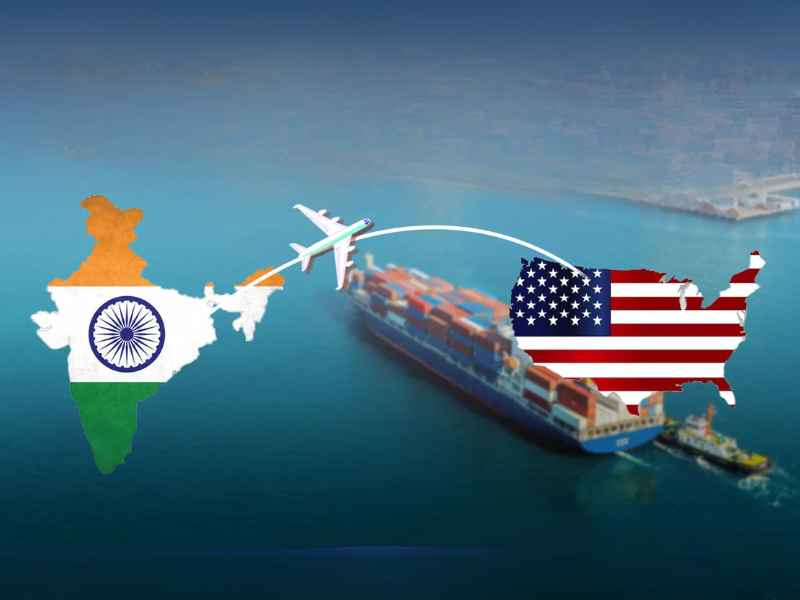
India and the United States faced economic friction and export competitiveness challenges following high tariff impositions.
Sector-Specific Impact: Heavy Toll on Industrial Goods and FIBC Exports
The financial fallout from US Tariffs on India rippled across major industrial sectors, including textiles, automotive components, engineering products, and industrial packaging. Among these, the Flexible Intermediate Bulk Container (FIBC) market—commonly known as Jumbo Bags or Bulk Bags (HTS Code 6305.32)—experienced substantial disruption.
The Disruption to the Global FIBC & Industrial Packaging Market
India has historically served as one of the world’s primary exporters of woven polypropylene bulk packaging. When the cumulative 50% tariff took effect in late August 2025 under HTS heading 9903.01.84, US importers of Indian FIBCs faced an immediate 20% to 35% increase in landed costs.
For chemical manufacturers, agricultural processors, and mining conglomerates that rely on high-volume FIBC bulk bags for logistics, this margin squeeze forced an urgent search for alternative sourcing partners. To evaluate how Asian trade flows adapt under long-term tariffs, industry leaders regularly examine will 2026 US tariffs affect Vietnam’s export growth.
Comparative Tariff Landscape: India vs. Southeast Asian Competitors
To maintain supply chain continuity while safeguarding operating margins, global procurement teams are benchmarked against alternative manufacturing hubs across South and Southeast Asia.
| Country / Territory | Base Tariff Rate (2025) | Additional Punitive Duty | Total Effective Duty Rate | Strategic Supply Chain Position |
| India | 25% | +25% (Secondary Sanction) | 50% | Subject to geopolitical policy risks |
| Vietnam | 20% | 0% | 20% | Premier “China+1” & “India+1” industrial hub |
| Indonesia | 19% | 0% | 19% | Expanding manufacturing, higher freight costs |
| Philippines | 19% | 0% | 19% | Niche production capacity |
The comparative data illustrates why the heavy levy from US Tariffs on India accelerated the migration of purchase orders toward Southeast Asian supplier networks, where tariff structures remain stable and predictable.
Vietnam as the Strategic China+1 & India+1 Packaging Hub
As international buyers adapt to the trade tensions caused by US Tariffs on India, Vietnam has consolidated its standing as the leading destination for industrial supply chain diversification.
Tariff Advantage and Supply Chain Stability
Vietnam’s predictable trade policy and stable import tariff rate (20%) give global manufacturers a dependable cost structure. Located along primary Pacific shipping lanes, Vietnamese exporters offer efficient ocean transit times to Western ports, making the country an ideal “India+1” manufacturing partner.
World-Class Manufacturing Standards at EPP Vietnam
As a premier supplier of FIBC bulk bags and industrial packaging solutions in Vietnam, EPP Vietnam delivers factory-direct capabilities tailored for demanding global supply chains:
- International Quality Certifications: Operating under BRCGS Packaging Materials (Grade A), ISO 9001:2015, and ISO 14001 certifications to ensure strict quality control and environmental compliance.
- Technical Packaging Engineering: Manufacturing UN-Certified FIBC bags for hazardous materials handling, Food-Grade Cleanroom packaging, and Electrostatic Discharge Type C / Type D bags meeting IEC 61340-4-4 standards.
- Structural Safety: Producing heavy-duty bulk bags engineered with Safety Factor ratios of SF 5:1 (Single-Trip) and SF 6:1 (Multi-Trip / Reusable) with custom UV stabilization.

EPP Vietnam engineers custom Big bags for severe industrial environments.
Strategic Recommendations for Procurement Leaders Navigating Tariff Uncertainty
Managing trade policy disruptions requires strategic foresight and proactive procurement frameworks. The operational strains caused by US Tariffs on India underscore the necessity of adopting structured risk mitigation protocols:
- Execute Dual-Sourcing (India+1 / China+1): Avoid over-concentrating production in single jurisdictions subject to diplomatic friction. Establish active production lines in stable manufacturing hubs like Vietnam.
- Conduct Comprehensive Factory Technical Audits: Ensure replacement suppliers possess authentic certifications (BRCGS, ISO, UN certificates) and cleanroom facilities to prevent quality lapses during vendor transitions.
- Optimize Freight & Incoterms Management: Leverage flexible Incoterms (such as DAP or DDP) to streamline customs entry procedures and eliminate tariff classification risks.
- Monitor Transatlantic Policy Cascades: Assess how trade restrictions ripple globally. To understand Western economic impacts, read our detailed analysis on how Trump’s 30% tariff could shake the EU economy.
Conclusion & Future Outlook
The market shifts surrounding US Tariffs on India demonstrate that supply chain agility is no longer optional—it is a core business necessity. While trade policies will continue to evolve alongside global political developments, proactive companies that diversify their sourcing footprint into established manufacturing centers like Vietnam will maintain a clear competitive edge.
At EPP Vietnam, we provide export-ready industrial packaging solutions designed to shield your business from geopolitical cost shocks. Contact our technical procurement team today at https://epp.vn to request product samples, technical specifications, and factory-direct quotations tailored to your operational requirements.
Website: epp.vn
Alibaba website: https://eppvietnam.trustpass.alibaba.com/
Email: [email protected] Hotline/ Whatsapps: +84 986 002 888