
In global B2B commerce, packaging is far more than a simple container—it is a critical supply chain asset engineered to safeguard product integrity, optimize logistics, and drive operational efficiency. For enterprise procurement managers and plant directors handling thousands of tons of raw materials, understanding the function of packaging is vital for preventing product loss, meeting stringent safety compliance, and reducing total shipping overhead.
From primitive containment methods to advanced industrial bulk bags, the evolution of packaging mirrors the expansion of international trade. As a leading FIBC supplier in Vietnam with extensive international export experience, EPP Vietnam delivers custom-engineered bulk packaging solutions designed to fulfill every functional requirement of modern industrial logistics.
The Historical Evolution of Packaging
The history of packaging reflects humanity’s continuous effort to store, protect, and transport goods over increasing distances.
Ancient Era to Industrial Revolution
In ancient times, early civilizations relied on natural materials—such as woven leaves, animal bladders, wooden barrels, and fired clay amphorae—primarily for basic containment and short-term storage of surplus food. As trade routes expanded across continents, the function of packaging shifted toward protecting goods from atmospheric degradation and mechanical damage. The Industrial Revolution brought mass production, introducing tinplate cans, paperboard boxes, and automated glass bottles to support growing commercial markets.
The 20th Century Polymer Boom & The Birth of Flexible Bulk Packaging
The mid-20th century marked a major turning point with the development of synthetic polymers like polypropylene (PP) and polyethylene (PE). The invention of woven polypropylene fabric transformed industrial logistics, giving rise to heavy-duty bulk bags. Today, the primary function of packaging in bulk industrial sectors focuses on unitization, enabling automated equipment to move 1,000 to 2,000 kg of material in a single operational cycle.
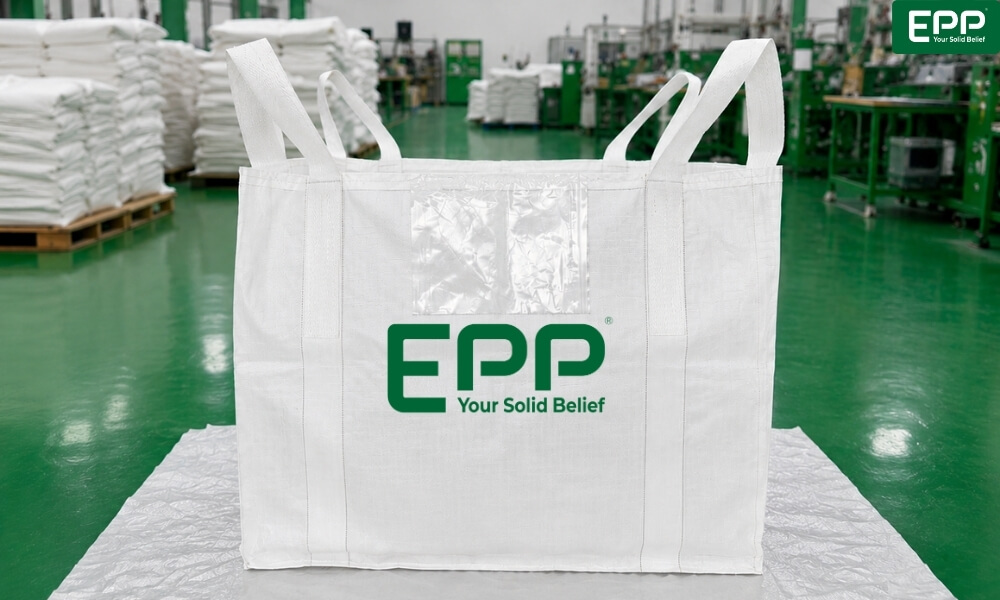
White EPP FIBC bulk bag designed for industrial storage and safe material handling
The Core Concept & Primary Functions of Packaging in Global Trade
Understanding the primary function of packaging is crucial for enterprise managers designing a damage-free supply chain. In industrial material handling, packaging serves as an engineered system designed to protect assets, streamline handling, and ensure compliance.
Containment: Keeping Products Together
The foundational function of packaging is keeping products secure and intact. From retail pouches to heavy-duty Flexible Intermediate Bulk Containers (FIBCs), proper containment prevents leakage, sifting, and contamination, enabling precise batching and clean transfer of powders, chemicals, or grains.
Protection and Preservation
Industrial packaging provides vital shielding against physical impact, moisture, dust, and UV degradation. However, inherent material protection differs from actual storage conditions—unlaminated woven PP allows air exchange, whereas specialized PE or aluminum liners provide airtight, moisture-proof barrier preservation for sensitive cargo. To explore how different heavy-duty container types are categorized for global transit, read our guide on industrial bulk packaging classifications.
Communication and Product Identification
Clear labeling is a critical function of packaging in global trade. Printing technical specs—such as Safe Working Load (SWL) limits, Safety Factors (SF 5:1/6:1), UN codes, and batch QR codes—ensures accurate product identification, smooth customs release, and safe handling.
Convenience and Handling Efficiency
Modern packaging maximizes speed during filling, warehousing, and discharge. Customized features like filling spouts, bottom discharge valves, heavy-duty lifting loops, and internal baffles allow automated equipment to move up to 2,000 kg in a single maneuver, reducing plant labor and optimizing storage space.
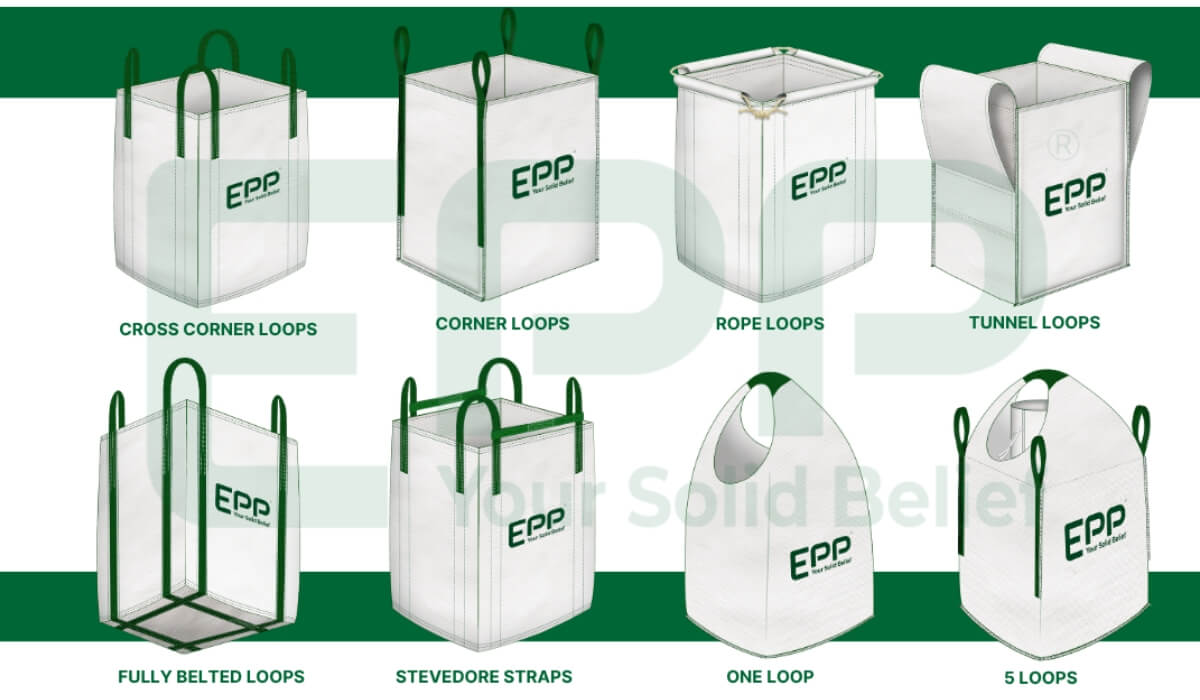
Common Types lifting loops for bulk bags
Functions of Packaging Across Industrial Formats
Evaluating how different packaging formats fulfill these core functions helps supply chain leaders select the most cost-effective option for their cargo profile.
| Packaging Function Criteria | Steel / Plastic Drums | Rigid Wooden Crates | Flexible Bulka Bags (FIBCs) |
| Payload Efficiency (Tare-to-Cargo Ratio) | Low (Heavy rigid tare weight) | Very Low (Bulky and heavy) | Maximum (Ultra-light PP weave carries up to 2,000kg) |
| Storage & Return Logistics Space | Low (Takes full volume when empty) | Low (Non-collapsible) | Superior (Folds completely flat when empty) |
| Custom Protective Barrier Options | Fixed interior linings | Low moisture protection | High (Tailored PE/Aluminum liners & conductive threads) |
| Handling Speed (Forklift / Crane) | Requires drum clamps | Requires specialized slings | Fast (Integrated heavy-duty lifting loops) |
| Cost per Ton Transferred | High | High | Optimal / Lowest total packaging cost |
To explore how these bulk formats compare with standard industrial containers, review our breakdown of most common industrial packaging formats in global logistics.
How Modern Industrial Packaging Criteria Drive Supply Chain Performance?
Modern packaging procurement extends far beyond comparing initial unit purchase prices. A seemingly low-cost bag can incur massive hidden expenses if it causes filling line downtime, tears under load, fails during warehouse stacking, or suffers transit contamination.
Technical Compatibility and Specifications
Packaging specifications must reflect product physics and plant infrastructure. Crucial variables include material bulk density (kg/m³), particle size, moisture sensitivity, filling temperature, and chemical reactivity.
Before issuing a Request for Quotation (RFQ), procurement teams should establish clear technical benchmarks: bag dimensions, SWL (e.g., 1000kg or 1500kg), safety factor (SF 5:1 or 6:1), fabric GSM, loop reinforcement, spout dimensions, and liner thickness. To understand how material quality impacts performance, review our analysis of essential quality benchmarks in bulk packaging manufacturing.
Certified Quality Assurance and Standards
High-performance packaging specifications must be backed by accredited lab test reports and international quality certifications:
- ISO 21898:2024: Governs structural top-lift safety testing, fabric tensile strength, and cyclic load performance.
- IEC 61340-4-4: Governs electrostatic safety classification (Types A, B, C, D) for explosive dust environments.
- BRCGS & ISO 22000: Mandates cleanroom manufacturing standards for food-grade, starch, and pharmaceutical packaging.
- FDA / EU Food Contact Regulations: Verifies that virgin resin additives and liners comply with food migration limits.
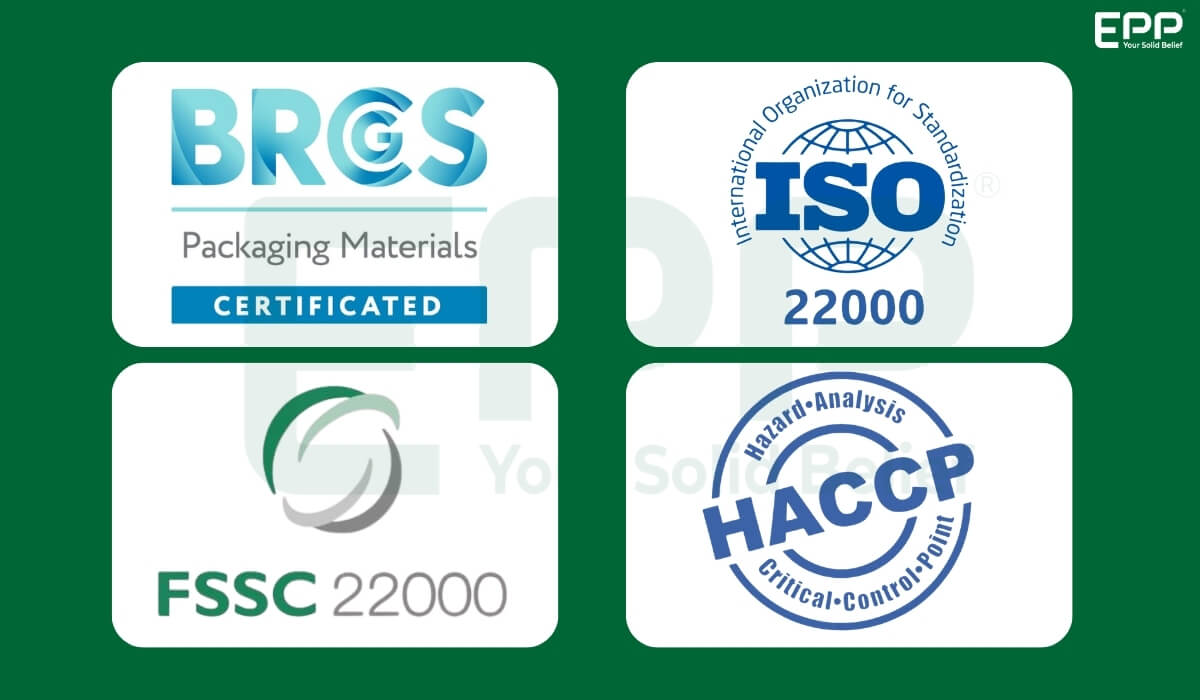
List of certification for food-safe packaging
Logistics Efficiency and Total Sourcing Cost
Packaging dimensions directly affect pallet utilization, ocean container fill rates (CBM efficiency), and warehouse storage density. Evaluating total cost requires analyzing whether the bag dimensions maximize container floor space, fit automated filling frames, and enable safe forklift transport.
Sustainability and Evolving Global Regulations
Environmental regulations increasingly dictate packaging design. Under the European Union’s Packaging and Packaging Waste Regulation (PPWR), effective August 12, 2026, international exporters face strict rules regarding packaging reusability, recyclability, and recycled content mandates. Practical industrial improvements include transitioning to 100% recyclable mono-material PP designs, optimizing fabric GSM without compromising SWL, and implementing multi-trip reusable bags (SF 6:1) where operationally viable.
The Future Evolution of Packaging Functions
The future of packaging is driven by supply chain digitization, material science innovations, circular economic models, and tightening global regulations.
Smart Packaging and Digital Traceability
Integrating digital identification tools—such as embedded RFID tags, serialized QR codes, and IoT sensors—connects physical packaging directly to enterprise ERP systems. In bulk industrial packaging, smart labels provide real-time tracking of batch numbers, production dates, moisture levels, and location history during ocean transit.
Material Efficiency and Circular Design
Next-generation bulk packaging focuses on material minimization and circular economy design. Monomaterial polypropylene bags (where the body fabric, sewing thread, lifting loops, and internal liners are made from 100% compatible PP resin) simplify post-industrial recycling without requiring manual separation.
Regulatory Compliance and Verified Claims
International buyers must verify regulatory compliance for destination markets. Generic market claims like “eco-friendly,” “recyclable,” or “food-grade” must be validated by official lab certificates (e.g., Migration Test Reports, Heavy Metal Contamination Audits, and ISO Test Records).
Frequently Asked Questions (FAQs)
What Are the Four Main Functions of Packaging?
The four primary functions of packaging are containment (holding the product securely), protection (shielding against physical, chemical, and environmental damage), convenience/utility (facilitating easy transport, storage, and handling), and communication (providing essential product info, safety warnings, and brand identity).
Why Is Packaging Important in Logistics?
In logistics, effective packaging prevents cargo damage during transit, maximizes warehouse stacking space, accelerates forklift and crane handling, and lowers freight expenses by optimizing container volume utilization.
How Does Packaging Support Branding?
For B2B enterprises, high-quality packaging communicates professional standards, technical reliability, and brand credibility. Custom printing, clear product labeling, and consistent quality reassure clients that the enclosed product meets strict international standards.
How Can Businesses Choose the Right Packaging?
Businesses should evaluate material bulk density, required load capacity (SWL), environmental exposure (moisture, UV, static electricity), handling equipment compatibility, and necessary international certifications (ISO, BRCGS, UN) to select the ideal packaging specification.
Conclusion
Understanding the multi-faceted function of packaging enables enterprise leaders to transform a standard procurement expense into a strategic operational advantage. By choosing correctly engineered packaging, businesses safeguard valuable products, protect workforce safety, and streamline global logistics performance.
Looking to optimize your industrial bulk packaging strategy? Contact EPP Vietnam today to consult with our technical packaging specialists and receive customized, export-ready bulk packaging solutions!
🌐 Website: https://epp.vn – https://eppvietnam.trustpass.alibaba.com
📲 +84 986 002 888 – [email protected]