For procurement managers and global supply chain directors, determining how much a FIBC bag costs is a critical step in budgeting and optimizing industrial packaging expenses. On average, market prices for Flexible Intermediate Bulk Containers (FIBCs)—commonly known as jumbo bags—range between $4.00 and $12.00+ per bag, depending on structural specifications, safety classifications, and total order volume.
With over 20 years of experience as a premier bulk packaging supplier, EPP Vietnam provides this comprehensive price breakdown to help B2B buyers understand cost drivers, compare product benchmarks, and implement smart procurement strategies.
Key Factors That Determine How Much a FIBC Bag Costs
Raw Material Costs (Virgin Polypropylene Resin)
Virgin Polypropylene (PP) resin accounts for 50% to 70% of total manufacturing costs. Because PP is derived from crude oil, global petrochemical market fluctuations directly impact yarn extrusion costs and fabric pricing.
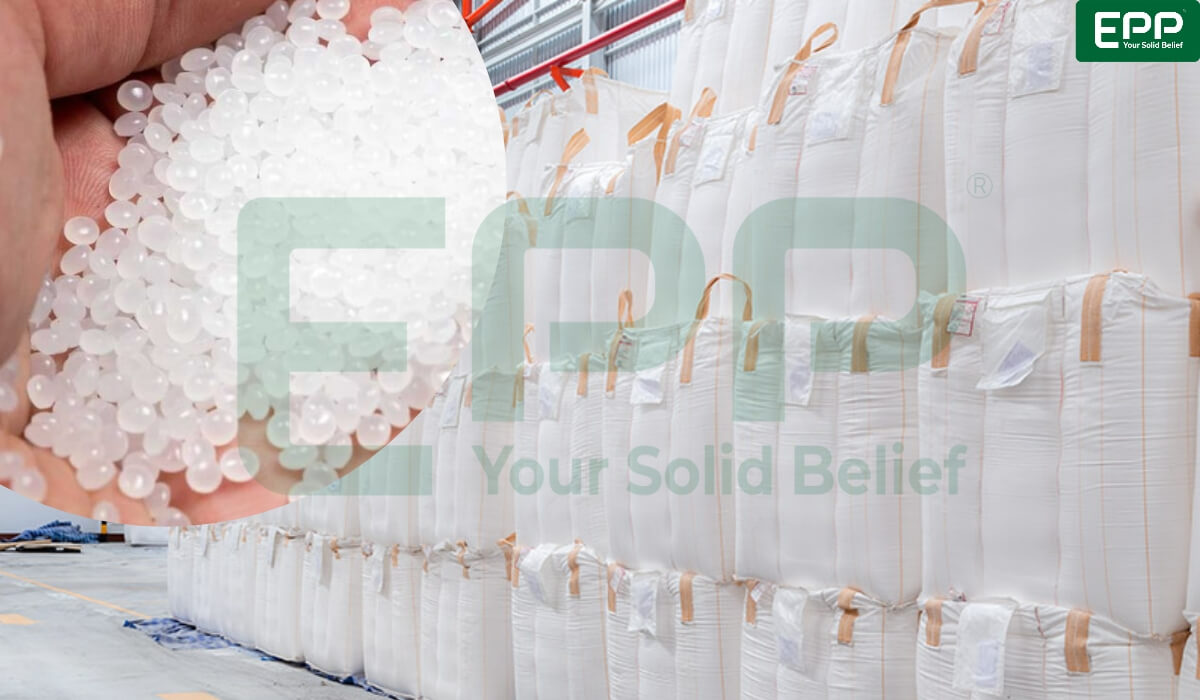
Virgin PP resin accounts for 50% to 70% of total cost of manufacturing bulk bags.
Fabric Weight and Coating (GSM & Lamination)
Fabric thickness—measured in Grams per Square Meter (GSM)—ranges from 120 GSM to 240+ GSM based on load requirements. Adding moisture-proof PE lamination or internal PE form-fit liners increases material consumption, adding $0.30 to $1.50 per bag.
Bag Construction and Safety Factor (SF)
Bag design (U-Panel, Circular, 4-Panel, or Baffle) significantly alters labor and material input. Furthermore, bags engineered for single-trip use require a Safety Factor (SF) of 5:1, whereas heavy-duty reusable containers require an SF 6:1 or 8:1 rating, which demands higher fabric density and reinforced loop stitching.
Specialized Features and International Certifications
Bags requiring specialized performance standards incur higher manufacturing costs:
- UN Certified Bulk Bags: Require rigorous drop, stack, and tear testing for hazardous goods.
- Anti-Static Bags (Type C/D): Incorporate groundable conductive threads or static-dissipative fibers.
- Food-Grade Cleanroom Bags: Manufactured in certified BRCGS/FSSC 22000 facilities with ultrasonic cutting to prevent loose thread contamination.
FIBC Bag Price Table
Note: The prices listed above are reference benchmarks for standard configurations and order volumes. Actual unit prices will vary based on specific technical requirements, such as custom dimensions, fabric GSM, inner liners, specialized coating, loop construction, and total order quantity.
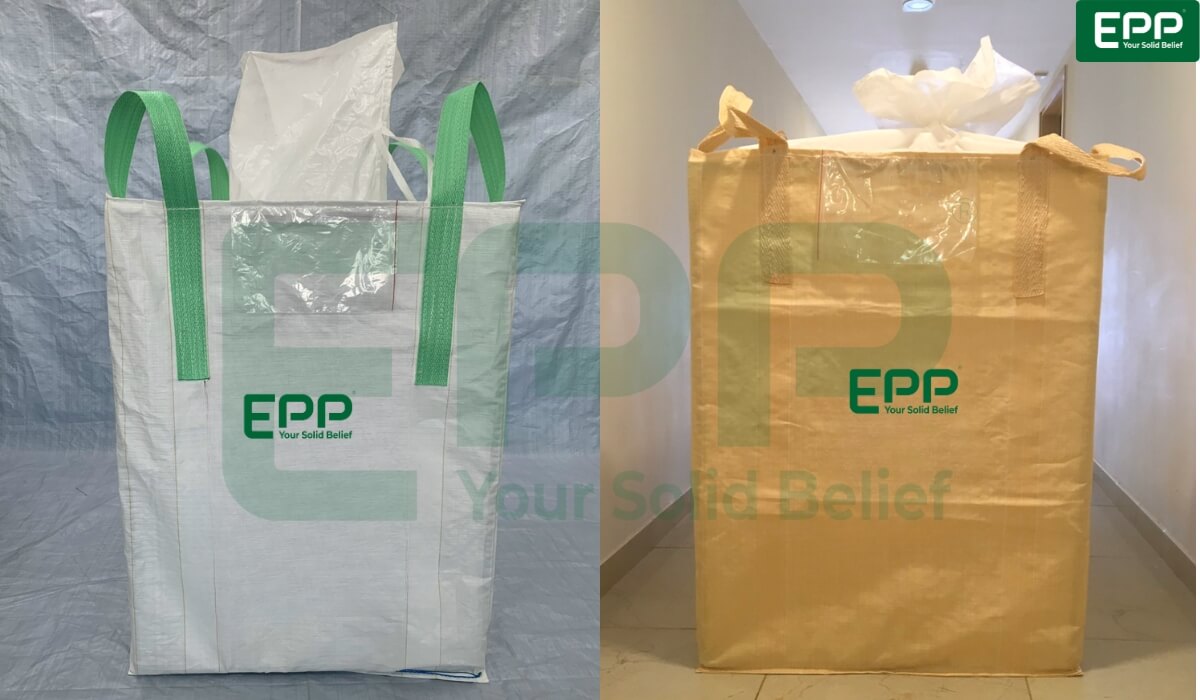
Pricing varies significantly across FIBC bulk bag types
Hidden Costs in FIBC Sourcing
Import Tariffs and Trade Duties
Sourcing bags from regions facing protective tariffs can drastically increase land costs. For example, bulk bags imported into North America from certain countries face duties exceeding 20%. Conversely, sourcing from Vietnam allows buyers to leverage strategic trade agreements (EVFTA, CPTPP) to enjoy preferential zero-tariff import rates.
Ocean Freight and Packaging Efficiency
How bags are packaged—whether in compressed Bales or stacked on Pallets—impacts how many units fit into a 40ft High Cube (40HC) sea container. Maximizing container payload directly reduces the ocean freight cost per bag.
The Financial Impact of Quality Failures
Procuring cheap, under-spec FIBC bags carries severe financial risks. A single bag rupture during crane hoisting can cause thousands of dollars in lost cargo, workplace injuries, and costly shipping delays. Buyers exploring the risks of low-cost FIBC bulk bags quickly learn that unverified suppliers often compromise on fabric tensile strength and UV stabilization.
How to Optimize Your Procurement Cost Without Sacrificing Safety?
Right-Size Specifications to Match Operational Needs
Avoid over-specifying fabric weight (GSM) or loop dimensions beyond actual Safe Working Load requirements. Designing bags to fit exact pallet footprints prevents wasted storage space and unnecessary material costs.
Utilize Baffle Bags (Q-Bags) to Lower Freight Costs
Baffle bags utilize internal fabric panels that prevent side-bulging when filled. By maintaining a square shape, Q-Bags optimize sea container space by 20% to 30%, significantly lowering overall freight expenditure per ton of product shipped.
Consolidate Orders to Full Container Loads (FCL)
Ordering in Full Container Loads minimizes factory setup overheads and ocean freight costs, yielding the lowest possible EXW or FOB unit price.
Partner Directly with a Trusted Master Supplier
Working directly with an established supplier like EPP Vietnam ensures access to fully audited manufacturing networks while eliminating middleman markups. As one of the market players alongside the Top 5 Jumbo Bag Companies with Global Coverage, EPP Vietnam guarantees strict technical compliance and quality assurance across all production facilities. Importers looking to streamline their purchasing workflows can also leverage our fast jumbo bags quote response time to receive accurate B2B pricing and proceed with order planning without delay.
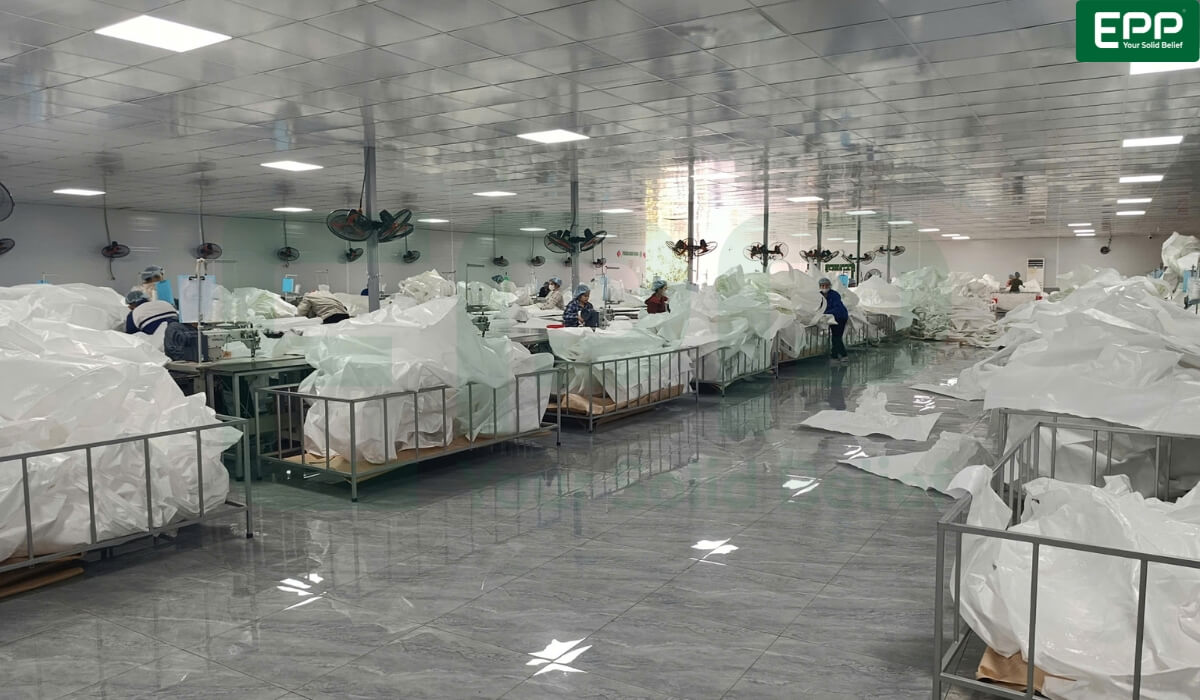
EPP Vietnam factory for producing certified bulk bags for export demand.
Frequently Asked Questions About FIBC Bag Prices
Why do two FIBC bags of the same size have different prices?
Even if two bags share identical dimensions, their prices differ based on fabric GSM, coating, loop strength, internal liners, safety factor rating (5:1 vs 6:1), and electrostatic protection levels.
Does ordering FIBC bags in bulk reduce the unit price?
Yes. Ordering in volume (such as 20ft or 40ft full container loads) allows manufacturers to optimize yarn extrusion runs and machinery setups, lowering unit production costs and ocean freight rates per bag.
Are UN-certified FIBC bags more expensive?
Yes. UN-certified bags require higher fabric density, specialized seam construction, and rigorous third-party laboratory testing (drop, stack, and tear tests) to meet United Nations dangerous goods transport regulations.
Why do FIBC bag prices vary so significantly between suppliers?
Pricing variances stem from raw material quality (100% virgin PP vs recycled resin blends), factory quality control standards, cleanroom certifications (BRCGS), and country-of-origin trade tariffs.
How much does a custom-printed FIBC bag cost compared to a plain bag?
Adding custom logo printing or handling instructions generally adds only $0.10 to $0.30 per bag, depending on the number of print colors and sides required.
Can I customize FIBC bags for my specific industrial needs?
Yes. EPP Vietnam specializes in manufacturing fully custom industrial FIBC bulk bags tailored to your precise size, loading spout, discharge option, liner, and safety specifications.

Conclusion: Get Your Accurate FIBC Price Quote from EPP Vietnam
Understanding how much a FIBC bag costs requires evaluating the balance between material quality, engineering features, and order volume. Partnering with a trusted, factory-direct manufacturer guarantees transparent pricing and uncompromised product safety.
Contact EPP Vietnam’s technical sales team today to get a competitive, direct price quote tailored to your exact industrial packaging requirements!
🌐 Website: https://epp.vn – https://eppvietnam.trustpass.alibaba.com
📲 +84 986 002 888 – [email protected]