Low-Density Polyethylene (LDPE) film is one of the most versatile polymers in global industry, serving as the backbone for high-performance industrial packaging, protective covers, and advanced agricultural applications. Achieving the optimal balance of optical clarity, tensile strength, and puncture resistance relies entirely on mastering the LDPE film manufacturing process.
For global procurement managers, agricultural directors, and supply chain specialists, understanding how raw polymer melts are converted into engineered films is essential. It enables B2B buyers to specify exact material properties, streamline sourcing budgets, and eliminate quality failures like gauge variations or premature degradation under field conditions.
What is LDPE Film?
Low-Density Polyethylene is defined by its branched molecular structure, which provides high flexibility, superior impact resistance, and exceptional moisture barrier capabilities. Converting raw LDPE resin or LDPE pellets into continuous sheeting typically utilizes the blown film extrusion method, making it a cornerstone of modern polyethylene film manufacturing.
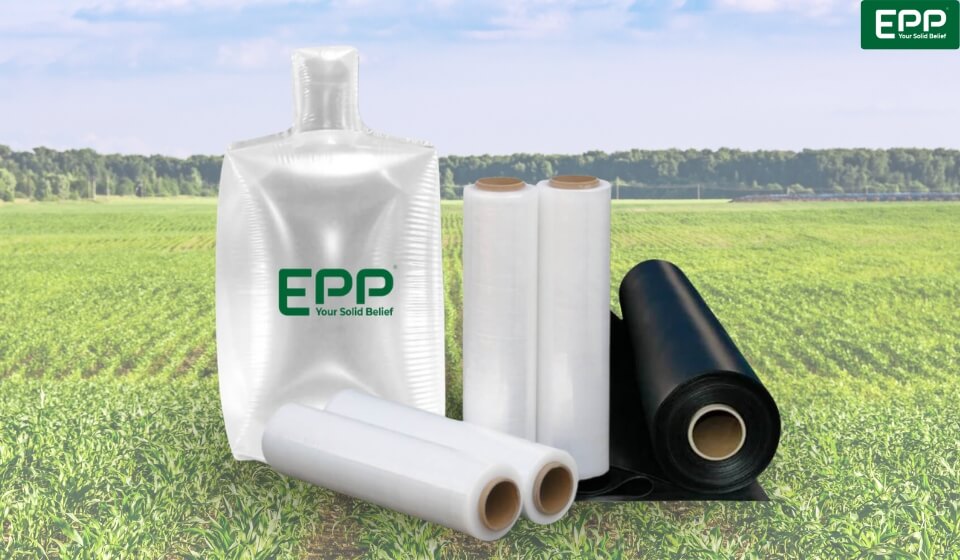
LDPE film combines flexibility, impact resistance, and moisture protection for diverse applications.
In commercial and industrial sectors, LDPE film is widely used for heavy-duty sacks, shrink wrap, stretch hooders, and protective liners. In agriculture, high-tier greenhouse film production consumes vast volumes of agricultural polyethylene film to build durable greenhouse plastic film covers and specialized agricultural sheeting.
The Multi-Stage LDPE Film Manufacturing Process
The modern LDPE film production process converts solid polymer feeds into continuous rolls through a highly controlled, multi-phase LDPE film extrusion process. Whether operating a single-layer line or a sophisticated multilayer co-extrusion system, precise execution at each of the LDPE film production steps ensures structural integrity.

How Does the LDPE Film Manufacturing Process Work?
Step 1: Resin Preparation
The process starts with the raw material: LDPE resin pellets. These pellets are often blended with specific masterbatches and additives. Masterbatches introduce essential color pigments or performance enhancers (e.g., UV inhibitors to prevent sun degradation in greenhouse films, or antioxidants to protect the film during processing and in its lifetime). Precise control over this blending stage is the first critical quality checkpoint in the LDPE film manufacturing process.
Step 2: Extrusion
Extrusion is the heart of the LDPE Film Manufacturing Process, where the solid resin is transformed into a continuous molten layer.
- Melting: The blended pellets are fed into a screw extruder, where they are conveyed forward by a rotating screw. Intense friction and external heaters melt the polymer into a homogenous fluid state (typically between 150oC -250oC).
- Filtering: The molten polymer is often passed through a fine screen changer to remove any impurities or unmelted particles, ensuring film integrity.
- Forming (Die System): The molten polymer is forced through a die to shape the film.
Step 3: Cooling and Solidification
This step immediately follows the extrusion and forming of the molten polymer and is critical for setting the film’s final structure and stability.
The extruded polymer “bubble” is cooled gradually by passing it through a high-volume air-ring. This slower, controlled cooling process helps to maintain the film’s desired orientation and physical properties (toughness, tear strength).
Step 4: Winding and Finishing
Once the film is solid, it is prepared for storage, transportation, and subsequent processing operations.
- Flattening and Trimming: The film is flattened (if it was a blown film bubble) and its edges are trimmed.
- Winding: The film is meticulously wound onto large jumbo rolls. This process must be done under controlled tension to ensure the film is crease-free and uniform, making it ready for converters.
- Finishing: Before winding, many films undergo a surface modification process, such as corona treatment. This high-frequency electrical discharge increases the film’s surface energy, which is essential for maximizing ink adhesion during printing or improving the bond strength during lamination.
To review additional sustainable polymer technologies, read our analysis on biodegradable plastic film.
What Controls LDPE Film Quality During Production?
Maintaining consistent quality across a high-speed LDPE Film Manufacturing Process requires automated monitoring and precise physical controls.
- Gauge Control and Thickness Uniformity: Automated air rings and infrared sensors continuously measure film thickness around the bubble circumference. Dynamic gauge control adjusts localized cooling air to ensure exceptional film uniformity.
- Co-Extrusion Layering: Modern agricultural film production relies on three-layer film or five-layer film co-extrusion technology. This allows manufacturers to isolate specific functional properties into distinct layers—such as an anti-drip layer on the interior surface and a UV-resistant layer on the exterior surface.
- Masterbatch Distribution: Thorough mixing within the extruder barrel ensures uniform dispersion of additives, preventing weak points or patchy optical clarity in the finished film.
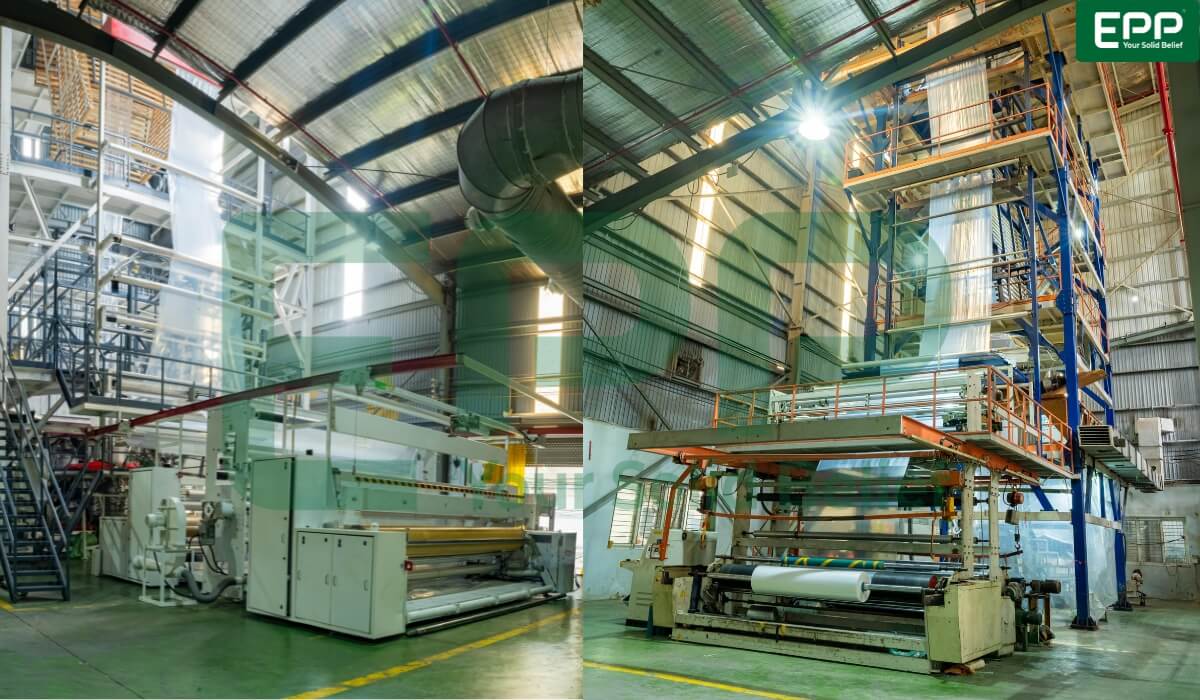
Multilayer blowing machine for LDPE film production
How Is LDPE Film Tested for Quality?
Rigorous LDPE film quality control protocols guarantee that manufactured rolls perform reliably in demanding industrial and outdoor environments.
| Quality Parameter | Standard Test Method | Operational Significance |
| Film Thickness | ISO 4593 / ASTM D374 | Verifies strict adherence to target micron specifications across the entire roll width. |
| Tensile Strength & Elongation | ASTM D882 | Measures maximum load resistance and stretch percentage before tearing occurs. |
| Dart Impact Resistance | ASTM D1709 | Evaluates puncture resistance against sharp objects, falling hail, or heavy handling. |
| Light Transmission & Haze | ASTM D1003 | Measures optical clarity and light diffusion percentages critical for agricultural crops. |
Evaluating these metrics—alongside overall roll quality, winding neatness, and structural integrity—ensures every batch meets rigorous end-user requirements. To learn how agricultural membranes are recovered and re-processed after field use, explore our guide on agricultural film recycling.

Expert FAQ: LDPE Film Manufacturing Process
What is the main difference between Blown Film and Cast Film processes for LDPE?
The blown LDPE Film Manufacturing Process inflates a vertical tube with air, stretching the polymer in two directions to create higher mechanical strength and puncture resistance. The cast film process extrudes molten polymer onto a polished cooling roller, producing higher optical clarity and faster production speeds, but with lower two-way tear resistance.
Why is UV stabilization mandatory in agricultural LDPE film production?
Unprotected LDPE greenhouse film or mulch film rapidly degrades when exposed to solar ultraviolet radiation. UV rays break the polymer’s molecular bonds, causing yellowing, loss of elasticity, and premature tearing. Incorporating UV masterbatch into the resin matrix extends the operational lifespan of greenhouse plastic film up to 3–5 years in intense sunlight environments.
Can recycled LDPE (rLDPE) be used in the manufacturing process?
Yes. High-quality recycled LDPE pellets can be blended into non-food-contact films or integrated into the core layer of multi-layer co-extruded films. This maintains virgin polymer performance on outer surfaces while reducing overall material costs and environmental impact.
Why are greenhouse films made with multiple layers?
Multilayer co-extrusion allows engineered resins to combine distinct chemical formulations without compromising structural strength. For example, a 3-layer greenhouse film can dedicate its outer layer to UV resistance and dust repellency, its middle layer to thermal insulation, and its inner layer to anti-condensation performance.
Partner with EPP Vietnam for High-Performance LDPE Films
Mastering the LDPE film manufacturing process enables businesses to make informed, value-driven purchasing decisions that protect crop yields, safeguard valuable freight, and reduce total packaging costs. As global demand for durable industrial covers and advanced greenhouse film production continues to rise, choosing the right material composition and extrusion technology is essential to long-term operational success.
Whether your market demands high-clarity light diffusing greenhouse film, custom multi-layer barrier sheeting, or heavy-duty industrial covers, EPP Vietnam is your trusted Master Vendor partner. By connecting your business with top-tier, ISO-certified manufacturing facilities across Vietnam, we deliver tailored formulations, rigid quality assurance, and factory-direct pricing on every shipment.
Ready to upgrade your film supply chain? Contact EPP Vietnam today to consult with our technical specialists, review product specifications, and request custom quotes for your global packaging and agricultural needs!
Website: epp.vn
Alibaba website: https://eppvietnam.trustpass.alibaba.com/
Email: [email protected] Hotline/ Whatsapps: +84 986 002 888