The growing demand for Type D big bags is reshaping how industries handle hazardous materials across the globe. As international safety regulations become more stringent, manufacturers are moving away from traditional packaging and toward advanced solutions that can prevent catastrophic industrial accidents.
At EPP Vietnam, we have seen firsthand how this shift is impacting our customers in the chemical, mining, and polymer sectors. Factories that once used standard bulk bags are now upgrading to Type D technology to ensure their products are “export-ready” for markets with the strictest safety protocols.
How Type D Big Bags Work?
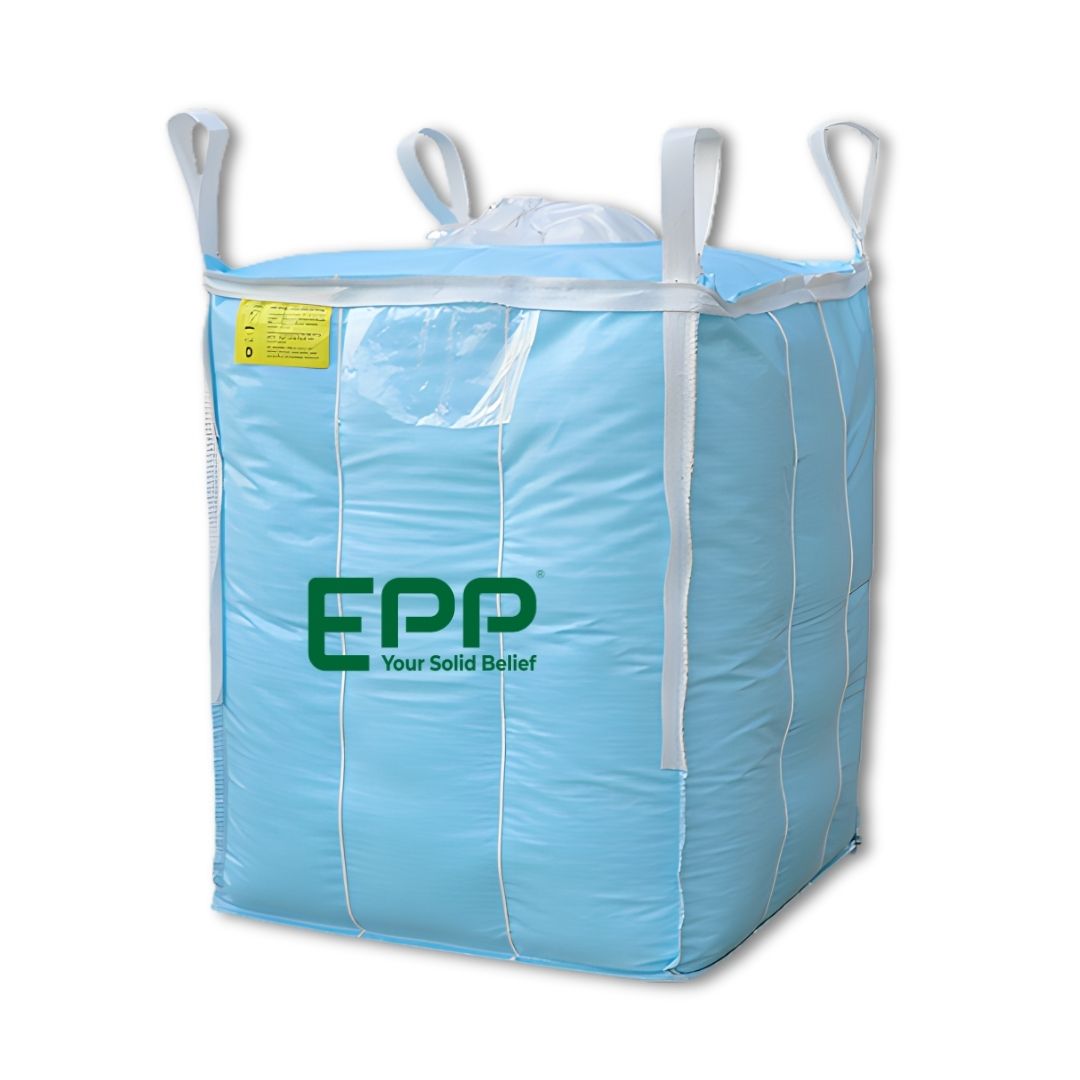
In the world of Flexible Intermediate Bulk Containers (FIBCs), not all bags are created equal. A Type D big bag, often referred to as a antistatic bulk bag or a Dissipative FIBC, is a specialized container designed to prevent the occurrence of incendiary sparks and brush discharges.
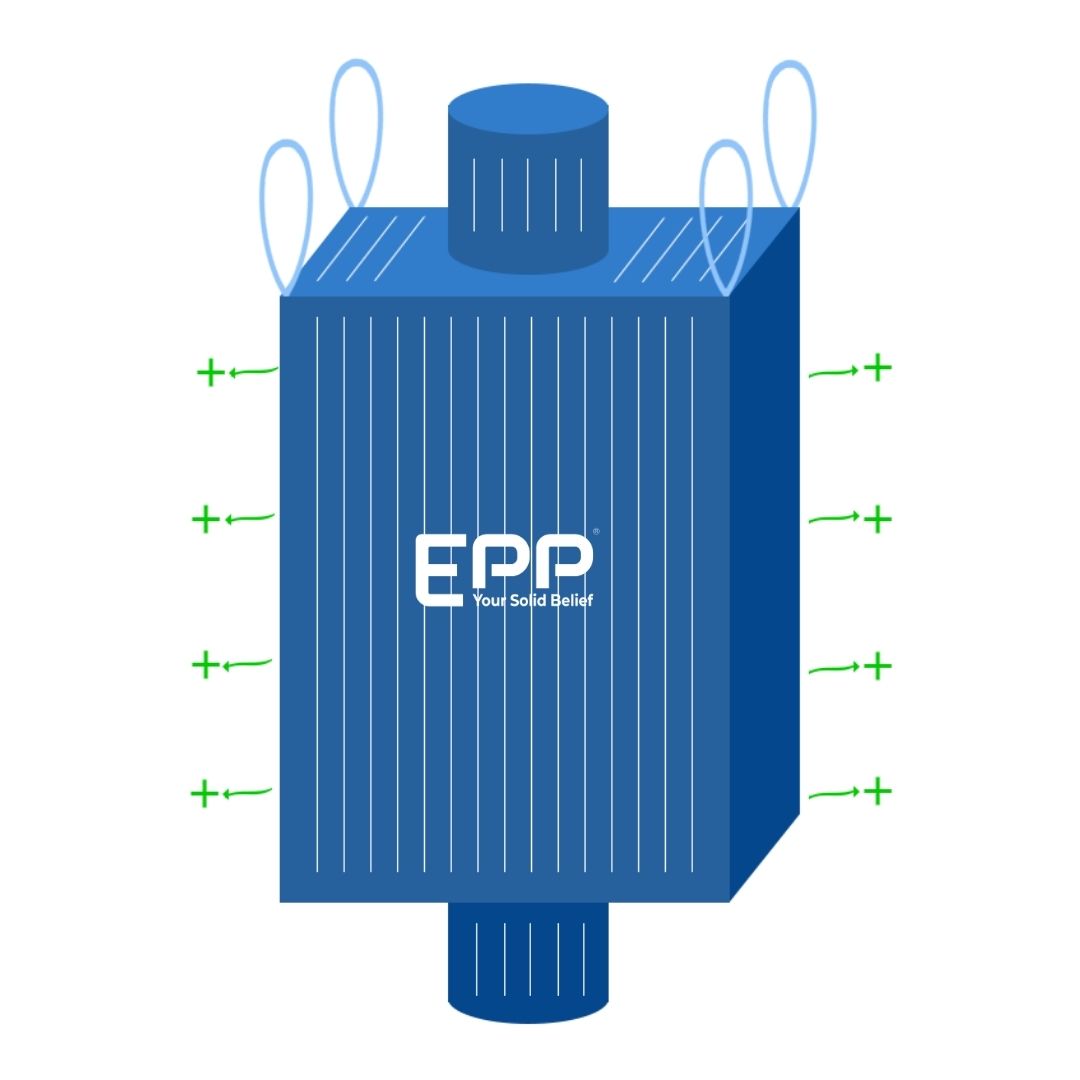
When fine powders or granular materials are poured into a bag at high speeds, friction creates a massive build-up of static charge. In a standard plastic bag, this charge stays on the surface until it finds a way to jump—often in the form of a spark. If there are flammable vapors or combustible dust in the air, that spark can cause an explosion.
Type D technology solves this by using a unique weave of dissipative yarns. These yarns spread the electrical charge across the surface of the fabric and release it safely into the surrounding air at low levels. The most significant advantage is that they do not require grounding. This removes the risk of human error, such as a worker forgetting to attach a ground cable, making the entire filling and discharging process much safer.
Why Global Demand is Surging?
At EPP Vietnam, our export data shows a clear trend: the world is getting stricter about safety. Several factors are driving the massive increase in orders for these antistatic bulk containers:
- Regulatory Compliance in the US and EU: Many countries now have rigorous health and safety mandates for storing and transporting flammable products. Whether it is plastic additives, specialized chemicals, or mining minerals, if the product is sensitive, the packaging must be Type D.
- Elimination of Human Error: In a fast-paced factory environment, mistakes happen. Type C bags are safe only if they are grounded correctly every single time. By switching to Type D, factory managers eliminate the “forgotten ground wire” risk entirely, protecting their facility and their staff.
- Efficiency in Logistics: Because there is no need to stop and ground each bag, the filling and discharging cycles are much faster. For high-volume exporters, this small time saving per bag adds up to significant operational gains over thousands of units.
- Global Supply Chain Safety: As products move across oceans, they encounter different humidity levels and temperatures, which can fluctuate static risks. Type D Big Bags provide consistent protection regardless of the environment.
Where Type D Big Bags are Non-Negotiable?
Through our experience working with international clients, we have identified several “high-stakes” industries where using a standard bag is simply not an option.
The Chemical and Pharmaceutical Industry
Fine powders used in medicine or industrial chemicals are often highly explosive when airborne. In these cleanroom or controlled environments, Type D dissipative bags are the gold standard. They ensure that even the finest dust particles don’t lead to a flash fire during the discharging phase.
Plastic Additives and Polymers
The production of plastics involves many volatile additives. These materials are prone to high friction during packaging. We have helped many plastic manufacturers transition to Type D Maxisacos to satisfy their buyers in the United States and Europe, who refuse to accept shipments in lower-grade packaging.
Mining and Mineral Exports
Many mineral products are processed into fine concentrates before export. These powders can be sensitive to static. For mining companies exporting from Southeast Asia to the rest of the world, Type D bags offer the durability of a heavy-duty jumbo bag with the added layer of electrical safety.
EPP Vietnam: Your Partner in Safe Export Packaging
As a leading supplier of Big bags from Vietnam, EPP Vietnam has built a reputation for helping factories navigate the complex world of international packaging standards. We don’t just sell bags; we provide safety solutions.
Our experience has shown us that many manufacturers are confused by the different “Types” of bags (A, B, C, and D). We work closely with our customers to analyze their products—be it flammable plastic resins or sensitive chemicals—and recommend the exact specification needed for safe export.

By choosing EPP Vietnam, you are partnering with a team that understands the US market’s transformative phase. We ensure that your Type D Big Bags meet all international testing standards (such as IEC 61340-4-4), allowing you to export with confidence. We utilize high-quality materials and modern manufacturing processes to ensure that every loop, seam, and fiber of our dissipative bags performs exactly as it should.
FAQ About Type D Big Bags
1. Can I use a Type D bag for any product?
While Type D bags are incredibly safe, they are specifically designed for environments where flammable vapors or combustible dusts are present. If your product is not sensitive to static and the environment is non-hazardous, a Type B or Type A bag might be more cost-effective. However, for “safety-first” operations, Type D is the premium choice.
2. Is there a difference between “Antistatic” and “Dissipative”?
In the industry, “Antistatic” is a broad term. However, Type D is specifically “Dissipative.” It doesn’t just resist static; it actively moves the charge away from the bag and into the air safely.
3. Does a Type D bag need a liner?
It depends on the product. If you are handling very fine powders that might leak through the weave (sifting), a specialized antistatic liner can be added. At EPP Vietnam, we can customize these liners to ensure they don’t interfere with the bag’s dissipative properties.
4. Why are Type D Big Bags more expensive than standard bulk bags?
The cost comes from the specialized technology in the fabric. The quasi-conductive yarns and the rigorous testing required to certify a bag as Type D are more intensive than standard polypropylene bags. However, the cost of one industrial accident far outweighs the price of high-quality packaging.
5. How do I know if the bag I bought is a real Type D?
Always look for certification labels. Genuine Type D Big Bags, especially those using CROHMIQ fabric, will have clear branding and test markers. At EPP Vietnam, we provide full transparency and documentation for all our safety-grade FIBCs.
Conclusion
The shift toward safer, more efficient packaging is not just a trend—it is a global necessity. As factories in Vietnam and across Asia continue to scale their exports, the demand for Type D big bags will only continue to rise. By investing in high-quality dissipative packaging, you aren’t just protecting a product; you are protecting your brand’s reputation and the lives of the people handling your goods.

If you are looking to upgrade your export packaging or need advice on meeting international safety requirements, EPP Vietnam is here to help. Contact us today to discuss how our Type D Maxisacos can secure your supply chain.