
2 tonne bulk bags are the powerhouse of the industrial packaging world, offering a heavy-duty solution for transporting high-density materials that standard containers simply cannot handle. As a leading Vietnam supplier specializing in high-capacity FIBCs (Flexible Intermediate Bulk Containers), we receive daily inquiries from procurement managers asking for the specific price points of these massive 2000kg sacks. Understanding the pricing landscape for 2-tonne solutions requires a deep dive into the engineering that separates a standard jumbo bag from a heavy-lift reinforced container.
The global market is shifting toward these larger capacities to reduce handling frequency and optimize shipping costs. However, because a 2-tonne load places extreme stress on polypropylene fabric, the price is not just a linear increase from a 1-tonne FIBC —it is a reflection of significantly enhanced safety engineering and material density calculations.
Understanding the Value of 2 Tonne Bulk Bags

The move toward 2 tonne bulk bags is driven by logistical efficiency. When a facility handles 2000kg in a single lift rather than two 1000kg lifts, it effectively halves the forklift labor, reduces the number of loops to be hooked, and optimizes vertical space in warehouses.
For industries dealing with high-density commodities like iron ore, lead concentrates, specialty aggregates, or heavy chemicals, the 2-tonne big bag is a necessity. In Vietnam, we manufacture these bags using 100% virgin polypropylene resin to ensure that the tensile strength of the woven fabric can withstand the immense downward pressure of two metric tons without stretching or “breathing” beyond safe limits.
Average Price Ranges for 2 Tonne Bulk Bags
The price of 2 tonne bulk bags is highly dependent on the “Safe Working Load” (SWL) and the “Safety Factor” (SF) required for your operations. While a 5:1 SF is standard for single-trip bags, many heavy-duty 2-tonne applications require a 6:1 SF for added security during transit.
Below is an estimated price range for 2-tonne FIBCs sourced from high-quality Vietnamese manufacturers.
| Bag Type | Technical Features | Price Range (USD/Unit) |
|---|---|---|
| Standard 2-Ton (Type A) | Open Top, Flat Bottom, Reinforced Loops | $7.00 – $9.50 |
| Heavy Duty (Type B) | Antistatic fabric, reinforced seams | $8.50 – $11.00 |
| Lined 2-Ton FIBC Bag | PE Liner for moisture protection | $9.00 – $12.50 |
| Baffled (Q-Bag) 2-Ton | Internal baffles to prevent bulging | $10.00 – $14.00 |
| Custom Reinforced | 6:1 SF, Double-coated fabric | $11.00 – $15.00+ |
Note: Prices vary based on order volume (MOQ), current polypropylene resin indices, and specific loop/spout customizations.
Why 2 Tonne Bulk Bags are More Expensive

A common question we hear is: “Why is the price of a 2-tonne bag so much higher than a 1-tonne bag?” To a layman, it is just more fabric, but to an engineer at a jumbo bag factory, it is a completely different structural design.
1. Fabric Density (GSM)
For a 1-ton bag, a GSM (grams per square meter) of 160g-180g is usually sufficient. However, 2 tonne bulk bags require a “heavy-duty” fabric, often ranging from 220g to 260g GSM. This extra thickness is essential to prevent the fabric from tearing at the stitch lines under the 2000kg load.
2. Reinforced Lifting Loops
The loops are the primary failure point. While a 1-ton bag uses standard webbing, a 2-tonne bag utilizes High-Tenacity Polyester or Polypropylene webbing with wider surface areas. We often implement “over-lock” or lock stitching that extends deeper into the body of the FIBC to distribute the weight across the entire fabric surface.
3. Double-Strong Stitching
In 2000kg bags, we use double-needle chain stitching . This prevents “needle-hole elongation,” a common issue where the weight of the material pulls the stitch holes open, leading to leaks or seam failure.
4. Bottom and Discharge Security
The bottom of a 2 tonne bulk bag must endure the “dynamic load” during lifting. We often use a “Iris closure” or “star-base” design with reinforced discharge spouts to ensure the bag doesn’t “bottom out” or burst when being moved by a crane or forklift.
How to Request a Quote for 2 Tonne Bulk Bags
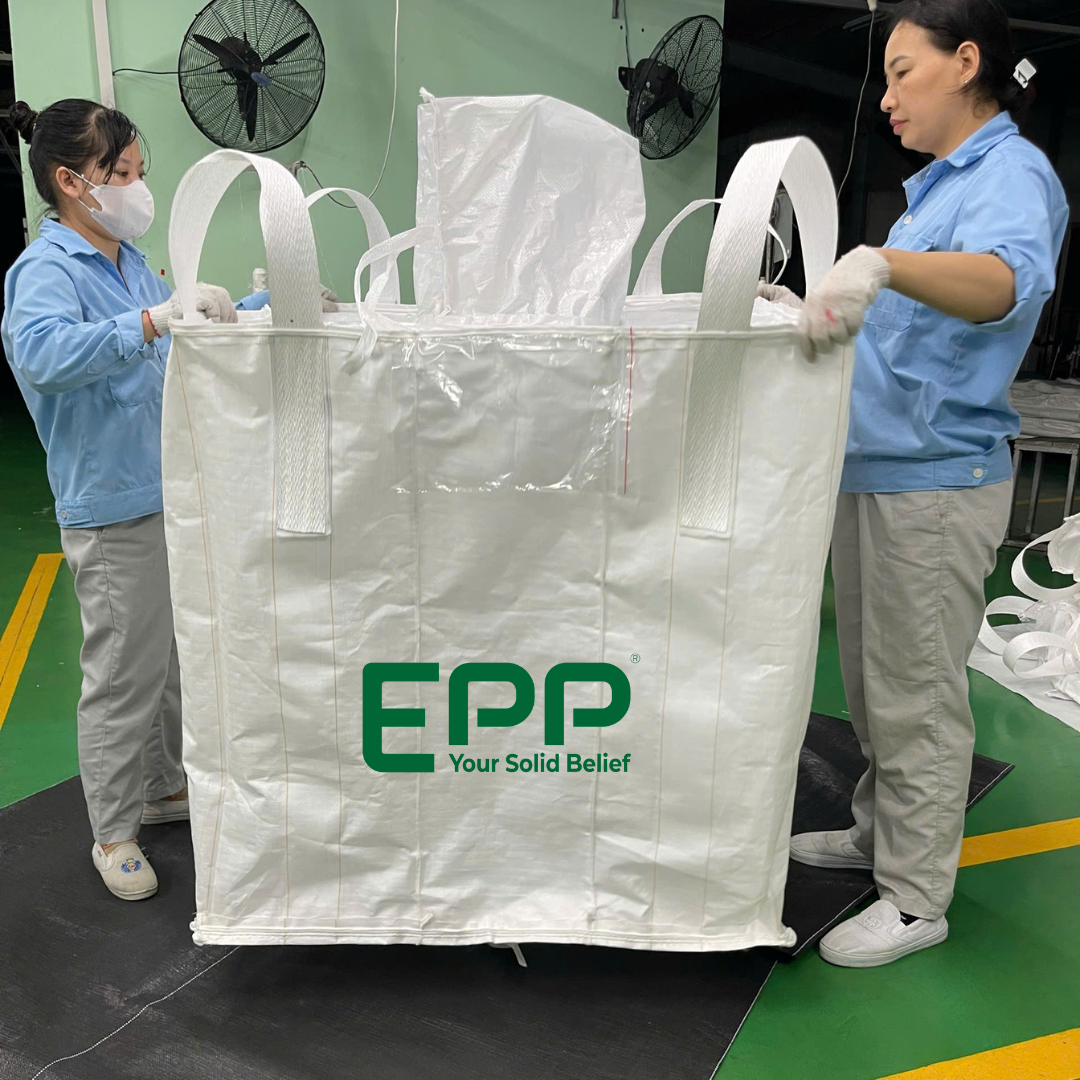

To get the most accurate 2 tonne bulk bags price from a supplier in Vietnam or other countries, you should provide a detailed technical specification. Avoid simply asking for “a 2-ton bag price.” Instead, follow this professional checklist:
- Dimensions and Use Case: We strongly recommend contacting your supplier to determine the suitable dimensions if you plan to use the bags in a warehouse or inside a shipping container. The height of the filled Super sack must be perfectly fitted to your storage racks or the internal height of a 20ft/40ft container to avoid wasting space or damaging the bag during loading.
- Material Density and Product Type: You must tell the supplier exactly which material will be stored inside the bag. This is critical because different materials have different bulk densities. With the correct product information, the supplier can calculate the precise volume required for a 2-tonne load. For example, 2 tonnes of heavy mineral sand will require a much smaller volume (and a shorter bag) than 2 tonnes of lighter chemical powder.
- Safe Working Load (SWL): Confirm it is strictly for 2000kg.
- Safety Factor (SF): Specify 5:1 (Single Trip) or 6:1 (Multi-Trip/Safety Priority).
- Loop Style: Cross-corner loops or loop around the bottom are highly recommended for 2-ton bags as they stay open for easy forklift access without manual intervention.
FAQ about 2 tonne bulk bags
Where can I buy 2 tonne bulk bags suitable for construction materials?
Vietnam is currently the global hub for construction-grade 2 tonne bulk bags. Manufacturers here specialize in high-denier fabric that can handle sharp aggregates, crushed stone, and heavy cement. Look for suppliers in Phu Tho, Hung Yen for the best export logistics and competitive pricing.
How to find 2 tonne bulk bags with certified safety standards?
Always ask for a Load Test Certificate from an independent lab (like Labordata or IIP). A certified 2-ton bag must have undergone a “Cyclic Top Lift Test” where it is loaded to 2000kg and held to ensure no deformation or loop failure occurs.
Can I reuse a 2 tonne bulk bag?
Only if it is labeled with a 6:1 Safety Factor. Most 2-tonne bags are designed for 5:1 (single use) because of the immense stress placed on the fabric during the first fill. Reusing a 5:1 bag with a 2000kg load is a significant safety risk.
Are baffled designs available for 2000kg capacities?
Yes. Baffled 2 tonne bulk bags (Q-Bags) are excellent for high-density

powders. They maintain their square shape, preventing the bag from leaning or toppling, which is a common danger when dealing with heavy 2-ton loads.
What is the lead time for 2 tonne bags from Vietnam?
Typically, a standard order takes 3-4 weeks for production. Given Vietnam’s efficient port systems, shipping to Australia, the USA, or Europe is highly streamlined, making it a faster alternative to other Asian hubs.
Conclusion
When it comes to 2 tonne bulk bags, the price is a direct indicator of the bag’s structural integrity. Investing in a FIBC bag that costs $9.00 vs $7.00 often means the difference between a seamless logistics operation and a catastrophic site accident.
In Vietnam, we focus on providing “Suitable Quality”—ensuring that every gram of fabric and every inch of thread is optimized to keep your 2000kg of product safe. When you are ready to upgrade your bulk packaging, prioritize the safety certifications, density-based volume calculations, and fabric GSM over the lowest possible unit cost.
