
Shipping from Vietnam to the US is a vital aspect of international trade, facilitating the exchange of goods between these two significant markets. As Vietnam continues to grow as a manufacturing hub, understanding the logistics, costs, and requirements of shipping goods to the US is crucial for businesses and exporters. This article will provide a comprehensive overview of shipping from Vietnam to the US in 2026, covering key aspects such as sea freight options, delivery times, customs requirements, and the most common goods shipped.

Understanding the complete logistics chain of shipping from Vietnam to the US allows B2B buyers to optimize transit times and landed costs.
Overview of Shipping from Vietnam to the US
Shipping from Vietnam to the US primarily relies on sea freight, which is the most cost-effective method for large shipments. This mode of transport allows for the movement of significant volumes of goods at lower costs compared to air freight. There are two main methods for sea shipping: Full Container Load (FCL) and Less than Container Load (LCL). FCL is ideal for larger shipments that can fill an entire container, while LCL is suitable for smaller shipments that share container space with other cargo.
Major ports in Vietnam, including Hai Phong and Ho Chi Minh City, serve as key departure points for shipments heading to the US. In the US, prominent receiving ports include Los Angeles, Long Beach, and Newark. The trade volume between Vietnam and the US is substantial, with estimates indicating it exceeds $120 billion annually, reinforcing Vietnam’s status as a critical player in the global supply chain.
Enterprise buyers can learn more about the competitive advantages of Vietnamese sourcing in our analysis of the strategic advantages of sourcing industrial goods from Vietnam.
Sea Freight from Vietnam to the US
Sea freight Shipping from Vietnam to the US include FCL and LCL, each catering to different shipping needs.
Full Container Load (FCL)
FCL involves utilizing an entire container for a single shipment. This method is cost-effective for larger volumes and offers several advantages, including faster transit times and reduced handling risks. Cost estimates for FCL shipments range from approximately $1,880 to $2,850 for a 20ft container and $1,880 to $4,550 for a 40ft container, depending on the specific route and market conditions.
Less than Container Load (LCL)
LCL is used for smaller shipments that do not require a full container. Costs for LCL shipments are calculated based on the weight or volume of the cargo, making it a flexible option for businesses that need to ship smaller quantities. While LCL can be more economical for small shipments, it typically involves longer transit times due to the consolidation and deconsolidation processes at ports.
Both FCL and LCL shipping methods are supported by a robust network of logistics companies and freight forwarders, making it easier for exporters to navigate the complexities of international shipping.
Ocean Delivery Time from Vietnam to the US in 2026
| PORT’S NAME AND CODE | VNHPH – Hai phong | VNDAD – Da Nang | VNSGN – Ho Chi Minh |
| Seattle (USA, Port code: USSEA) | 18 – 66 days | 24 – 56 days | 18 – 50 days |
| Portland, bang Oregon (USA, Port code: USPDX) | 18 – 55 days | 26 – 57 days | 24 – 40 days |
| Oakland (USA, Port code: USOAK) | 23 – 42 days | 31 – 50 days | 25 – 43 days |
| Los Angeles (USA, Port code: USLAX) | 17 – 35 days | 22 – 39 days | 21 – 36 days |
| Long Beach (USA, Port code: USLGB) | 17 – 41 days | 22 – 38 days | 21 – 35 days |
| Chicago (USA, Port code: USCHI) | 24 – 46 days | 31 – 52 days | 30 – 50 days |
| New York (USA, Port code: USNYC) | 26 – 51 days | 34 – 52 days | 30 – 46 days |
| Norfolk, bang Virginia (USA, Port code: USORF) | 27 – 51 days | 36 – 61 days | 35 – 54 days |
| Houston (USA, Port code: USHOU) | 21 – 42 days | 33 – 71 days | 33 – 49 days |
| Miami (USA, Port code: USMIA) | 39 – 64 days | 39 – 63 days | 39 – 64 days |
| New Orleans (USA, Port code: USMSY) | 23 – 54 days | 33 – 54 days | 31 – 54 days |
To navigate trans-Pacific logistics smoothly, importers frequently partner with trusted freight forwarders for Vietnam export routes.
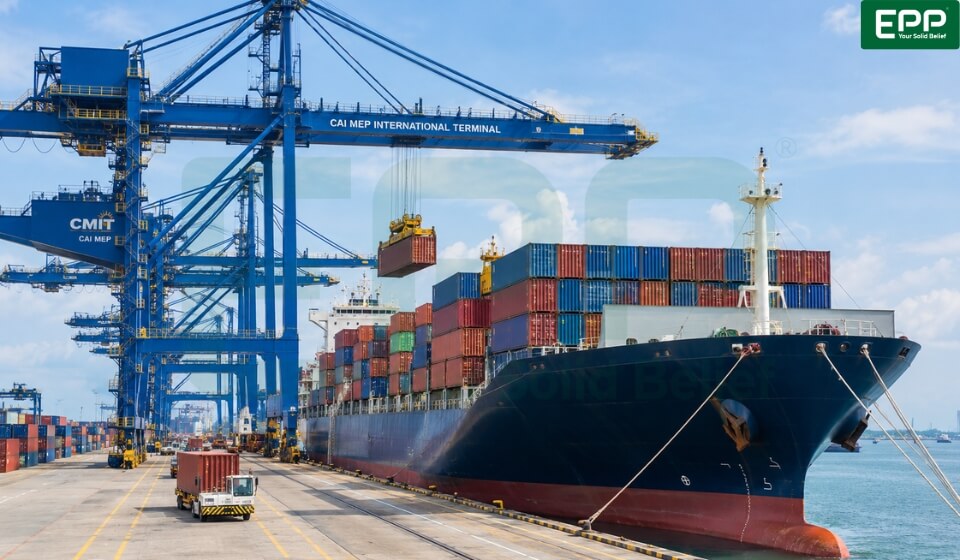
Direct deep-water services from Cai Mep to the US West Coast shorten sea transit times to as little as 14 to 18 days.
Customs Requirements for Shipping from Vietnam to the US
Navigating customs requirements is a critical aspect of goods shipping from Vietnam to the US. Understanding these regulations helps ensure smooth clearance and avoids costly delays.
Customs Duties and Documentation
Customs duties are calculated using the Cost, Insurance, and Freight (CIF) method, which considers the total value of the goods, including shipping costs. Duty rates vary by product category; for instance, mobile devices may have a 0% duty, while fashion items can be subject to a 30% duty, significantly impacting overall shipping costs.
Required documentation for shipping includes:
- Commercial Invoices: Detailing the sale transaction, including item descriptions and values.
- Packing Lists: Enumerating the contents of the shipment for easy identification.
- HS Codes: Harmonized System codes for classification of goods, essential for duty assessment.
Working with a customs broker is advisable to navigate the complexities of customs regulations and ensure compliance, as they can help prepare necessary documentation and facilitate smoother clearance.
For an in-depth breakdown of Vietnamese export clearance, read our guide on how to streamline customs clearance for Vietnam imports.
Restricted and Prohibited Items shipping from Vietnam to the US
Certain items may be restricted or prohibited from import into the US. Common restricted items include currency, drugs, and counterfeit goods, which can lead to severe penalties if not properly managed. Additionally, items like certain agricultural products and hazardous materials have specific regulations. It is crucial to stay informed about these regulations, as they can change frequently, impacting shipping plans and compliance requirements. Regularly checking updates from the US Customs and Border Protection (CBP) can help businesses avoid potential issues and ensure smooth operations when shipping from Vietnam to the US.

Understanding US Customs and Border Protection (CBP) regulations is crucial for maintaining compliance when shipping goods from Vietnam to the US.
Common Goods Shipped from Vietnam to the US
Vietnam exports a wide range of goods to the US, reflecting its manufacturing strengths and the demands of the American market. The most common goods shipped include:
Electrical Machinery and Equipment
This category dominates the shipping from Vietnam to the US, with significant shipments of computers, telecommunications equipment, and other electronic devices. In 2023, electrical machinery accounted for a substantial portion of Vietnam’s exports, valued at billions of dollars.
Apparel and Footwear
Vietnam is known for its robust textile and garment industry, exporting a wide variety of clothing and footwear to the US market. The fashion sector remains one of the largest contributors to trade, with many American brands sourcing production from Vietnam.
Furniture
Furniture exports from Vietnam have witnessed rapid growth, with a wide range of products being shipped to the US. This includes both indoor and outdoor furnishings, reflecting Vietnam’s capabilities in woodworking and design.
Agricultural Products
In addition to manufactured goods, Vietnam exports agricultural products such as seafood, fruits, and coffee. These items are increasingly popular in the US, driven by growing demand for diverse food options.
E-commerce Goods
The rise of e-commerce has also influenced shipping trends. Many smaller shipments driven by online sales are increasingly being shipped from Vietnam to the US, reflecting the changing landscape of retail and consumer behavior. US customer can ordered woven bags from Vietnam with competitive price and quick delivery time.

Conclusion
Shipping from Vietnam to the US in 2026 presents numerous opportunities for businesses looking to engage in international trade. With a well-established sea freight system, competitive costs, and a diverse range of goods, Vietnam continues to play a vital role in global supply chains. By understanding the logistics, customs requirements, and common goods exported, businesses can effectively navigate the complexities of shipping and capitalize on the growing trade relationship between Vietnam and the US. As the landscape continues to evolve, staying informed and adaptable will be key to success in this dynamic market.
Website: epp.vn
Alibaba website: https://eppvietnam.trustpass.alibaba.com/
Email: [email protected] Hotline/ Whatsapps: +84 986 002 888