
The Portland Cement Price Per Ton is an important benchmark for procurement managers, construction companies, and bulk distributors planning large-volume purchases. However, the quoted price alone does not determine the true cost of cement. Freight, packaging, handling, import duties, and delivery terms can all affect the final procurement budget.
For bulk buyers, understanding these cost drivers is essential to comparing suppliers, negotiating contracts, and managing price volatility. This guide explains how to compare bulk and bagged cement purchases, evaluate packaging options, and make more informed sourcing decisions.
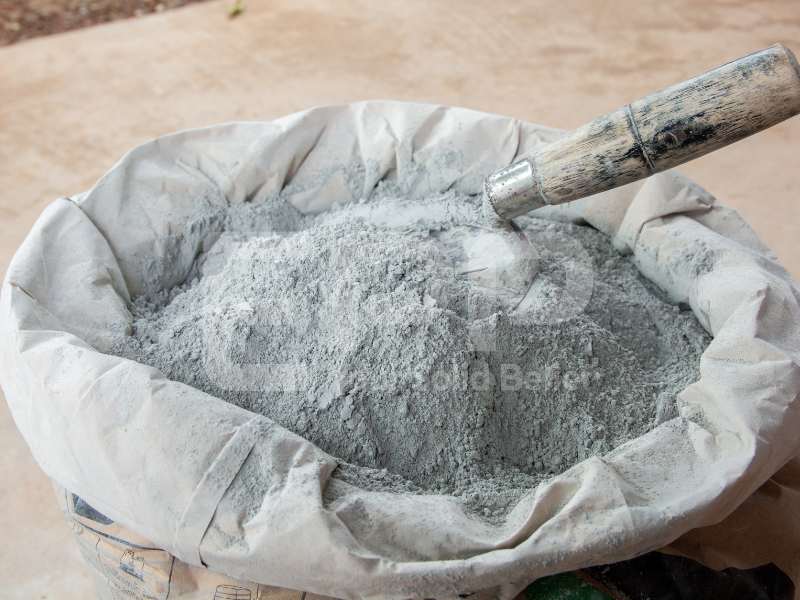
Evaluating dry Portland cement powder quality to minimize cargo loss and optimize landed B2B procurement costs.
Portland Cement Price Per Ton vs. Per Bag
Navigating B2B procurement in the construction and infrastructure sectors requires a clear understanding of wholesale unit metrics. When sourcing materials at scale, evaluating the Portland Cement Price Per Ton against standard per-bag pricing reveals substantial differences in capital efficiency and operational margins.
Calculating the True “Portland Cement Bulk Price” Savings
Procuring cement in loose bulk or large-format packaging offers significant economies of scale. Wholesale bulk shipments remove individual retail packaging fees, lower automated palletization overheads, and streamline freight density.
On the international market, Asian export hubs yield competitive FOB rates, allowing global buyers to source high-grade Ordinary Portland Cement (OPC) efficiently:
| Criterion | 50kg Bag Purchase | Bulk Purchase (Per Ton) |
| Estimated Market Price | $140 – $160 USD / Ton | $95 – $115 USD / Ton |
| Price per Ton Structure | High (Includes packaging & retail markups) | 10% to 20% Lower (Pure material cost) |
| Handling / Labour | High (Manual labour, slow offloading) | Low (Machine-handled via Pneumatic/FIBCs) |
| Waste / Damage | Higher risk of tear and weather damage | Minimal waste; better weather protection |
How much is a bag of Portland cement? Understanding the Portland Cement 50kg Price
How much is a bag of Portland cement? The 50kg bag is the industry standard for retail and smaller construction projects. This Portland Cement Bag Price serves as an important point of comparison:
- Retail Reference Price: The Portland Cement 50kg Price usually ranges from $3.50 to $4.50 USD, depending on the brand and markups from distributors.
- The “Retail” Price Per Bag: If you calculate based solely on this retail rate (20 bags per ton), the resulting Portland Cement Bag Price multiplied by 20 can create a misrepresented high rate per ton. This demonstrates that buying by the bag is the costliest way for large projects, driving up the true Portland Cement Cost.
Procurement officers evaluating large project budgets find that purchasing small sacks introduces cumulative losses through higher packaging unit costs, manual labor overhead, and material degradation during transport.
The Best Packaging Bags Solution for Cement
Selecting the right packaging format bridges the gap between raw material costs and site delivery efficiency. For international maritime shipping, flexible intermediate bulk containers (FIBCs) optimize logistics across ocean routes.
Why the 1-2 Ton FIBC Bag is the Bulk Standard?
Flexible Intermediate Bulk Containers (FIBCs), or bulk bags, designed for 1,000 kg to 2,000 kg capacities, serve as the global standard for dry powder distribution.
Using heavy-duty woven polypropylene (PP), these cement bulk bags protect fine cement particles from moisture ingress. When evaluating the overall Portland Cement Price Per Ton, shipping via 1.5-ton FIBCs lowers port discharge times and eliminates the need for expensive pneumatic equipment at destination harbors.
FIBC Sling Bags – The Pallet-Free Solution for 50kg Sacks
When target markets require traditional 50kg retail bags, FIBC Sling Bags offer an efficient transport medium.
Instead of utilizing wooden pallets—which add dead weight, require ISPM-15 phytosanitary treatment, and reduce container volume—Sling Bags wrap 30 to 40 individual 50kg sacks into a single unified load. Crane operators can load and discharge up to 2 tons per lift, accelerating port turnaround times.
To understand regional export dynamics and shipping infrastructure, buyers can examine current cement export trends in Vietnam to better align their procurement schedules.
AD*STAR Bags Superior Strength for 20-50kg Cement
Logistical efficiency for 20kg, 40kg, and 50kg bags is dramatically improved by AD*STAR’s geometric design: The “Brick” Shape for Stacking allows for safer, tighter stacking, maximising payload capacity and directly reducing overall freight costs.
This technology also ensures Guaranteed Net Weight for the 20kg, 40kg, or Portland Cement 50kg Price unit. In essence, AD*STAR bags are a critical logistics tool that ensures the cement arrives intact, solidifying their role as the gold standard for efficient cement transportation.
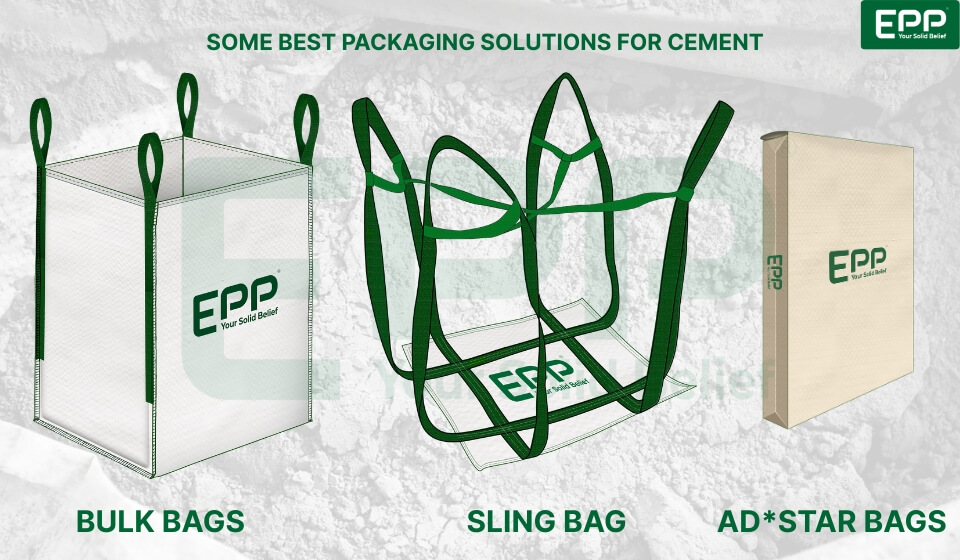
Specialized cement packaging solutions by EPP Vietnam.
Key Factors That Influence Your Final “Portland Cement Cost”
Getting a good unit price is only part of the challenge. Bulk buyers must also consider the following factors that affect the final delivered Portland Cement Cost. Knowing these factors is key to negotiating the lowest Portland Cement Price Per Ton.
Product Type & Logistics
Sourcing specialized cement formulations impacts the baseline material price:
- Ordinary Portland Cement (OPC CEM I 42.5N/52.5N): Represents the benchmark for structural performance and high early strength.
- Portland Pozzolana Cement (PPC / CEM II): Incorporates industrial fly ash or pozzolanic materials, offering enhanced sulfate resistance at a lower price point.
- Type V Sulfate-Resistant Cement: Demands a premium due to restricted tricalcium aluminate (C3A) content required for marine structures.
Logistics modes also alter the landed Portland Cement Price Per Ton. While pneumatic bulk vessels offer low transport costs per unit, they require specialized port silos. Ocean shipping in FIBC bulk bags within 20ft or 40ft dry containers provides greater port flexibility and lower capital overhead for regional import terminals.
Geographical Location & Regional Regulations
Regional energy structures, carbon taxes, and trade tariffs create wide pricing disparities across global markets:
- Southeast Asia & China: High manufacturing capacity and proximity to shipping lanes maintain competitive FOB pricing ($50–$60/MT).
- European Union: Environmental regulations, such as the Carbon Border Adjustment Mechanism (CBAM) and ETS carbon credits, push domestic prices higher ($140–$250/MT).
- North America: High domestic demand and logistics constraints maintain US mill prices around $160/MT.
Before finalizing supply agreements, procurement managers should follow best practices for vetting bulk Portland cement manufacturers to confirm plant capacity and quality compliance.

Global trade routes and port logistics influencing the landed Portland cement cost per ton.
How to Secure Your Portland Cement Bulk Price?
Securing a favourable Portland Cement Bulk Price is crucial due to market volatility. A proactive, strategic approach involving negotiation, market intelligence, and risk mitigation is necessary.
- Strategic Contract Negotiations: Use Long-term Commitments (LTCs) and Price Escalation/De-escalation Clauses tied to transparent industry indices. Commit to higher usage tiers for immediate price benefits.
- Optimize Packaging Specifications: Match the FIBC design to site handling equipment. Selecting top-spout filling and bottom-discharge spouts accelerates batching plant integration.
- Using Financial Tools to Hedge Prices: Utilise Fixed-Price Forward Contracts for budget certainty. Employ Correlated Commodity Hedging on major input costs like coal or natural gas futures.
- Market Intelligence and Supply Chain Diversification: Invest in Detailed Market Forecasting to gain negotiation leverage. Implement a Dual Sourcing Strategy for contingency, and strategically use Inventory Management (stockpiling) to hedge against sharp price increases.
For a comprehensive view of industrial bulk packaging options, explore the broader range of certified FIBC bulk bags designed for international trade.
Conclusion
Managing the landed Portland Cement Price Per Ton requires balancing raw material specification, transport logistics, and packaging protection. While loose bulk offers a low initial material cost, high-specification FIBC bulk bags and sling bags deliver optimal Total Cost of Ownership (TCO) by reducing port congestion, preventing moisture damage, and eliminating product loss during maritime transit.
As a leading FIBC supplier in Vietnam, EPP Vietnam provides ISO 9001:2015 and BRCGS-certified bulk packaging solutions designed specifically for high-density building materials.
Contact EPP Vietnam today to consult with our industrial packaging engineers and receive a customized packaging quote for your global cement supply chain.
Website: epp.vn
Alibaba website: https://eppvietnam.trustpass.alibaba.com/
Email: [email protected] Hotline/ Whatsapps: +84 986 002 888