Polypropylene woven sacks are the quiet backbone of the global supply chain, yet they are perhaps the most misunderstood packaging medium in the current industrial landscape. While most procurement officers see them as simple plastic bags, the reality is that a modern PP woven sack is a high-performance textile, engineered at the molecular level to withstand extreme stress, UV radiation, and environmental hazards.
As a leading technical packaging supplier based in Vietnam, we have seen these sacks evolve from basic commodity items into “smart” packaging solutions. In this guide, we will pull back the curtain on the manufacturing secrets, the hidden science, and the logistical advantages of sourcing polypropylene woven sacks from Southeast Asia’s manufacturing hub.
How Are Polypropylene Woven Sacks Actually Made?
Understanding the complexity of a polypropylene woven sack begins with the manufacturing process. It is not a molded product; it is a woven fabric created through a multi-stage engineering cycle.
1. Extrusion: The Birth of the Tape
The process starts with high-quality, virgin polypropylene (PP) resin pellets. These pellets are melted and extruded into a thin, flat film. This film is then slit into thousands of tiny ribbons known as “tapes.” During this stage, “secret” additives are introduced, including UV inhibitors to prevent sun rot and Calcium Carbonate to provide “anti-skid” properties. The quality of a woven sack is decided here: if the tapes are stretched too thin, the bag becomes brittle; if the resin is impure, the sack will fail under load.
2. Weaving: The Circular Loom
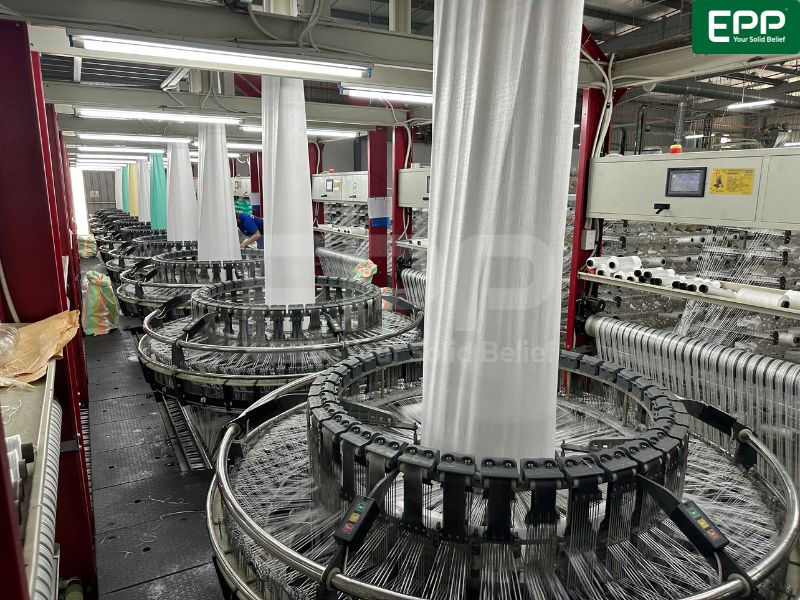
These tapes are loaded onto large circular looms, such as those from Starlinger or Hengli. This is where the tapes are woven in two directions (warp and weft) to create a seamless tube of fabric. Circular weaving is the gold standard because it eliminates side seams, which are the weakest points in any packaging. The tightness of this weave—known as the “mesh count”—determines whether a PP sacks is breathable or sift-proof.
3. Finishing: Lamination and Printing
Once the woven tube is complete, it can be left “plain” for breathability or coated with a thin layer of PP film (lamination) to make it waterproof. In reccent year, many brands who are EPP Vietnam’s customers opt for BOPP (Biaxially Oriented Polypropylene) lamination, which allows for high-definition, photographic-quality printing directly onto the PP woven sack.
5 Things You Didn’t Know About PP Woven Sacks
Fact 1: They Have a “Memory” for Stress
Polypropylene is a thermoplastic polymer with high elastic recovery. When you drop a 50kg polypropylene woven sack, the fabric actually stretches slightly to absorb the kinetic energy and then “remembers” its shape, preventing a burst.
Fact 2: They Are Inherently Bacteria-Resistant
Unlike burlap or paper, the synthetic nature of a PP woven sack means it does not absorb moisture or organic matter. This makes it naturally resistant to mold, rot, and bacterial growth—a critical feature for agricultural exports like rice or grain.
Fact 3: The Secret World of “Anti-Skid”
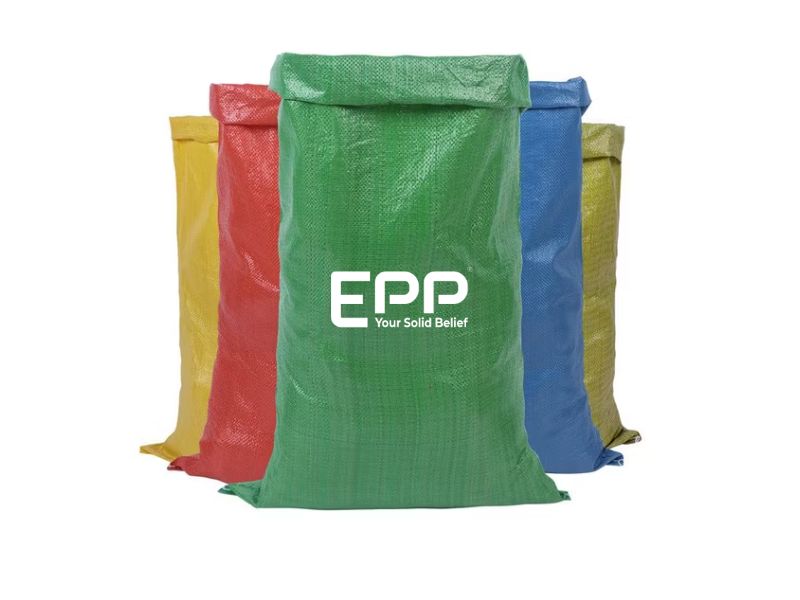
High-quality polypropylene woven sacks are treated with a “twisted weave” or specialized coatings. This increases the coefficient of friction, ensuring that stacks of bags “grip” one another and do not slide off pallets during high-speed transit.
Fact 4: They Are Heroes of Civil Engineering
Beyond the warehouse, the woven bag is a vital tool in “Geosynthetics.” Because of their high tensile strength, they are used to build temporary dams and reinforce riverbanks against erosion in major infrastructure projects.
Fact 5: 100% Recyclability
The “Mono-material” movement has made polypropylene woven sacks one of the most eco-friendly options. Because the bag, thread, and lamination are often all made from the same PP family, the entire sack can be recycled into new industrial products without expensive chemical separation.
Why should you choose Polypropylene woven sacks from Vietnam
The global sourcing map has shifted, and Vietnam has emerged as the premier hub for high-tech polypropylene woven sacks. Leading Vietnamese factories utilize Starlinger (Austrian) and Hengli circular looms to ensure uniform weight and zero weaving defects.
Vietnam’s trade agreements, such as the EVFTA and CPTPP, also allow for reduced or zero tariffs on PP woven bags, making them significantly more cost-effective. In our Vietnam facility, we treat the PP sack with pharmaceutical-grade care; our “Clean Room” extrusion and ultrasonic cutting technology ensure zero loose threads or internal dust, a mandatory requirement for food-grade industries shipping salt, sugar, or flour.

When sourcing polypropylene woven sacks, savvy buyers look for reliable PP woven bag supplier to ensure supply chain stability. At EPP Vietnam, we provide over 20 years of experience in textile engineering, delivering millions of sacks to over 50 countries. Our expertise is backed by world-class Starlinger technology and a technical team that consults on optimizing GSM and Denier for your specific cargo.
Our authority is cemented by global certifications, including ISO 9001:2015, BRCGS for food-grade environments, and UN ratings for hazardous goods. We build trustworthiness through absolute transparency, offering virtual factory tours, detailed QA reports for every batch, and a “No-Risk” guarantee that ensures our polypropylene woven sacks always meet your exact technical specifications or we replace them at our cost.
Expert FAQ
Q: Can a polypropylene woven sack be made waterproof?
A: Yes. While the woven fabric has tiny pores, we apply a PE/PP lamination layer or insert a poly liner. This transforms the polypropylene woven sacks into a 100% moisture-proof barrier.
Q: What is the difference between “Denier” and “GSM” in a sack?
A: “Denier” refers to the weight of the individual plastic tapes, while “GSM” (Grams per Square Meter) refers to the total weight of the finished fabric.
Q: How long can these sacks stay in the sun?
A: A standard polypropylene woven sack without UV additives will degrade in weeks. However, our specialized sacks are treated with UV stabilizers to withstand 2,000+ hours of intense sunlight.
Q: Is it possible to print high-resolution logos on woven fabric?
A: Absolutely. By using BOPP lamination, we can print multi-color, high-definition graphics, turning your polypropylene woven sack into a powerful marketing tool.
Conclusion
The polypropylene woven sacks are far more than the simple containers; it is a meticulously engineered solution for the modern age. By understanding the “hidden” science businesses can make smarter procurement decisions that reduce waste and increase safety.
As the industry moves toward “Smart Sacks” with 100% circular recyclability, partnering with a technologically advanced supplier in Vietnam is the key to staying competitive. If you are ready to upgrade your packaging from “commodity” to “high-performance,” contact our technical team today for a full audit of your polypropylene woven sack specifications.