
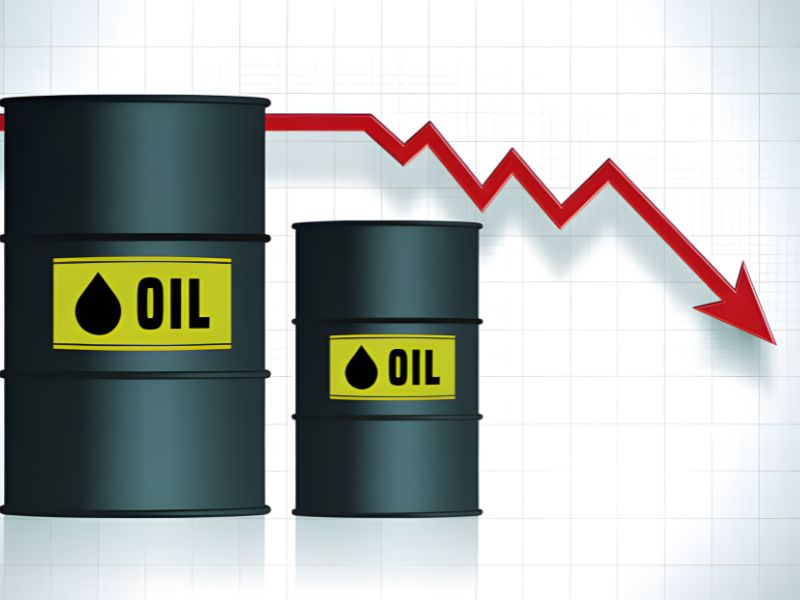
Oil prices have sent a seismic shock through the global commodities market on Wednesday, April 8, 2026, crashing through the psychological $100-per-barrel floor in a matter of minutes. The catalyst for this historic liquidation was the sudden announcement of a two-week ceasefire brokered by the Trump administration, effectively sucking the geopolitical risk premium out of the energy sector. For months, traders had baked in a “war premium” that kept crude trading at elevated levels, but as the news of a 14-day diplomatic pause hit the wires, the market reacted with a violent “sell-off” that caught many by surprise.
As a leading FIBC (Flexible Intermediate Bulk Container) supplier based in Vietnam, our operations are deeply intertwined with the volatility of energy markets. Because the polypropylene (PP) resin used to manufacture our jumbo bags and bulk bags is a byproduct of oil refining, we monitor these fluctuations with eagle-eyed precision. When the cost of energy shifts this dramatically, it ripples through the entire supply chain—from the plastic pellets in our extruders to the freight rates of the vessels carrying our super sacks to the United States and Europe.
Why Oil Prices Cratered on the Ceasefire News
The primary reason oil prices cratered following the announcement was the immediate evaporation of “uncertainty.” In the world of commodities, prices are often driven more by potential disruptions than actual ones. The “Trump Ceasefire” acted as a massive release valve for a market that was coiled tight with tension.

Traders who had been “long” on crude as a hedge against escalating conflict suddenly found themselves overexposed. As the ceasefire terms were detailed on April 8, 2026, a wave of automated algorithmic trading was triggered. These “black box” systems are programmed to sell when specific support levels—like the $100 mark—are breached. This created a feedback loop: as the price dropped, more sell orders were triggered, leading to a vertical plunge in oil prices that hadn’t been seen in months. Furthermore, the news signaled a potential return to diplomatic stability, suggesting that the supply-side constraints that had plagued the market might finally be easing.
The Statistical Breakdown of Falling Oil Prices
To understand the magnitude of today’s move, we must look at the hard data. The “Flash Crash” saw Brent Crude and WTI (West Texas Intermediate) move in near-perfect synchronization, though the velocity of the drop varied across different delivery months. The following table illustrates the dramatic shift in market value within the first few hours of the announcement:
Market Reaction Table: April 8, 2026 (from investing.com)
| Benchmark Asset | Current Price (USD) | Intraday Change ($) | % Change |
| Crude Oil WTI Futures | $96.4 | -$16.60 | -14.7% |
| Brent Oil Futures | $94.9 | -$14.2 | -13.1% |
| Natural Gas Futures | $2.72 | -$0.12 | -4.2% |
| Dollar Index (DXY) | $98.6 | -$1.1 | -1.1% |
Data represents intraday trading action on April 8, 2026. Volume in the “front-month” futures contracts spiked to 300% above the 20-day moving average, indicating a massive institutional exit from long positions.
For a manufacturer like us in Vietnam, these statistics are more than just numbers on a screen. A $10 drop in oil prices can eventually lead to a significant reduction in the “Energy Surcharge” applied to our raw material resin orders, though there is typically a 30-day lag before these market prices reflect in the chemical supply chain.
A View from the Commodities Trading Floor
From the perspective of a veteran trader, the atmosphere following the ceasefire was pure chaos. Imagine a trading floor where the screens suddenly turn a vibrant, bleeding red. The “experience” of such a move is visceral; it’s the sound of hundreds of orders hitting the tape simultaneously and the realization that the fundamental “story” of the market changed in the time it took to read a tweet.
In the commodities pits, the talk shifted instantly from “supply shortages” to “demand destruction” and “liquidation.” Traders who had spent weeks defending the $100 support level were forced to “capitulate,” a term used when investors finally give up and sell their positions at any available price.
At our headquarters in Vietnam, our procurement team was on high alert on April 8, 2026. We saw the oil prices ticker dive and immediately began analyzing our resin hedging strategy. In our experience, when a “geopolitical bubble” bursts this cleanly, the initial move is often followed by a period of “consolidation” where the market tries to find a new, stable floor. The consensus on the floor was clear: the “fear trade” is over, and the “fundamental trade” has begun.
What This Means for the Global Economy
The plunge in oil prices below $100 is a massive win for the global fight against inflation. For the past year, high energy costs have acted as a “tax” on both consumers and manufacturers.
- Consumer Relief: Lower crude costs eventually translate to lower prices at the pump. This puts more disposable income into the pockets of consumers, which can stimulate retail spending.
- Logistics and Freight: For the shipping industry, which moves our big bags across the ocean, bunker fuel is the largest variable expense. A sustained dip in oil prices should lead to a reduction in “Fuel Surcharges” (FSC) for ocean freight and trucking.
- Manufacturing Costs: For the plastic and textile industries in Southeast Asia, lower energy costs mean lower overhead. This allows us to maintain competitive pricing for our international clients even as other costs continue to rise.
If oil prices stay in the $90–$95 range, central banks may feel less pressure to hike interest rates, potentially leading to a “soft landing” for the global economy in 2026.
Will the Sub-$100 Trend Hold?
The “trending” question on every financial forum right now is: “Is this a temporary dip or a permanent shift?” The 14-day window of the ceasefire is the critical variable.
If the ceasefire is extended or leads to a permanent peace treaty, we could see oil prices drift even lower, perhaps testing the $85 support level. However, if Day 15 arrives and hostilities resume, the market could see a “dead cat bounce,” where prices snap back toward $105 as traders bake the risk premium back in.

From our vantage point as a leading FIBC exporter, we are preparing for “volatility” rather than a straight line down. We are advising our clients to lock in orders now while freight and resin outlooks are bearish, rather than waiting for a bottom that might not stay low for long.
Conclusion
The sudden drop in oil prices below $100 on April 8, 2026, is a watershed moment for the year. While the Trump ceasefire was the immediate trigger, the underlying statistics suggest that the market was already looking for an excuse to move lower. For the global economy—and for manufacturers like us in Vietnam—this price correction provides a much-needed breath of fresh air.
Whether you are a commodities trader or a procurement manager buying super sacks, keeping a close eye on oil prices is essential. The next two weeks will determine if we have entered a new era of “cheap energy” or if this was simply a brief pause in a long-term bull market.Expert Insight: “Market trends are driven by news, but they are sustained by data. Currently, the data suggests that the $100 ceiling will be very difficult to break through again in the short term.”
