Mastering customs procedures for importing goods from Vietnam is essential for procurement managers looking to optimize landed costs and eliminate freight delays. As Vietnam’s economy continues its trajectory as a rising power in Southeast Asia, demand for Vietnamese manufactured goods—ranging from electronics to industrial bulk packaging—has surged.
However, misclassified tariff lines or missing origin documentation lead directly to customs holds, port penalties, and expensive storage demurrage fees. As a leading global exporter of industrial packaging, EPP Vietnam leverages over 20 years of trade expertise to ensure seamless export compliance alongside our certified bulk bags. Below is your complete operational guide to managing import and export customs procedures when sourcing from Vietnam.
What Are Customs Procedures When Importing Goods From Vietnam?
When importing goods manufactured in Vietnam, customs procedures represent the structured operational steps required to satisfy both Vietnam export customs controls and destination-country import regulations. This process ensures trade compliance, proper tariff classification, accurate valuation, and adherence to safety and quality standards.
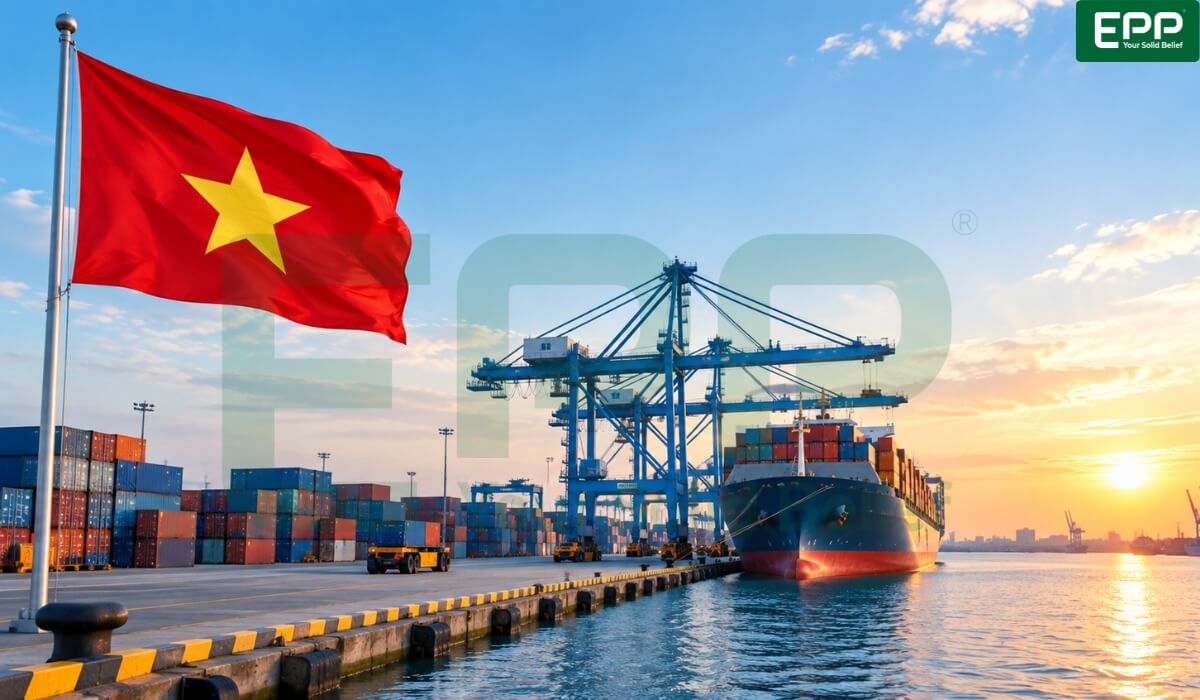
Mastering customs procedures ensures seamless supply chain operations and zero delay costs.
Proper trade management requires absolute data consistency across all commercial dossiers—including Sales Contracts, Commercial Invoices, Packing Lists, Bills of Lading, and Certificates of Origin. Any discrepancy between declared line items and physical cargo can result in administrative fines, audit re-classifications, or physical container holds.
General Customs Procedures for Importing Goods From Vietnam
Although the exact process differs by product and destination, international buyers can generally organize the transaction around six key operational stages:
1. Confirm the Product and HS Classification
Before placing an order, define the exact product specification (composition, intended use, quantity, packaging) and confirm the applicable HS classification. Because HS codes dictate tariff rates, customs controls, and permit requirements, buyers should verify classification with relevant customs authorities or a licensed broker rather than relying solely on supplier historical records.
2. Prepare Commercial and Customs Documents
Required documentation varies by shipment and destination. Key commercial records include:
- Commercial Invoice & Packing List
- Bill of Lading (B/L) or Air Waybill
- Certificate of Origin (C/O), where applicable
- Customs declaration & import/export permits
- Product-specific certificates or inspection documents
Vietnam’s official Trade Information Portal lists the customs declaration and commercial invoice as primary export documents. Always verify destination-specific paperwork requirements with your customs broker prior to vessel departure.
3. Complete Vietnam Export Customs Clearance
The Vietnamese exporter submits the electronic declaration via the VNACCS system. The system automatically routes filings into three inspection channels:
- Green Channel : Automated clearance for immediate cargo release.
- Yellow Channel : Requires detailed document verification by customs officers.
- Red Channel : Involves both document review and physical cargo examination.
Providing clear product descriptions and matching document values prevents unnecessary Yellow or Red channel routing.
4. Arrange International Transportation
Once export clearance is complete, the shipment moves through the supply chain: Vietnam Supplier → Export Customs → Vietnam Port → International Shipping → Destination Port → Import Customs → Buyer Warehouse
Buyers and sellers must clarify responsibilities, costs, and risks under the agreed Incoterms (e.g., FOB, CIF, DDP). For sea freight, buyers should evaluate total supply chain schedules rather than port-to-port sailing time alone. Learn more about transit windows in our guide on sea freight delivery times from Vietnam.
5. Complete Destination Import Customs
Upon vessel arrival, the importer or customs broker manages destination entry by submitting import declarations, settling duties/taxes, presenting Certificates of Origin, and filing required inspection or conformity permits tailored to destination laws.
6. Customs Release and Final Delivery
After satisfying import requirements and clearing port charges, the shipment moves through final port release and inland transport directly to the buyer’s warehouse.
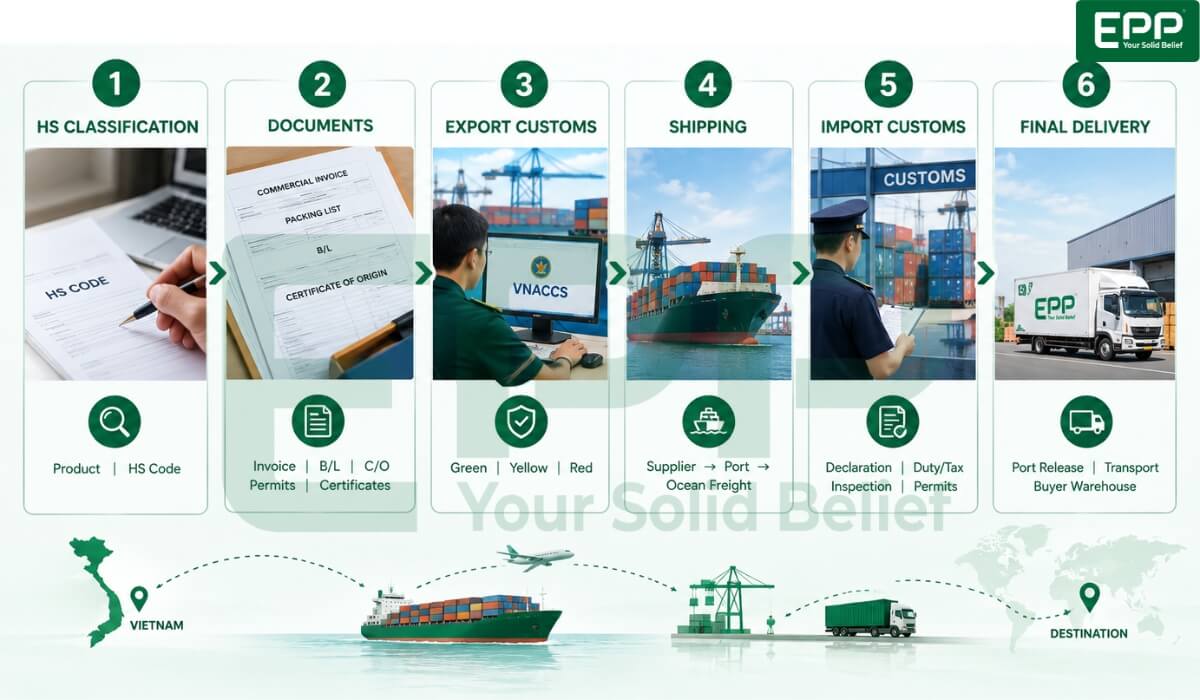
Comprehensive flowchart of customs procedures for importing goods from Vietnam including document preparation and clearance.
Case Study: Customs Clearance for FIBC Jumbo Bags from Vietnam
Applying this 6-step framework to FIBC jumbo bags (Flexible Intermediate Bulk Containers) demonstrates how technical packaging moves efficiently when sourcing from Vietnam: a strategic move.
- Step 1: Product & HS Code Confirmation: Specs (1,000 kg SWL, 5:1 SF, woven PP) are finalized under HS Code 6305.32.00 (woven PP bulk bags) rather than general plastic items (Chapter 39), avoiding misclassification fines.
- Step 2: Document Preparation: EPP Vietnam issues the Invoice, Packing List, C/O (Form EUR.1/CPTPP for 0% preferential tariffs), and safety test certificates.
- Step 3: Vietnam Export Customs: Submissions via the VNACCS system at Cat Lai Port match perfectly, securing automated 1-hour Green Channel clearance.
- Step 4: International Freight: Under FOB Cat Lai, EPP Vietnam manages port loading before vessel departure to destination ports (e.g., Rotterdam or Long Beach).
- Step 5: Destination Import Entry: The buyer’s broker files import entries with the preferential C/O, reducing duties to 0% with VAT assessed on CIF value.
- Step 6: Terminal Release: Following customs clearance, the container is released for direct inland haulage to the buyer’s facility.

Strategic Logistics & Sourcing Optimizations for Global Buyers
Aligning international trade compliance with freight operations maximizes supply chain efficiency when sourcing from Vietnam.
Transit Time Planning & Port Selection
Factoring ocean transit times into inventory planning ensures seamless port clearance and warehouse delivery. To evaluate regional shipping windows across North America, Europe, and Asia-Pacific.
Incoterm Selection (FOB vs. CIF vs. DDP)
- FOB (Free On Board): The seller manages export clearance in Vietnam, inland trucking, and port handling. The buyer retains control over ocean freight selection, insurance, and import customs entry at the destination port.
- DDP (Delivered Duty Paid): The seller assumes complete liability, managing export processing, ocean carriage, destination customs clearance, and final door-to-door delivery.
Common Pitfalls in Vietnam Import Customs & How to Avoid Them
International buyers frequently encounter preventable friction during cross-border operations. Implementing strict quality controls eliminates these primary risks:
- Document Discrepancies Across Filings: Mismatches between unit counts on the Commercial Invoice and the Master Bill of Lading lead to immediate customs holds. Mandate a pre-shipment cross-verification process before ocean bills are finalized.
- Missing ISPM 15 Fumigation Seals: Cargo shipped on solid wood pallets must display ISPM 15 heat-treatment or fumigation stamps. Lacking proper phytosanitary certificates can trigger mandatory port quarantine or rejected entry.
- Inadequate Port Free Time (Demurrage & Detention): Physical inspections (Red Lane) can take up to 5 business days. Always negotiate 14 to 21 days of combined demurrage and detention free time directly with your ocean carrier.
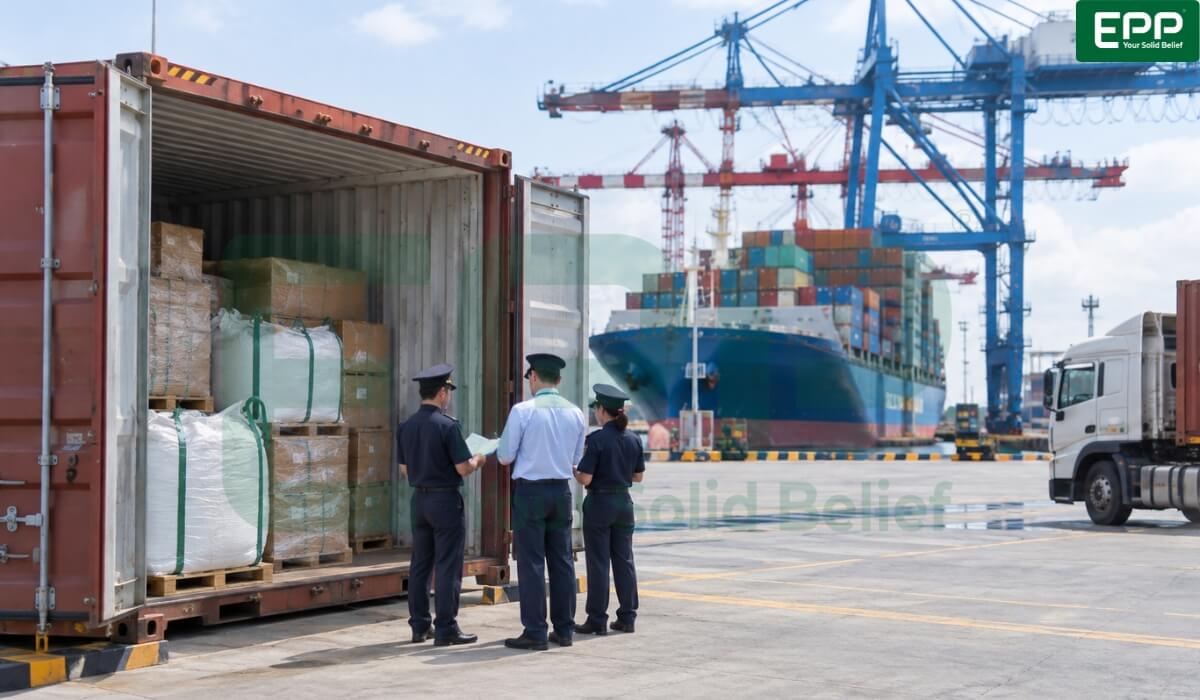
Pre-verifying documents and securing port free time prevents costly customs holds and demurrage fees.
Frequently Asked Questions (FAQ)
How to Reduce Customs Delays When Importing From Vietnam?
Partner with established Vietnamese manufacturers with dedicated export departments, pre-clear draft documents with your broker prior to sailing, and maintain a clean compliance record for consistent Green Channel routing.
Who handles customs when importing from Vietnam?
Under FOB, the seller manages export clearance in Vietnam while the buyer handles import entry at destination. Under DDP, the seller handles clearance at both origin and destination borders.
Do I need a customs broker to import from Vietnam?
Yes. Over 90% of global importers use licensed customs brokers to navigate automated e-customs filings, tariff schedules, and local trade regulations efficiently.
How Import Duties and Taxes Are Determined?
Duties are calculated on the ad valorem CIF value using the product’s HS Code. Valid Free Trade Agreement certificates (e.g., Form EUR.1 for EVFTA or Form CPTPP) can reduce tariffs down to 0%, with local VAT calculated on the combined CIF value plus duty.
Strategic Support from EPP Vietnam for Global Procurement
Understanding customs procedures when importing goods from Vietnam empowers global buyers to build secure, cost-effective supply chains. As Vietnam’s leading FIBC supplier, EPP Vietnam combines world-class cleanroom manufacturing (BRCGS, ISO 22000, ISO 9001) with end-to-end export support. We ensure every bulk packaging order meets strict international standards while delivering accurate, fully compliant export dossiers.
Contact our export trade specialists today to request technical product specifications, confirm compliance documentation, or receive a customized quote for your bulk packaging needs:
Website: epp.vn
Alibaba website: https://eppvietnam.trustpass.alibaba.com/
Email: [email protected] Hotline/ Whatsapps: +84 986 002 888