Procurement directors and supply chain managers face a constant balancing act: lowering bulk packaging costs while meeting strict ESG sustainability targets. FIBCs, or jumbo bags, are the backbone of dry bulk logistics. However, discarding them after a single use wastes capital and inflates waste management fees, while reusing them without strict safety protocols risks catastrophic container failure.
As a leading FIBC supplier in Vietnam, EPP Vietnam connects international buyers with audited, high-precision manufacturing networks across Asia. We help industrial clients build resilient, cost-effective packaging strategies that balance structural safety with circular economy principles. This guide provides actionable protocols for big bags recycling and safe reuse, helping you maximize ROI without compromising safety.
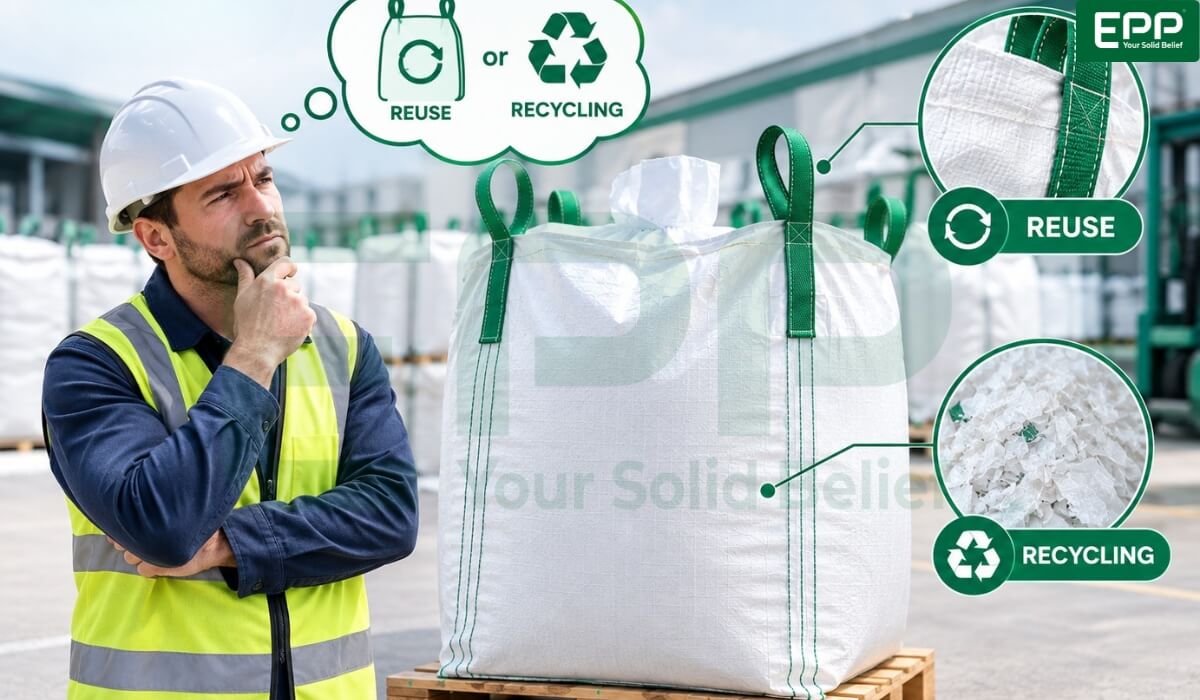
Should we reuse or recycle old bulk bags?
Reusing vs. Big Bags Recycling
Before implementing an internal reuse or recycling protocol, packaging engineers must establish a clear structural baseline. The distinction between a reusable container and a single-use bag lies in its engineering safety factor, governed by international standards such as ISO 21898.
Single-Trip FIBCs (SF 5:1)
Single-trip bulk bags are engineered with a 5:1 Safety Factor (SF). This rating means the bag is certified to withstand a ultimate break load equal to five times its Safe Working Load (SWL). However, an SF 5:1 rating is intended for a single filling and discharge cycle.
Once emptied, the structural integrity of the woven polypropylene, stitching seams, and lifting loops can no longer be guaranteed for heavy-load hoisting. Attempting to reuse an SF 5:1 container for heavy industrial materials creates severe workplace hazards. Therefore, single-trip containers should be directed into a structured big bags recycling stream after their initial run.
Multi-Trip FIBCs (SF 6:1)
Multi-trip bulk bags are engineered specifically for closed-loop packaging systems. Built with an SF 6:1 ratio, these heavy-duty builder bags utilize higher fabric GSM (grams per square meter), reinforced seam construction, and heavy-tenacity webbing.
According to ISO 21898 testing protocols, SF 6:1 reusable FIBC bags are designed to withstand multi-cycle handling, emptying, and refilling, provided they pass rigorous cleaning and safety inspections between uses.
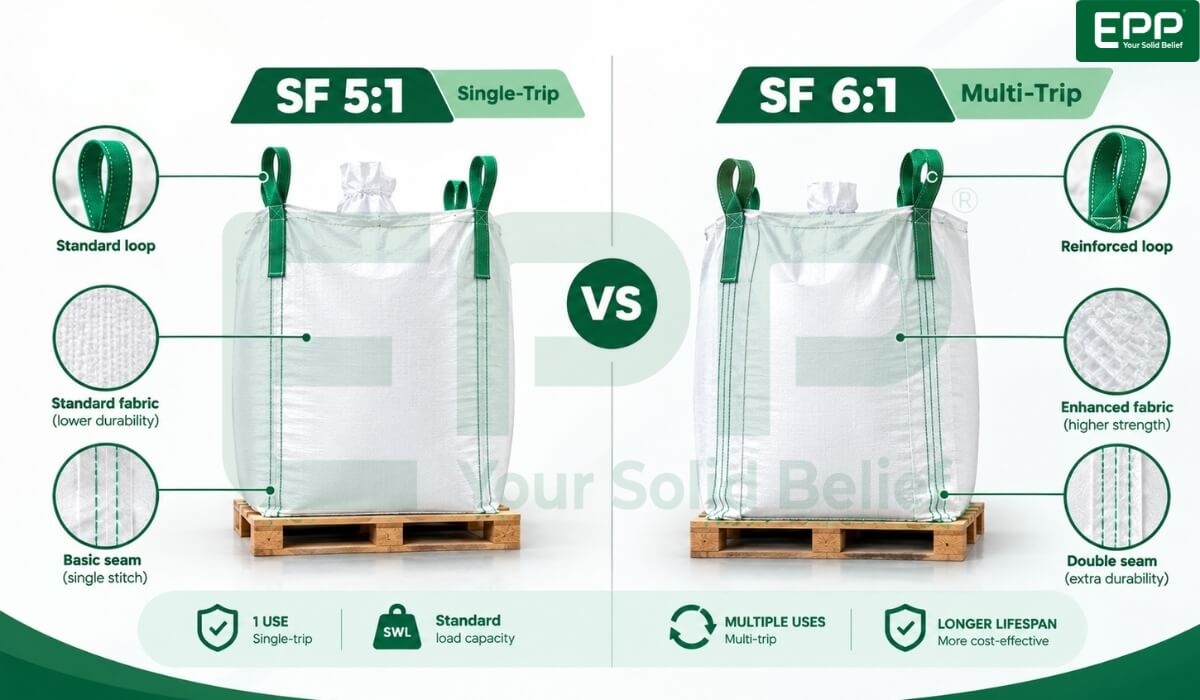
Understanding the safety factor rating is essential before deciding whether to reuse or recycle an FIBC.
To evaluate whether your current inventory strategy aligns with new or pre-owned packaging parameters, read our technical comparison on used bulk bags vs new bulk bags.
| Specification Parameter | Single-Trip Bulk Bags (SF 5:1) | Multi-Trip Bulk Bags (SF 6:1) |
| Primary Design Intent | Single filling & discharge cycle | Continuous closed-loop reuse |
| Safety Factor Ratio | 5:1 (Break load 5x SWL) | 6:1 (Break load 6x SWL) |
| Typical Fabric Weight | 110 – 180 GSM | 190 – 240+ GSM |
| End-of-Life Protocol | Direct to PP jumbo bag recycling | Multi-cycle reuse, then recycling |
| Cost Profile | Lower upfront cost | Higher initial cost, lower cost-per-use |
Step-by-Step Guide to Safely Reusing Bulk Bags
Implementing a compliant FIBC reuse program requires strict Standard Operating Procedures. Allowing uninspected bags back into a filling line invites line stoppages, product contamination, and dynamic hoisting failures.
Step 1: Comprehensive Physical Inspection
Every returned container must undergo a multi-point mechanical audit before re-entry into service. Inspectors must check for:
- Lifting Loops: Abrasion, fraying, broken stitch rows, or thermal deformation.
- Woven Fabric Body: Punctures, tears, panel stretching, or UV degradation (indicated by fabric chalking or discoloration).
- Seams & Closures: Slipped stitches, frayed tie tapes, or damaged discharge spouts.
If a bag exhibits any structural defect, it must be removed from the reuse line and sorted for polypropylene bag recycling.
Step 2: Industrial Cleaning and Decontamination
Dust, chemical residues, and environmental debris must be cleared from the bag interior. Depending on the previous cargo, cleaning protocols range from high-pressure air jetting to industrial wash cycles.
When handling food products, pharmaceuticals, or ultra-fine chemicals, washing the outer shell may not eliminate contamination risks. In these cases, installing a replacement PE liner inside a clean outer woven shell ensures absolute hygiene while retaining the bag’s structural value.
Step 3: Chain-of-Custody Logging
Maintain a physical or digital tracking tag on every multi-trip bag. Document the number of fill cycles, the type of material previously contained, and the date of the last inspection. Discard bags that have reached their maximum certified service lifespan.
Creative Repurposing Ideas Before Final Big Bags Recycling
When a bulk bag can no longer safely hoist 1,000 kg to 2,000 kg overhead, it may still offer utility for non-critical, ground-level industrial tasks before undergoing final material processing.
- On-Site Waste Collection Stations: Position damaged or single-trip bags across manufacturing facilities, construction sites, or warehouses as heavy-duty collection bins for scrap wood, metal turnings, or plastic film.
- Erosion Control and Flood Mitigation: Fill decommissioned containers with gravel, sand, or demolition rubble to create temporary retaining walls, soil erosion barriers, or water diversion dikes.
- Equipment & Storage Covers: Cut open the side panels of damaged bags to create durable, water-resistant polypropylene tarps for covering machinery, timber pallets, or raw material stockpiles stored outdoors.
- Composting and Agricultural Storage: Utilize breathable, uncoated bag shells for agricultural green waste, compost curing, or dry firewood storage.
To review heavy-duty load capacities commonly repurposed in industrial setups, explore our guide on commonly used 2000kg bulk bags .
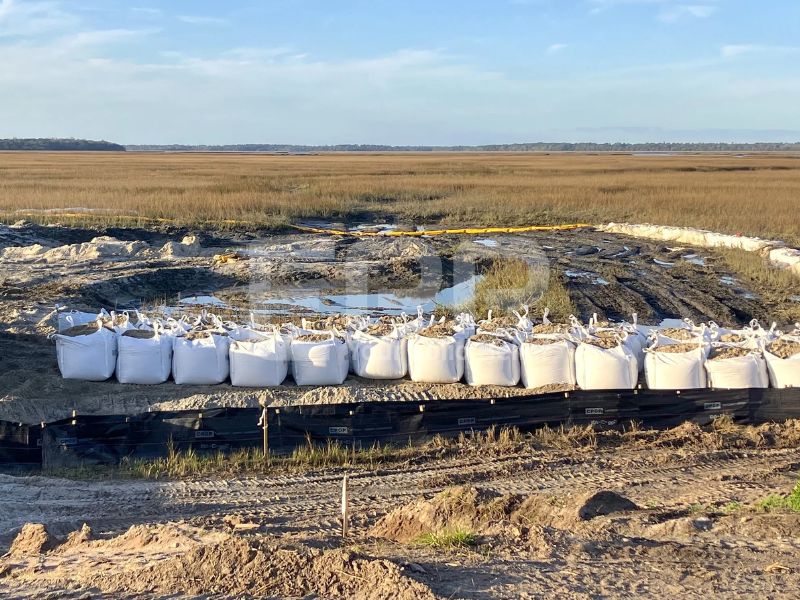
A row of decommissioned bulk bags repurposed as a temporary retaining wall and soil erosion barrier.
The Industrial Big Bags Recycling Process
Once an FIBC reaches the end of its functional life, it transitions into industrial bulk bag recycling. Super sacks are manufactured primarily from 100% virgin polypropylene (polypropylene resin code #5), a thermoplastic polymer that retains excellent mechanical properties when reprocessed.
1. Collection and Grading
Post-industrial or post-consumer bulk bag scrap is collected and sorted based on contamination levels:
- Grade A Scrap: Clean, clear, or white fabric with minimal printing, free of heavy chemical residues or dirt.
- Grade B Scrap: Slightly soiled fabric with moderate printing, minor color variations, or light dust contamination.
- Grade C Scrap: Heavy contamination, oil residues, or mixed materials requiring aggressive washing.
For a detailed analysis of scrap market applications and scrap material behavior, read our breakdown on PP jumbo bag scrap features and applications.
2. Shredding, Washing, and Separation
Sorted bags are fed into heavy-duty rotary shredders that reduce the tough woven fabric into small, uniform flakes. These flakes undergo high-friction wet washing to remove residual contents, adhesives, labels, and dirt. Sink-float separation tanks isolate the polypropylene from high-density contaminants.
3. Drying, Extrusion, and Pelletizing
The cleaned PP flakes are thermally dried and transferred to a compounding extruder. The polymer is melted under controlled temperatures, filtered through fine mesh screens to capture micro-impurities, and extruded into continuous strands.
These strands are water-cooled and pelletized into high-quality reprocessed polypropylene (rPP) pellets. These pellets are then used to manufacture drainage pipes, automotive parts, plastic pallets, and construction materials.
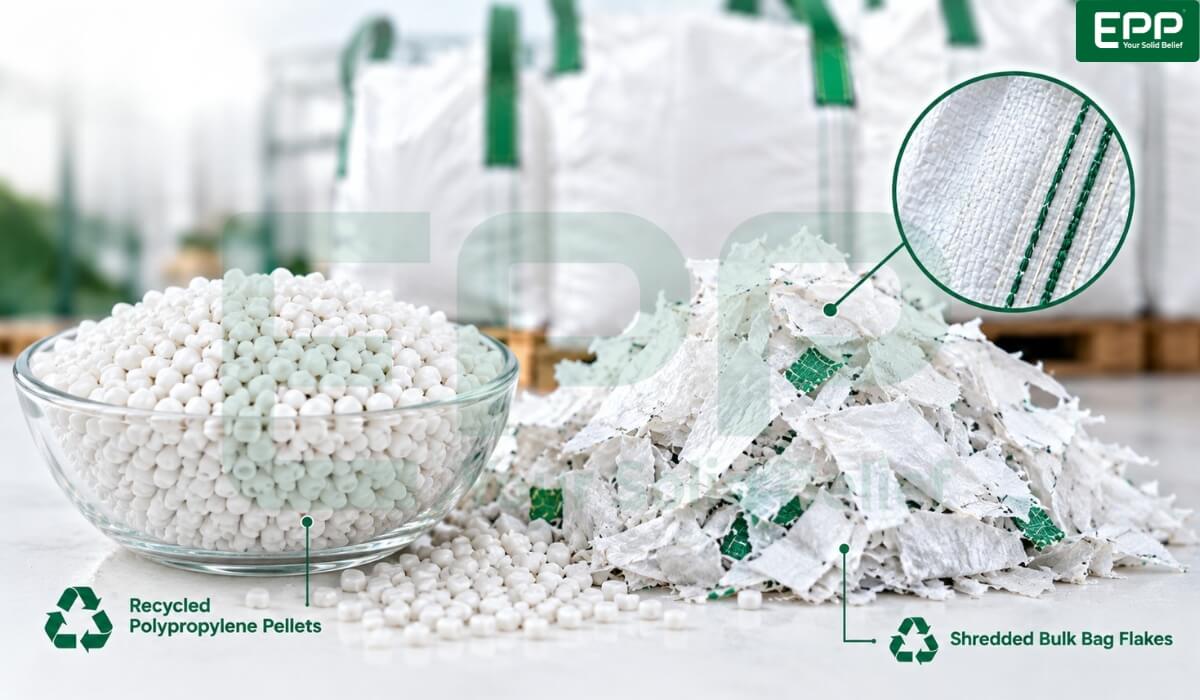
Industrial recycling transforms spent woven PP bags into high-grade reprocessed plastic pellets.
Common Mistakes When Reusing or Recycling Big Bags
Navigating closed-loop packaging requires avoiding critical procedural errors that compromise safety or degrade recyclate quality:
- Reusing Single-Trip (SF 5:1) Bags for Heavy Loads: Treating single-use bags as multi-trip containers to cut costs is a major safety violation. Single-trip fabric degrades under dynamic stress, risking sudden tearing during overhead cẩu operations.
- Failing to Remove Contaminated Liners: Sending heavily contaminated polyethylene liners through standard plastic scrap processing clogs filtration systems and ruins entire batches of reprocessed PP resin. Liners should be separated from outer woven shells before processing.
- Mixing Plastic Polymers: Attempting to recycle FIBCs containing non-PP components (such as unapproved polyester lifting straps or PVC coatings) pollutes the recycling stream and reduces final pellet purity.
- Ignoring Static Safety Classifications: Reusing Type C (conductive) or Type D (dissipative) electrostatic bags without testing their ground continuity or static discharge properties can create fire hazards in explosive dust environments (IEC 61340-4-4).

FAQs About Big Bags Recycling and Reusing
Can all FIBC bulk bags undergo the big bags recycling process?
Most FIBCs made from 100% virgin polypropylene (PP #5) are fully recyclable. However, bags used to transport hazardous chemicals, toxic minerals, or radioactive materials cannot enter standard recycling streams and must be disposed of according to strict local hazardous waste regulations.
What is the difference between Grade A, B, and C recycled PP bulk bags?
Grades reflect scrap cleanliness and purity. Grade A scrap consists of clean, unprinted white fabric that yields high-clarity rPP pellets. Grade B scrap has light dirt or print. Grade C scrap contains heavy contamination or dark pigments, yielding lower-value recycled resin suitable for thick industrial products.
Can used FIBCs with PE liners be recycled?
Yes, but the polyethylene (PE) liner must be separated from the polypropylene (PP) outer bag first. Because PE and PP have different melting points and melt flow rates, recycling them together compromises the mechanical strength of the recycled resin.
How many times can a Multi-Trip (SF 6:1) big bag be reused?
An SF 6:1 multi-trip bag typically completes 2 to 8 reuse cycles, depending on cargo abrasiveness, filling and discharge protocols, handling care, and UV exposure. Thorough inspection and cleaning are mandatory between every single cycle.
Conclusion
Building an efficient bulk packaging strategy requires balancing immediate operational needs with long-term environmental responsibility. By understanding the structural boundaries of SF 5:1 versus SF 6:1 containers, enforcing strict inspection SOPs, and routing spent packaging into industrial big bags recycling channels, businesses can lower packaging costs while reducing environmental impact.
EPP Vietnam is dedicated to helping global enterprises build secure, compliant, and cost-effective bulk packaging supply chains. Contact our packaging engineering team today to review your technical specifications, optimize container lifecycle management, or request a competitive quote for your global operations.
🌐 Website: https://epp.vn – https://eppvietnam.trustpass.alibaba.com
📲 +84 986 002 888 – [email protected]