Procurement executives all around the word face severe operational risks when sourcing industrial packaging. Saving a fraction of a dollar per unit on cheap poor quality PP super sacks—commonly called Jumbo bags or bulk bags—frequently leads to catastrophic line stoppages, product loss, and workplace injury.
This technical report provides an executive overview of the hidden dangers behind substandard FIBCs, outlines physical warning signs, details quality testing protocols, and presents certified packaging solutions.
What Defines Poor Quality PP Super Sacks?
A poor quality PP super sack is an industrial bulk container manufactured using degraded raw materials, insufficient fabric weight (GSM), or compromised stitching standards. Synthetic polypropylene (PP) relies on long, intact molecular chains to achieve the tensile strength required for heavy loads.
When manufacturers introduce cheap post-industrial scrap (“regrind”) or excess calcium carbonate (CaCO3) fillers, the fabric strength deteriorates rapidly under stress. Substandard bags fail to meet international safety standards, leading to seam unzipping and loop snapping during warehouse handling.
- Gray or Off-White Color: Pure, strong bags use 100% virgin polypropylene. Discolored or gray tints mean the manufacturer added cheap recycled plastic or excess calcium carbonate, which destroys tensile strength.
- Frayed or Thin Lifting Loops: Weak webbing or poorly anchored loops cause straps to tear away from the bag body under a fraction of the rated load.
- Loose or Skipping Stitching: Inadequate lock-stitching on seams and spouts allows fine powders to leak out or causes seams to unzip entirely.
- Missing Safety Documentation: Bags lacking clear Safe Working Load (SWL) tags, safety factor ratios (such as 5:1 or 6:1), or batch traceability lead to compliance and safety risks.
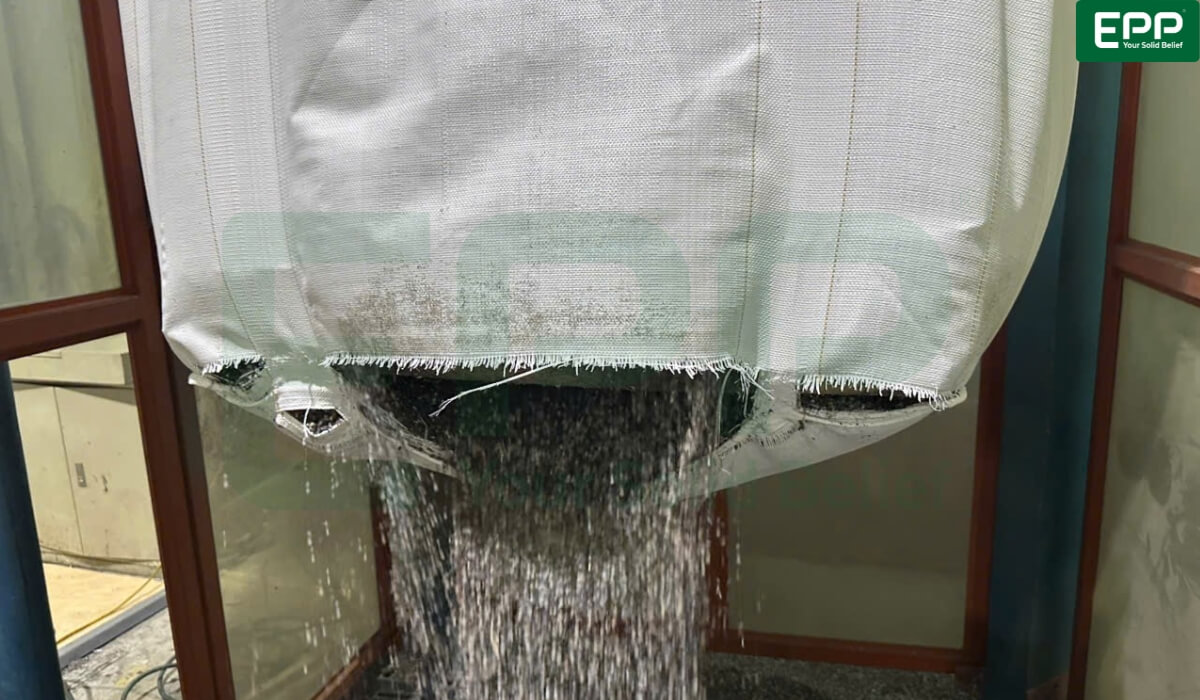
Physical inspection of a torn seam on a low-quality PP super sack
Critical Catastrophes Caused by Poor Quality PP Super Sacks
Using low-quality bulk bags exposes US industrial plants to severe financial, operational, and regulatory liabilities.
1. Structural Failure and OSHA Compliance Hazards
When a bulk bag loaded with 1,000 kg to 2,000 kg (2,200 to 4,400 lbs) suffers loop tearing or bottom bursting during crane hoisting, falling material creates immediate threats to personnel. Substandard bags fail to achieve their rated Safety Factor (SF)—delivering a weak 3:1 ratio instead of the required 5:1 (Single-Trip) or 6:1 (Multi-Trip) standard—violating US OSHA workplace safety regulations.
2. Material Spills and Product Contamination
Poorly stitched seams allow fine powders, agricultural seeds, or chemicals to leak during transit. Uncertified manufacturing environments also introduce loose thread fibers, dust, or metal shavings into food-grade products. Plant operators should follow established FIBC safe handling guidelines to minimize risk during daily operations.
3. Rapid UV Degradation Outdoors
Polypropylene degrades quickly under sunlight unless treated with suitable UV masterbatch. Inferior manufacturers of poor quality PP super sacks omit expensive UV additives to save money. Under intense sunlight, untreated fabric loses up to 80% of its tensile strength within weeks, causing bags stored outdoors to crumble during lifting.
4. Electrostatic Sparks and Dust Explosion Risks
Filling and emptying dry bulk powders generates static electricity. Using an ungrounded Type A or Type B bag in an environment with flammable dust creates dangerous sparks. Without proper compliance with IEC 61340-4-4 standards (Type C conductive or Type D dissipative bags), static discharge can ignite dust explosions.
5. Freight Inefficiencies and Container Bulging
Bags lacking internal baffle walls (Q-Bags) bulge outward into rounded shapes when filled. Bulging bags overhang pallet dimensions, reducing shipping container space utilization by 20% to 30% and causing stack instability. Mastering structured loading techniques ensures better space utilization; managers can review strategies for efficient mastering and loading of super sacks to protect cargo during transit.
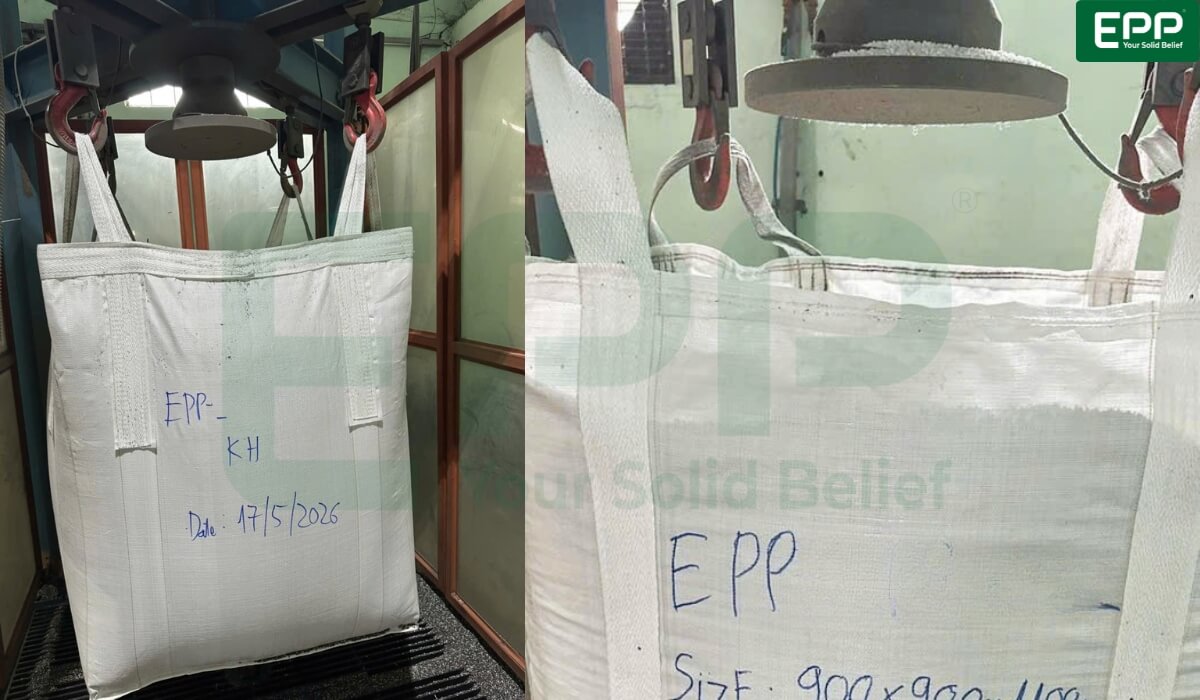
In-house top-lift proof testing of an FIBC bulk bag at 5:1 Safety Factor ratio in EPP Vietnam’s testing laboratory
Root Causes of FIBC Failures
Understanding why low-cost bulk bags fail requires examining polymer chemistry, weaving mechanics, and manufacturing shortcuts. Substandard factories compromise bulk bag integrity across four critical operational areas:
- Excessive Recycled Scrap and Filler Overload: Uncertified suppliers mix post-industrial regrind or excess calcium carbonate fillers with virgin polypropylene resin. High filler ratios break the long polymer molecular chains. This material degradation severely drops the tensile breaking force (N/5cm) of extruded tapes, making the woven fabric brittle and prone to sudden tearing under stress.
- Substandard Fabric Density (GSM) and Tension Variations: To minimize resin consumption, budget manufacturers reduce woven fabric weight of poor quality PP super sacks from a required 180 GSM down to 140 GSM. Inconsistent yarn tension during circular weaving creates structural weak spots across the fabric surface. These under-spec fabrics buckle when subjected to internal hydraulic powder pressure or dynamic transport shocks.
- Compromised Stitching Mechanics and Omitted Filler Cords: High-volume factories frequently substitute heavy-duty double-needle chain stitching with weak single-thread seams. They also omit polypropylene sift-proof filler cords along seam lines to lower unit costs. Under load, needle holes stretch, causing thread snapping, seam unzipping, and severe dusting leakage.
- Bypassed Batch Quality Assurance (QA) Testing: Substandard producers skip mandatory lot-level testing to speed up export deliveries. Omitting cyclic top-lift testing, UV weathering checks, and drop tests allows defective units to reach customer facilities without warning.
Safe discharge operations require structural integrity at the bottom spout. Facilities can review best practices for unloading bulk bags safely to prevent discharge injuries.
Inspection of heavy-duty double-needle chain stitching with sift-proof filler cord on an EPP Vietnam bulk bag
EPP Vietnam Solution: Custom, Stable Quality & Competitive Pricing
EPP Vietnam solves the core dilemma faced by procurement teams: eliminating quality defects while maintaining competitive, factory-direct pricing.
Full-Range FIBC Product Capabilities
EPP Vietnam produces a comprehensive range of custom industrial packaging, including Standard 4-Loop Bags, Baffle Bags (Q-Bags), Food-Grade Cleanroom Bags, UN Dangerous Goods Bags, and Type C/D Electrostatic Bags. Every premium Vietnam bulk bag is engineered to exact GSM, size, and loop configuration requirements.
Transparent Pricing
To eliminate speculative supplier markups, EPP Vietnam updates packaging quotes weekly based on official ICIS polymer index reports. This ensures buyers receive fair, market-aligned pricing on virgin PP fabric.
Strict International Quality Certifications
EPP Vietnam operates manufacturing facilities certified under ISO 21898, ISO 22000, BRCGS Grade A, UN Packaging for Dangerous Goods, and IEC 61340 standards. Every production lot undergoes automated metal detection, thread cleaning, and top-lift testing prior to shipment.
How to Test and Audit FIBC Quality?
Procurement managers should establish a four-step audit protocol before approving new packaging suppliers:
- Visual Material Inspection: Inspect fabric for bright white color, smooth weave uniformity, and absence of dark specks or gray tints.
- Lifting Loop Tensile Check: Verify that loop webbing uses multi-filament yarn anchored deeply into the main body fabric seams.
- Document and Tag Verification: Ensure every bag carries a permanent label listing SWL, SF ratio, production batch number, and test certificate references.
- Laboratory Stress Testing: Request certified test reports for Top-Lift performance (5:1/6:1 static load for 5 minutes) under ISO 21898 standard, UV stabilization, and cyclic load limits.
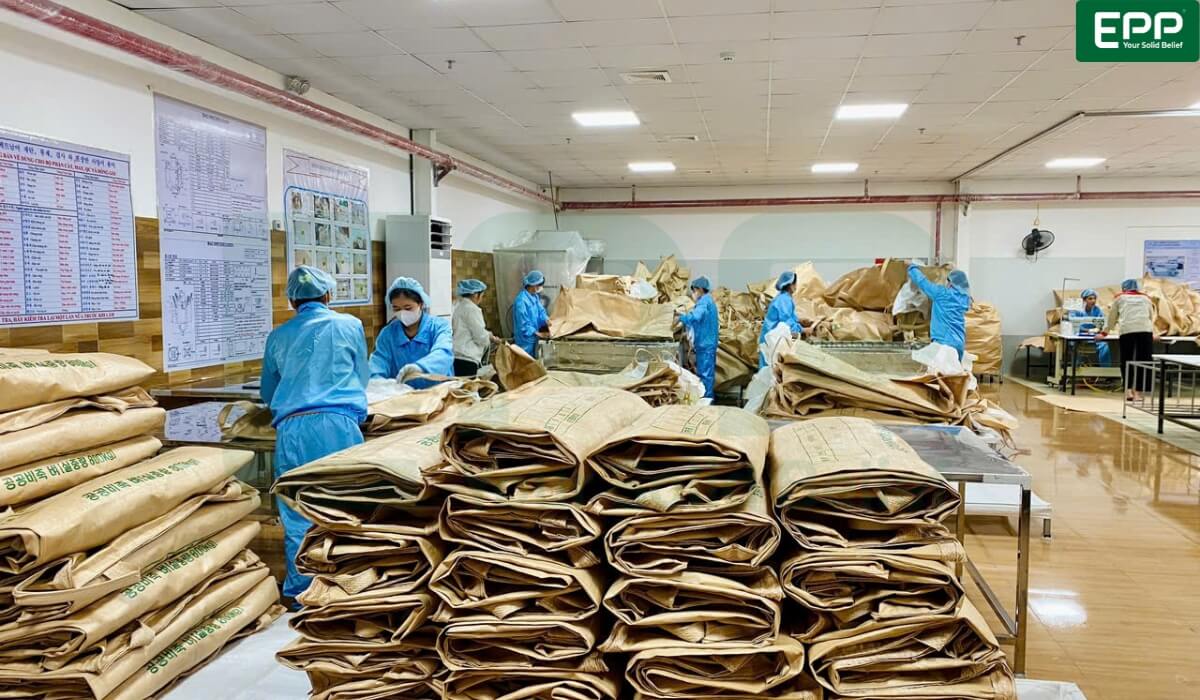
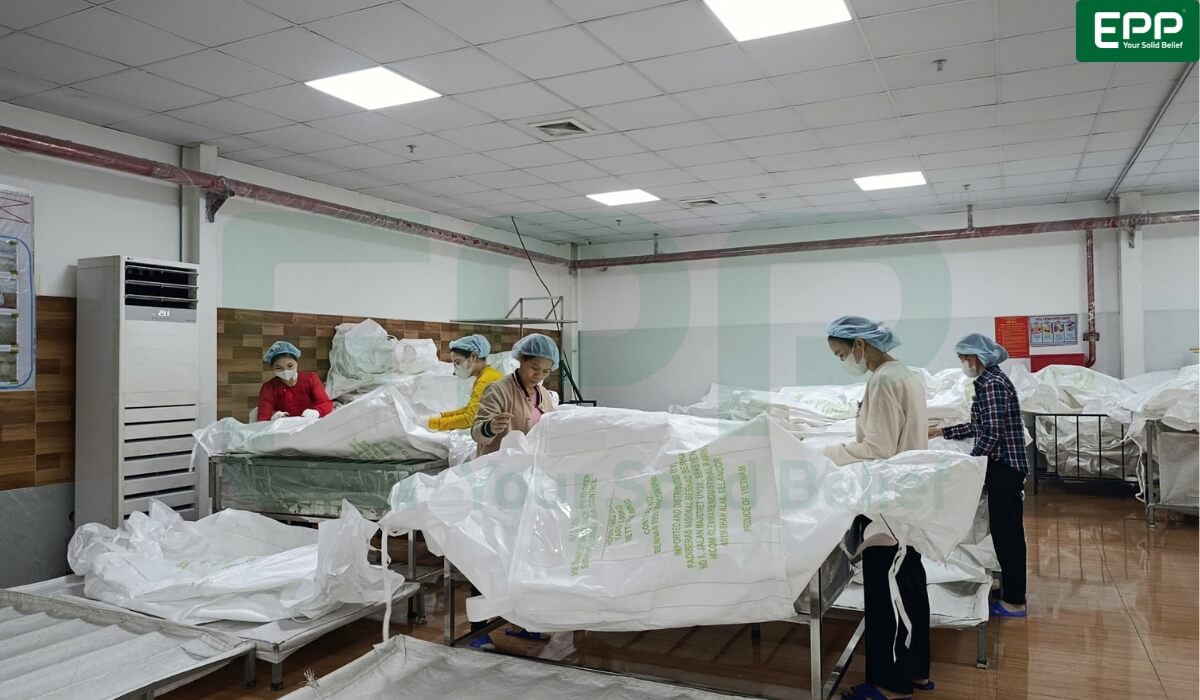
Cleanroom manufacturing and inspection floor at EPP Vietnam adhering to BRCGS Grade A food-safety standards
EPP Vietnam Rescue a US Chemical Distributor
The Challenge: A chemical distributor in Texas suffered repeated loop tears and dusting leakage using poor quality PP super sacks from an uncertified supplier. Failures caused $45,000 in spilled material, downtime penalties, and OSHA warnings.
The Solution: EPP Vietnam re-engineered the specification, providing a 180 GSM U-Panel bag with reinforced corner loops, double-sift-proof filler cord stitching.
The Result: Zero bag failures across 50,000 units shipped annually, a 15% improvement in container loading using baffle structures, and a 10% net saving in annual packaging expenditure.
FAQ part about poor quality pp super sacks
What causes cheap FIBC bulk bags to tear at the lifting loops?
Loop tearing occurs when suppliers use thin, low-denier loop webbing or anchor loops using weak single-stitching on substandard fabric GSM.
How do I know if a super sack uses recycled PP resin?
Check the fabric color and clarity. Virgin PP produces a bright white or clear fabric, whereas gray, yellow, or off-white tints indicate recycled regrind or excess fillers.
EPP Vietnam’s quality control team highlights a distinct sensory indicator: scent. During thermal extrusion and high-friction handling, recycled PP resin releases a strong, pungent “burnt plastic” or chemical odor due to degraded polymer chains and oxidized scrap contaminants.
Can EPP Vietnam match my exact bag specifications at a lower cost?
Yes. EPP Vietnam manufactures custom FIBC bulk bags to your exact dimensions, GSM, loop style, and liner specifications while offering competitive pricing.
Cutting procurement costs on industrial packaging by purchasing poor quality PP super sacks creates severe risks for global manufacturing and logistics operations. Minor upfront savings are quickly erased by catastrophic loop breakages, product contamination, and warehouse downtime. Ensuring supply chain integrity requires verifying 100% virgin resin, certified Safety Factors, and strict manufacturing quality controls.
Need to eliminate bag failure risks and secure stable packaging costs?
Contact EPP Vietnam’s technical packaging team today for a free fabric audit, sample testing High quality big bags, and a transparent price quote tailored to your bulk packaging requirements
🌐Website:https://epp.vn/ – Alibaba Minisite: https://eppvietnam.trustpass.alibaba.com/
📲 +84 986 002 888 – [email protected]