For over a decade, Vietnam has been the global economy’s star performer—a “miracle” built on the foundations of open trade, a strategic location, and a relentless drive toward industrialization. However, as we cross the threshold of 2026, the landscape has shifted. With the new 150-day window on universal 2026 US tariff now active, a shadow of uncertainty looms over Southeast Asia’s manufacturing powerhouse.
The question is no longer just “will the tariffs hurt?” but rather, “how will Vietnam evolve to survive them?” To understand the future of the Vietnam export miracle, we must look at the intersecting lines of geopolitics, innovation, and industry-specific resilience.
Macroeconomic Consequences for Vietnam
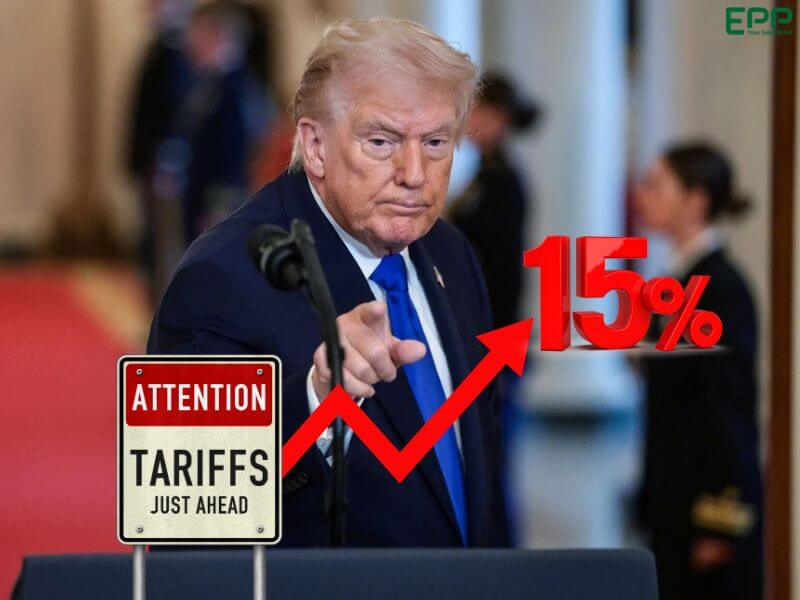
The implementation of a blanket 15% tariff by the United States marks a seismic shift in global trade dynamics. For Vietnam, the primary concern is the potential erosion of its competitive edge. Historically, Vietnam’s GDP growth has been inextricably linked to its trade surplus with the US. A sudden 15% price hike on imported goods essentially acts as a tax on the Vietnamese miracle.
However, the macroeconomic reality of 2026 is more nuanced than simple doom and gloom. As these tariffs were announced, the US dollar experienced a significant cooling period. Investors, wary of the inflationary pressures tariffs create within the US, shifted toward alternative assets, causing the US Dollar Index to retreat. This weakening of the dollar has provided Vietnamese exporters with a “currency cushion,” making their goods slightly more affordable in relative terms, even with the tariff applied.
We cannot ignore the “Gold Factor.” With gold prices stabilizing at historic highs above $5,000 per ounce, Vietnam’s domestic economy has seen a unique surge in asset value, providing a layer of financial stability for the nation’s banking sector. While the 2026 US tariff is a headwind, Vietnam enters this storm with a more mature financial system and a more resilient currency than it had during the trade tensions of the late 2010s.
Winners and Losers from 2026 US Tariff
Protectionism rarely affects everyone equally. In the 2026 landscape, we are seeing a clear divergence between industries that are “too essential to fail” and those that are “easily replaceable.”
The Losers: Low-value-added manufacturing sectors are feeling the heat. Small-scale textile firms and basic plastic assembly lines, where the margin for error is less than 5%, are struggling to absorb the 15% cost increase. For these businesses, the US market—once a land of endless opportunity—is becoming a high-risk zone.
The Winners: High-tech manufacturing and specialized industrial sectors are proving surprisingly resilient. For example, in the industrial packaging and logistics sector, bulk bag wholesale suppliers are finding that their products are more essential than ever. As global supply chains become more fragmented and regionalized, the demand for high-quality Flexible Intermediate Bulk Containers (FIBCs) has remained steady.
When a US-based manufacturer imports raw chemicals or minerals, the cost of the “bulk bag” is a fraction of the total shipment value. Consequently, these suppliers can often pass through the tariff costs more easily than a t-shirt manufacturer could. Companies that have invested in “smart packaging” and sustainable materials are finding that US buyers are willing to pay the tariff-inclusive price for the sake of quality and reliability.
Government Response for 2026 US Tariff
The Vietnamese government’s response to the 2026 trade shock has been decisive, encapsulated in the “Innovation 2.0” framework. This isn’t just about building more factories; it’s about changing what happens inside those factories.
Innovation 2.0, driven by the Prime Minister’s recent directives, focuses on three core pillars:
- Digital Transformation: Integrating AI and automation into the production line to slash operational costs. If a factory can improve its efficiency by 15%, it effectively “cancels out” the US tariff.
- The Green Pivot: Vietnam is aggressively aligning with global ESG standards. By producing goods that meet the strictest environmental criteria, Vietnamese exporters can differentiate themselves from cheaper, “dirtier” competitors, justifying a higher price point that accommodates tariff costs.
- Domestic Value Chains: Moving away from the “assembly only” model. The government is incentivizing the production of raw materials within Vietnam, reducing the need for costly imports from third-party nations and strengthening the “Rule of Origin” documentation required for US trade.
Geopolitical and Trade Strategy Responses to 2026 US Tariff
Vietnam has long mastered the art of “Bamboo Diplomacy”—standing firm but remaining flexible. In response to the 2026 US tariff, Hanoi is doubling down on its “Plus One” status, but with a twist.
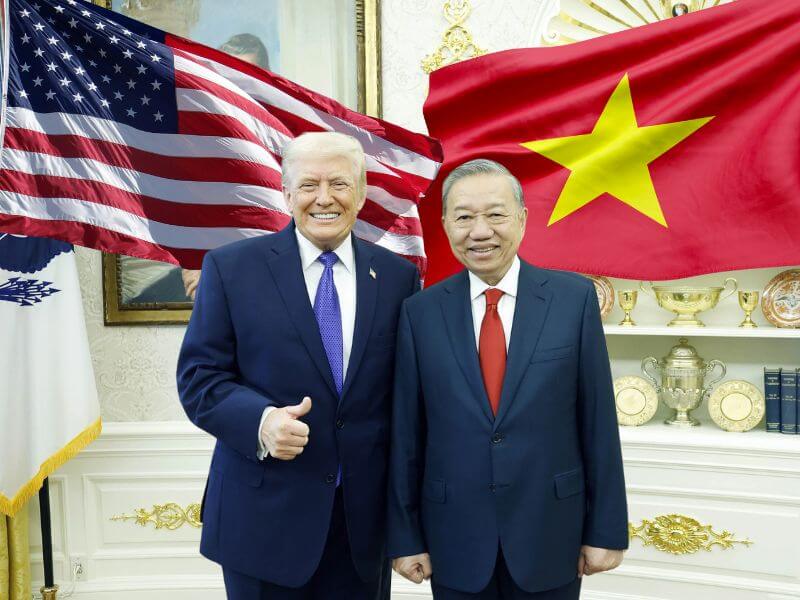
Vietnam is no longer just the alternative to China; it is positioning itself as the hub of a “Multiplex Trade Network.” By leveraging the Comprehensive and Progressive Agreement for Trans-Pacific Partnership (CPTPP) and the EVFTA with Europe, Vietnam is actively redirecting trade flows. If the 15% tariff makes a specific product line unviable for the US market, the infrastructure is already in place to pivot that volume toward the European or Japanese markets.
Furthermore, Vietnam is engaging in proactive trade dialogues. Rather than retaliating with its own tariffs—which would only hurt domestic consumers—Vietnam is positioning itself as a “Secure Trade Partner,” offering US companies deeper transparency in supply chain mapping to ensure that goods are not being “laundered” from other sanctioned jurisdictions.
Strategic Recommendations for Vietnamese Exporters
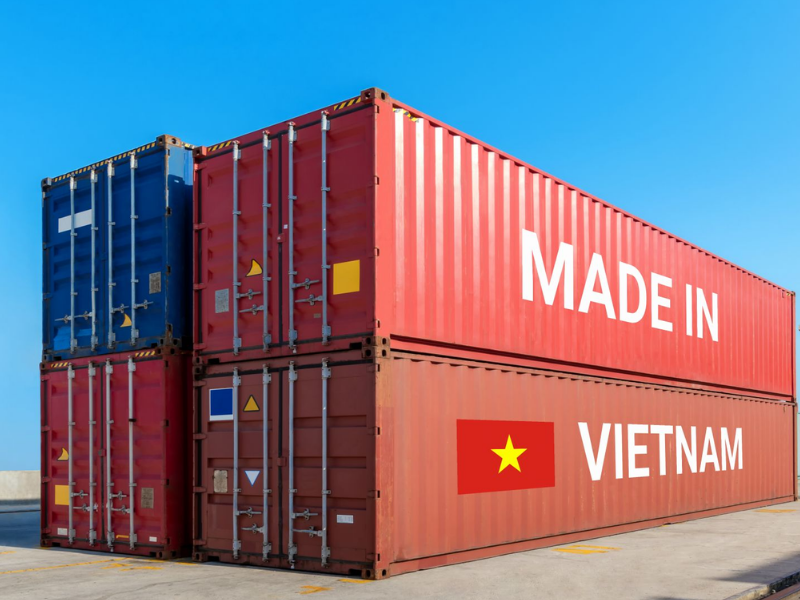
Having observed the first wave of the 2026 US tariff implementation, the path forward for exporters requires a mix of tactical agility and long-term vision.
1. Diversify or Die: Reliance on a single market is now a liability. Exporters must aim for a “30/30/30” split—30% US, 30% EU/Japan, and 30% ASEAN/Domestic. This balance ensures that a policy shift in Washington doesn’t result in a total collapse of the order book.
2. Invest in Specialized Segments: Follow the lead of successful bulk bag wholesale suppliers by specializing. Don’t just sell a commodity; sell a solution. Whether it’s food-grade certification, anti-static properties, or recycled content, specialization creates “pricing power” that can withstand 15% (or higher) tariff barriers.
3. Master the Paperwork: In 2026, the “War of Trade” is often won in the accounting office. Ensuring flawless documentation of “substantial transformation” within Vietnam is critical. Exporters should undergo voluntary audits to ensure their supply chains are “Clean and Clear” for US Customs and Border Protection (CBP).
4. Financial Hedging: With the dollar’s volatility and gold’s high valuation, exporters should use forward contracts to lock in exchange rates and maintain a portion of their reserves in “hard assets.” This provides the liquidity needed to survive shipping delays or sudden inventory backups at US ports.
Conclusion
The 2026 US tariff is undoubtedly a challenge, but they are not the end of the Vietnam Export Miracle. Instead, they represent a “Great Filter.” Companies that rely solely on cheap labor and high-volume US exports will struggle. However, for those who embrace Innovation 2.0, specialize their offerings, and diversify their reach, this era of protectionism will merely be a catalyst for a more mature, technologically advanced Vietnamese economy.
The miracle isn’t over; it’s just getting its second wind. As the world watches Vietnam navigate these turbulent waters, the nation is proving once again that its greatest export isn’t just goods—it’s resilience.