
Which is better: corner loop or cross corner loop big bags? This is a common question of many businesses when they need to use FIBC bags for work. Choosing the right loops for bulk bags will limit the situation of bursting and tearing when transporting them. So what is the best loop for jumbo packaging? If readers also have the same question above, do not ignore this article to find the answer to choose the most suitable loop for your FIBCs.
FIBC Bags with Corner Loops
Corner loop big bags (also called side seam loops) feature four lifting straps sewn directly into the vertical side seams at each corner of the container.
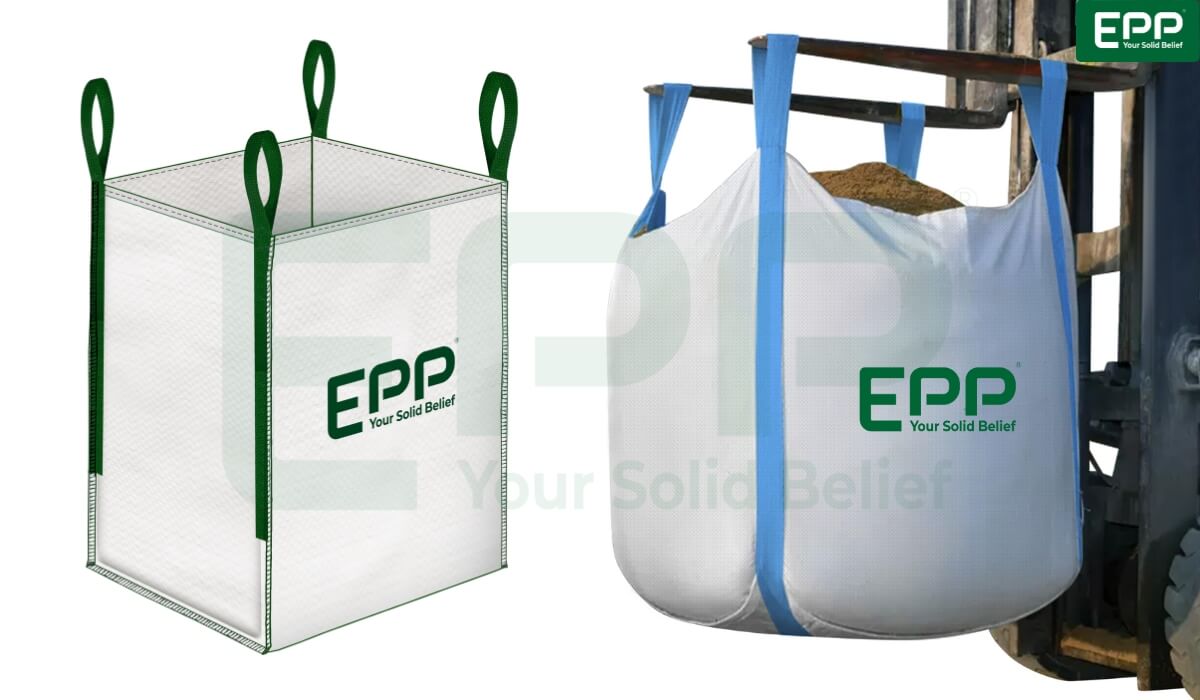
Corner loop FIBC bags are a cost-effective solution for construction, agriculture, chemicals, and mineral transportation
Big bags with cross corner loops
Cross corner loop big bags feature lifting straps sewn across adjacent sides of each corner, forming a distinct “arch” over each top corner of the bag.
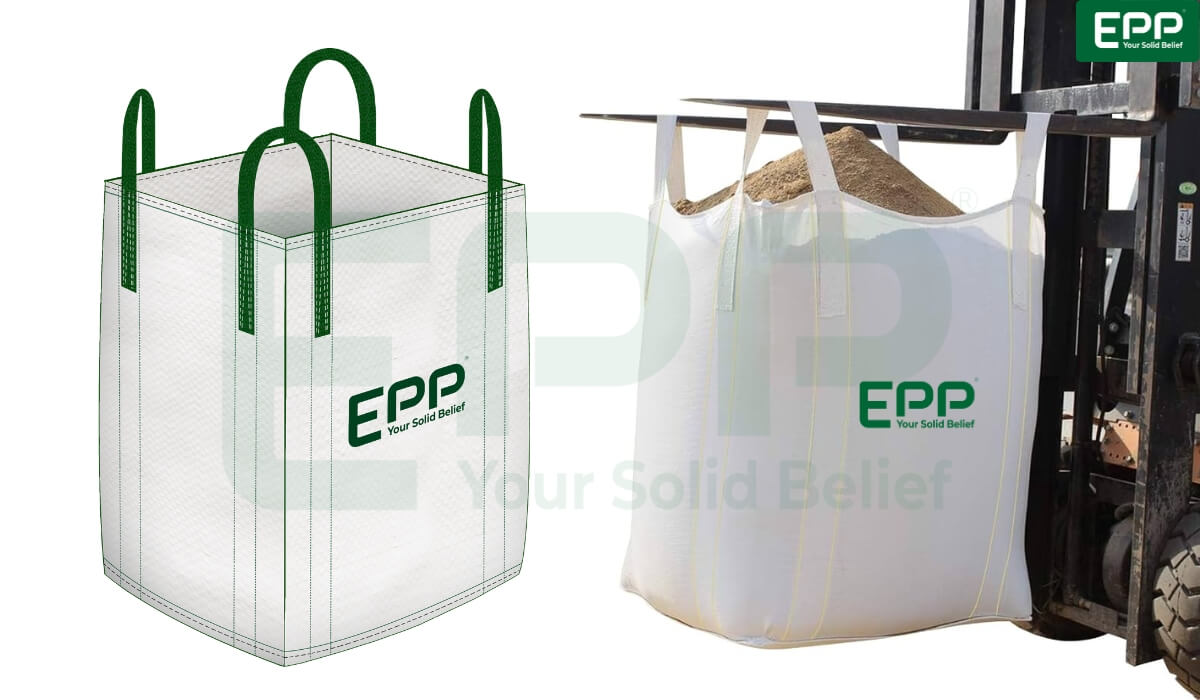
Cross-corner loop FIBC bags provide easier forklift access and faster loading in automated material handling operations.
Circular and tubular FIBC super sacks are the most common type of bags using cross corner loops. These loops are sewn directly to the main body of the FIBC bag rather than into side seams. The loop webbing is slightly wider than a standard corner loop—measuring 7 cm or 10 cm wide and about 30 cm in height—allowing the arches to stay erect and open naturally.
Tubular bulka bags using cross corner loops are chosen by many businesses because of their low unit price when paired with seamless fabric, which saves considerable packaging costs. Matching loop styles with the right top inlet is critical for smooth automated filling—explore the top 5 FIBC bag top designs for every filling system to optimize your setup.
Advantages and disadvantages corner loop and cross corner loop
Corner loop or cross corner loop—each type of strap sewn on a jumbo bag has a different structure, cost profile, and operational effect. Depending on your handling equipment and packed goods, both designs offer distinct trade-offs:
| Feature / Criteria | Corner Loop (Side Seam Loop) | Cross-Corner Loop |
| Primary Construction | U-Panel, 4-Panel, and Baffle (Q-Bag) designs | Circular / Tubular woven polypropylene bags |
| Webbing Dimensions | 5-7 cm wide x30 cm height | 7-10 cm wide x 30 cm height |
| Loop Shape & Position | Teardrop shape; tends to lay flat against bag sides | Self-standing arch shape; remains upright and open |
| Best Operational Role | Overhead crane lifting, hoists, stevedore setups | Forklift handling, automated packaging lines |
| Advantages (Pros) | • Lower unit purchase cost
• High vertical seam strength • Ideal for crane hookups and vessel loading |
• Fast, easy forklift tine access • Reduces driver handling time and labor • Ideal 8-point load distribution on tubular bodies |
| Disadvantages (Cons) |
• Can collapse inward, slowing down forklift entry • May require ground workers to hold loops open |
• Slightly higher unit price on non-tubular bag • Requires extra patch reinforcement on 4-panel bags |
Which One Should You Choose?
Knowing how to handle and transport super sacks for sale will help you determine Corner loop or cross corner loop should be chosen:
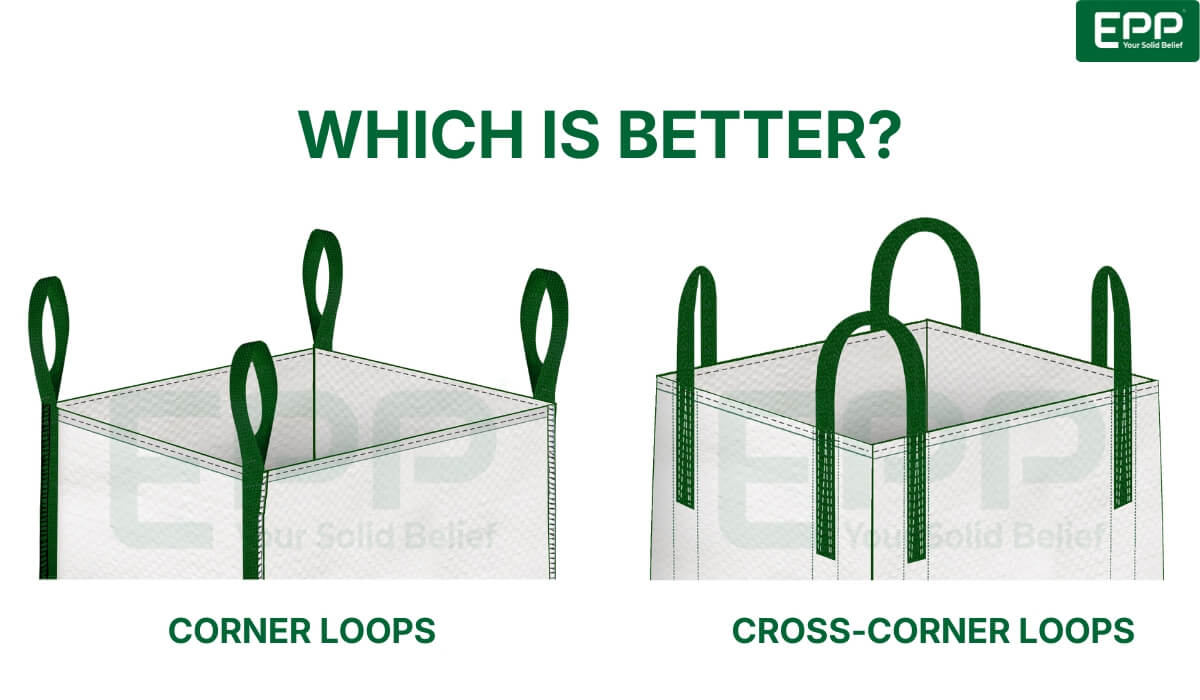
Corner loops vs. cross-corner loops: Understanding the key differences in FIBC lifting loop designs
- If you move FIBC products by forklift: Big bags with cross-corner loops are the perfect choice. Their upright arches streamline forklift pickup, save labor time, and improve safety on busy loading docks.
- If you use a crane to pack or move super sacks: Corner loops with stevedore straps are the best options. In addition, single stevedore straps and double stevedore straps are popular for transporting goods in overseas markets, providing enhanced stability during vessel loading.
- If unit cost is your primary driver: Corner loops on 4-panel or U-panel bags offer a reliable, cost-effective balance for general industrial bulk storage.
To explore why these design choices directly impact material handling and worker safety, read our detailed guide on why lifting loops matter in FIBC bags.
Frequently Asked Questions (FAQs)
Can I use cross-corner loops on a 4-panel bag?
Yes, cross-corner loops can be custom-stitched onto a 4-panel bag. However, it requires adding extra fabric patch reinforcements behind the stitching points on each panel, which increases manufacturing complexity and cost. For 4-panel bags, standard corner loops remain the most efficient choice.
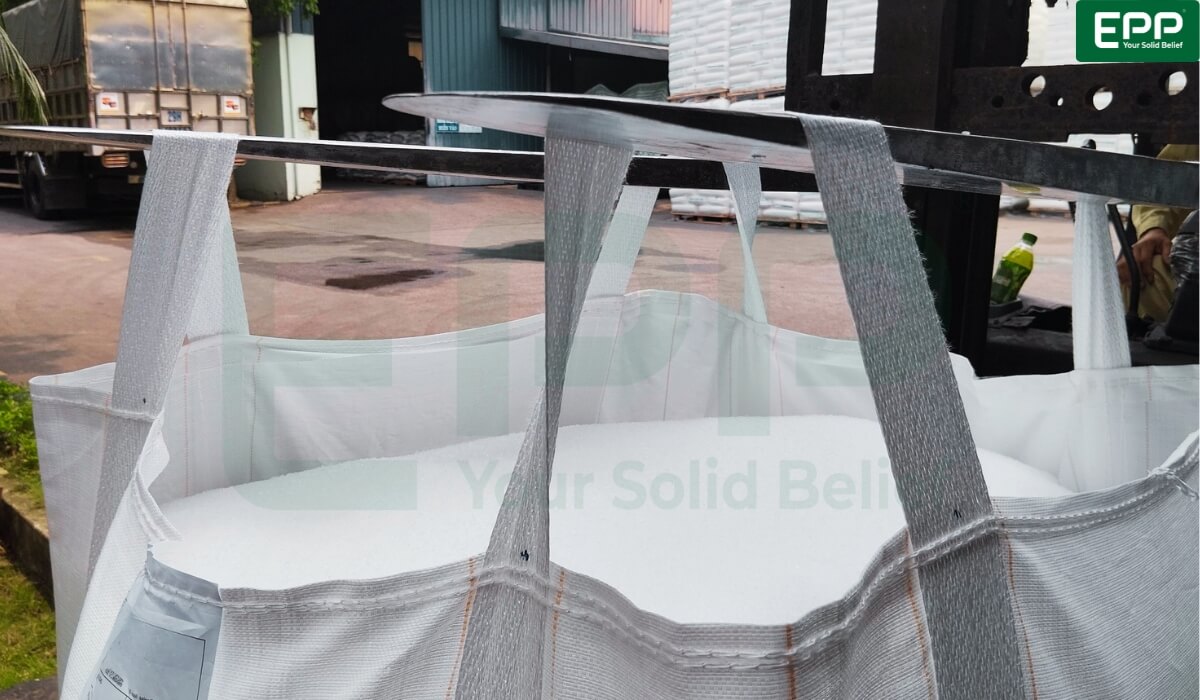
A cross-corner loop Big bag allows forklifts to lift and transport bulk materials quickly
Do cross-corner loops cost significantly more?
No. While cross-corner loops carry a slight premium due to wider webbing (7 cm) and specialized stitching, they are very economical when combined with circular/tubular bag fabric. Furthermore, the handling time saved by forklift drivers quickly offsets the minor unit price difference.
Which loop style is safer for crane overhead lifting?
Corner loop or cross corner loop styles is fully safe when engineered to certified Safe Working Loads (5:1 single-trip or 6:1 multi-trip). However, corner loops (or corner loops equipped with single/double stevedore straps) are generally safer and better suited for crane lifting because they maintain straight vertical tension without placing lateral stress on the fabric.
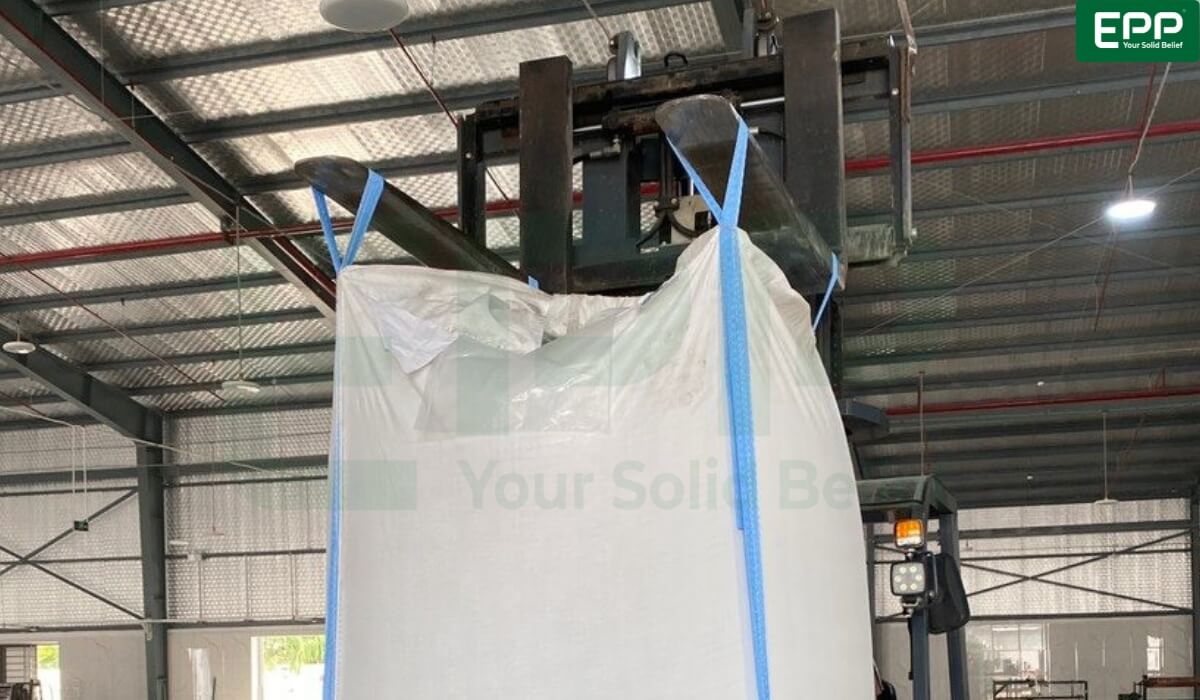
A standard corner loop bulk bag being lifted by a forklift, offering reliable handling
Selecting the right lifting loop configuration Corner loop or cross corner loop directly dictates your operational efficiency, safety standards, and material handling costs. By aligning your bag construction and webbing dimensions with your warehouse machinery and transport methods, you eliminate handling bottlenecks and ensure secure transit for every load.
Ready to secure durable, certified FIBC bulk bags customized to your exact operational specifications? Visit EPP Vietnam to browse our full product catalog today for a fast, detailed quotation and bulk supply solutions.

Website: epp.vn
Alibaba website: https://eppvietnam.trustpass.alibaba.com/
Email: [email protected] Hotline/ Whatsapps: +84 986 002 888