In industrial supply chains, protective coverings do far more than shield equipment from rain; they serve as critical safety barriers, thermal shields, and site hazard management tools. For B2B procurement managers selecting protective covers involves balancing material durability against site-specific compliance requirements. While blue covers have traditionally served as a standard default, evaluating a Yellow Tarpaulin against conventional alternatives reveals significant technical, visual, and operational benefits.
This comprehensive guide breaks down the technical differences between yellow and blue protective sheets, explores key industrial applications, and provides essential procurement metrics.
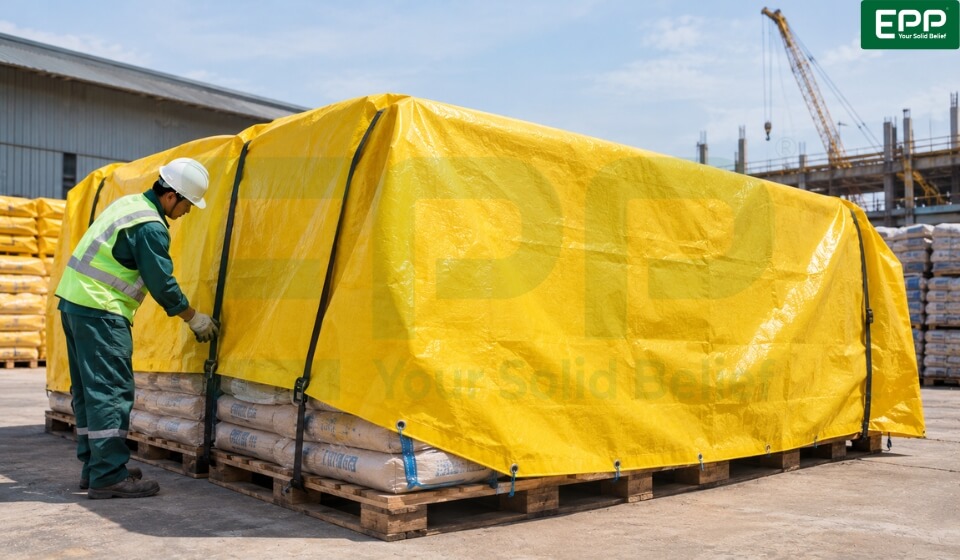
Industrial yellow tarpaulins provide essential weatherproofing while acting as high-visibility safety barriers.
What Is a Yellow Tarpaulin and How Is It Used?
A Yellow Tarpaulin is an industrial-grade protective cover engineered from high-density polyethylene (HDPE) woven fabric laminated with polyethylene (PE) or heavy-duty polyvinyl chloride (PVC). Manufactured with high-visibility color pigments and UV-stabilizing additives, these covers combine robust weather resistance with enhanced visual awareness.
Unlike standard ground covers, yellow tarpaulins function as essential safety equipment across demanding sectors:
- Construction & Infrastructure: Shielding raw materials, scaffolding, and machinery while alerting site workers to hazards.
- Agriculture & Crop Protection: Covering harvested yields, grain stores, and equipment with reduced heat buildup compared to darker fabrics.
- Outdoor Events & Commercial Venues: Serving as high-visibility canopies, ground barriers, and temporary enclosures.
- Logistics & Freight Transport: Securing cargo during transit to prevent weather degradation and increase fleet visibility.
Yellow Tarpaulin vs. Blue Tarpaulin: What Are the Real Differences?
While both options provide baseline weatherproofing, comparing a Yellow Tarpaulin to a standard blue cover highlights distinct functional differences that impact site safety and product lifespan:
| Specification / Feature | Yellow Tarpaulin | Blue Tarpaulin |
| Primary Industrial Intent | High-visibility hazard warning, UV reflection & safety compliance | General-purpose light/medium protection |
| Standard Weight Class | Heavy-duty (120 GSM – 250+ GSM) | Medium to Heavy-duty (120-250+ GSM) |
| Visual Awareness Level | High (OSHA-aligned hazard visual signal) | Moderate to Low (Blends into surrounding environments) |
| Thermal & Light Behavior | High solar reflection (Keeps underlying goods cooler) | Higher heat absorption (Can trap heat beneath cover) |
Selecting a Yellow Tarpaulin is the preferred choice for safety-critical zones where high visibility prevents workplace accidents, whereas blue options suit routine, low-risk temporary storage.
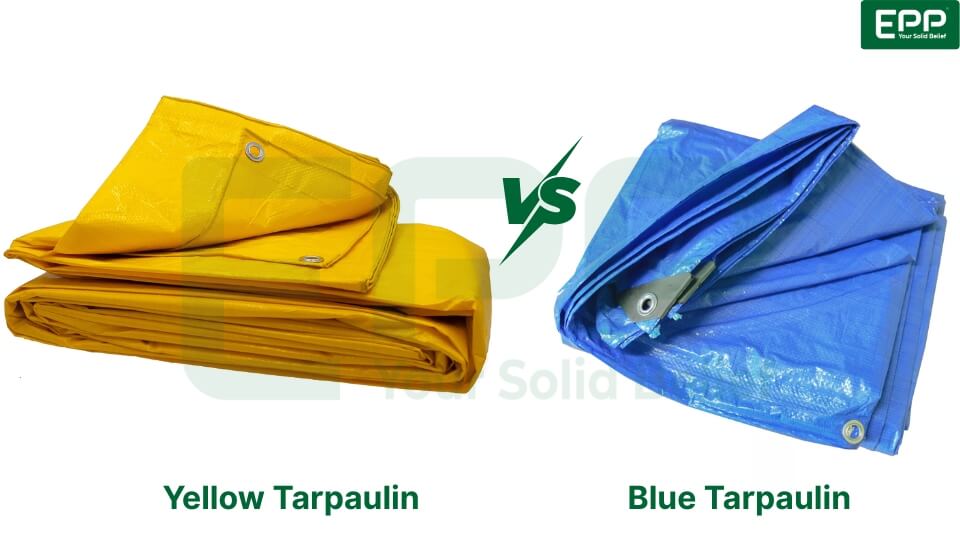
Comparing yellow tarpaulin vs blue tarpaulin to evaluate safety standards, heat reflection, and material durability.
Which Tarpaulin Specifications Matter More Than Colour?
Relying solely on fabric color can lead to improper material selection. A Yellow Tarpaulin derives its physical strength from manufacturing parameters rather than pigment choice:
- Fabric Weight (GSM): Measured in Grams per Square Meter, GSM directly correlates with tear resistance and wind endurance.
- Weave Density (Mesh Count): High-tensile strength relies on dense weave structures (e.g., 10×10, 14×14 threads per square inch).
- UV Stabilization Percentage: Incorporating 3% to 5% UV Masterbatch additives into the outer laminate layer prevents premature material degradation under intense sunlight.
- Lamination & Structural Seams: Dual-sided waterproof lamination, heat-welded seams, and reinforced hems prevent water ingress and grommet pull-out.
To review specialized raw material options, explore high-strength woven fabric solutions engineered for heavy industrial manufacturing.

Maintenance and Care for Tarpaulins
To ensure the longevity of your tarpaulin, proper maintenance is crucial. Here are some tips for caring for your yellow tarpaulin:
Clean Regularly: Remove dirt and debris using a mild detergent and water. Avoid harsh chemicals that can damage the fabric.
Dry Properly: After cleaning, allow the tarp to dry completely before folding or storing it to prevent mold and mildew.
Store Correctly: When not in use, store your yellow tarpaulin in a cool, dry place. Keep it away from direct sunlight to preserve the color and material integrity.
Inspect for Damage: Regularly check for tears or punctures. Small damages can be repaired with tarp repair kits, but extensive damage may require replacement.
By following these maintenance tips, you can extend the life of your yellow tarpaulin, ensuring it remains effective and reliable for years to come.
How to Choose the Right Yellow or Blue Tarpaulin?
To ensure your investment aligns with operational demands and budget constraints, evaluate your purchasing decisions against five core procurement factors:
- Safety & Compliance Needs: For active job sites, roadwork, or hazardous storage, choose a Yellow Tarpaulin to satisfy high-visibility safety standards.
- Dimension Standards: Select precise sheet sizes to avoid material waste or dangerous overhangs. Review our guide on common tarpaulin sheet sizes to streamline fleet and inventory planning.
- Environmental Exposure: High-wind or long-term outdoor applications require heavy-duty PE or PVC materials with elevated GSM ratings.
- Emergency Readiness: For rapid-response roof protection or storm damage, refer to our operational protocol on emergency roof tarp installation and maintenance.
- Manufacturer Vetting: Source directly from certified international suppliers offering custom fabrications. Discover why global clients work with the best tarpaulin supply partner in Vietnam.
Frequently Asked Questions About Yellow Tarpaulins
Does a Yellow Tarpaulin Last Longer in Direct Sunlight?
Yes, high-grade yellow tarpaulins typically outlast standard light-duty covers under direct sun exposure. Their bright pigment reflects IR rays more efficiently, and commercial-grade formulations incorporate higher concentrations of UV inhibitors to resist brittleness.
Is a Yellow Tarpaulin Completely Waterproof?
Yes, a Yellow Tarpaulin produced with dual-sided PE or PVC lamination is 100% waterproof. It withstands high hydrostatic water pressure, making it highly reliable for severe weather protection.
Which Tarpaulin Colour Is Best for Construction Sites?
Yellow and orange are the industry standards for active construction sites. Their high visual contrast alerts workers and vehicle operators to hidden hazards, boundary lines, and covered equipment in low-light conditions.
Conclusion
A Yellow Tarpaulin matches blue alternatives in waterproofing and structural durability while outperforming them in safety visibility, heat reflection, and hazard prevention.
As a leading supplier of industrial woven fabrics and FIBC solutions in Vietnam, EPP Vietnam delivers ISO 9001:2015 certified, custom-engineered tarpaulin covers built for international export. Contact EPP Vietnam today to consult with our technical team and receive a factory-direct quote for your bulk protective covering needs!
Website: epp.vn
Alibaba website: https://eppvietnam.trustpass.alibaba.com/
Email: [email protected] Hotline/ Whatsapps: +84 986 002 888