While fabric GSM and tensile strength define overall body durability of Jumbo bags, the seam interface bears concentrated mechanical stress during crane lifting, transport vibration, and high-velocity filling operations.
Selecting the correct jumbo bag sewing technology is essential for plant managers and procurement teams sourcing industrial packaging. Matching seam construction to your material’s particle size and bulk density prevents catastrophic seam bursting, eliminates fine powder sifting, and ensures compliance with international safety standards.
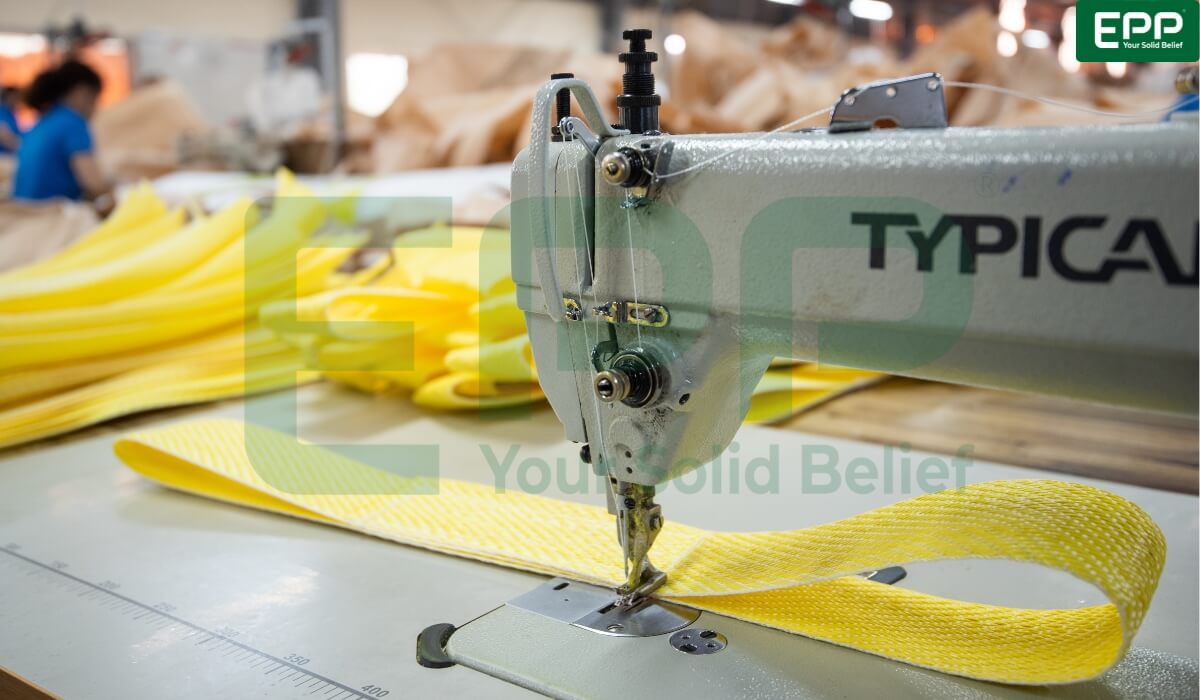
Heavy-duty sewing machines drive structural seam integrity in industrial bulk packaging
The Critical Role of Seam Integrity in FIBC Performance
During hoisting, dynamic load forces shift toward the bag’s vertical seams and corner attachments. If a seam fails, mechanical stress propagates instantly along the weave line, leading to full container failure and severe material loss.
To meet international specifications under ISO 21898:2024 (which governs non-dangerous goods bulk containers), seams must maintain a certified Safety Factor (SF) rating—typically 5:1 for single-trip containers or 6:1 for multi-trip heavy-duty units. Achieving this strength requires matching high-tenacity polypropylene or polyester thread to the appropriate mechanical stitch geometry.
Breakdown of Key FIBC Sewing Technology
Core Stitch Mechanics
1. Chain Stitch (Single / Double Needle)
Chain stitching serves as the foundational structural seam across flexible packaging manufacturing.
- Technical Mechanics: Utilizes 1 to 2 needles powered by multi-thread looper configurations to produce strong, flexible baseline structural seams without using internal bobbins.
- Mechanical Properties: High elasticity and tensile strength. The looped underside acts as a mechanical spring; when heavy loads cause the woven PP fabric to stretch during transit, the chain stitch expands and contracts without snapping thread filaments.
- Best Applications: Engineered for heavy bulk solids (1.000kg – 2.000kg SWL) including dense minerals, industrial chemicals, fertilizers, and agricultural exports. When reviewing technical specifications across different global markets, consult our guide on standard FIBC terminology to verify seam strength ratings and thread denier specs.
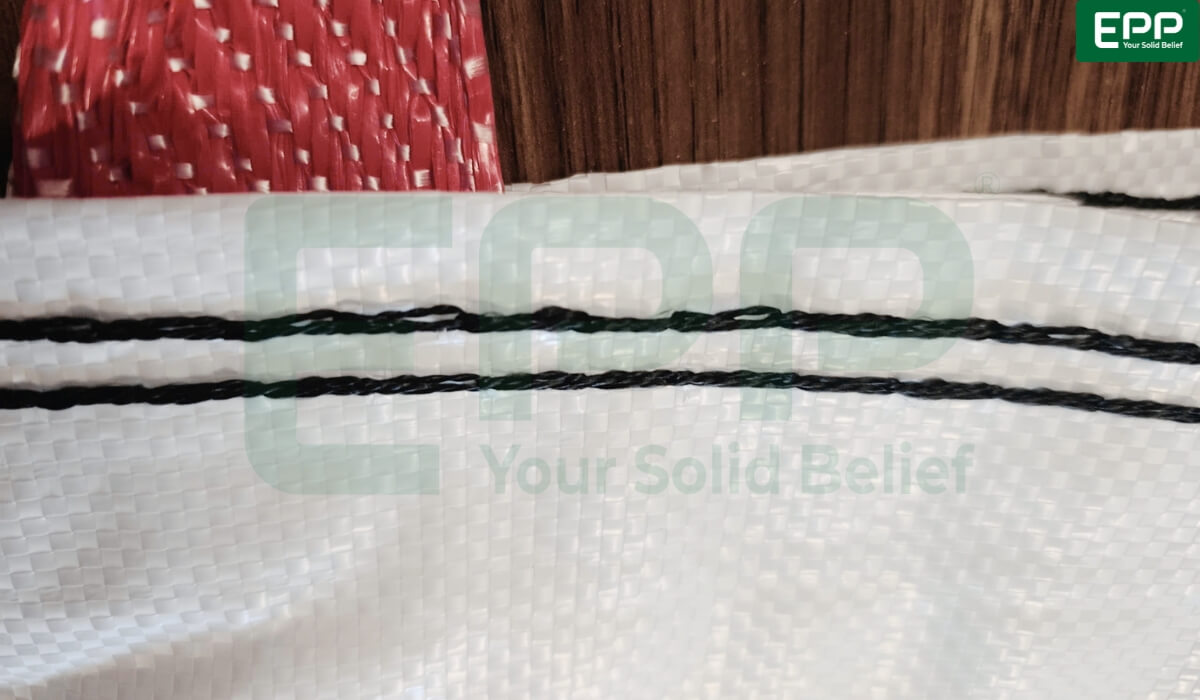
Single/ double needle chain stitch in FIBC bags
2. Overlock and Safety Stitch
Safety stitching combines edge encapsulation with primary load reinforcement along critical stress points.
- Technical Mechanics: Combines an overedge-forming overlock stitch with a parallel safety chain stitch simultaneously.
- Mechanical Properties: The overlock looper wraps thread continuously over raw fabric edges to prevent polypropylene tape fraying, while the adjacent chain stitch bears the direct hoop stress exerted by internal cargo weight.
- Anti-Sifting Defense: To stop ultrafine powders from leaking through needle perforations, manufacturers sew a specialized polypropylene filler cord (sift-proofing felt or yarn) directly into the stitch path to plug all punctures.
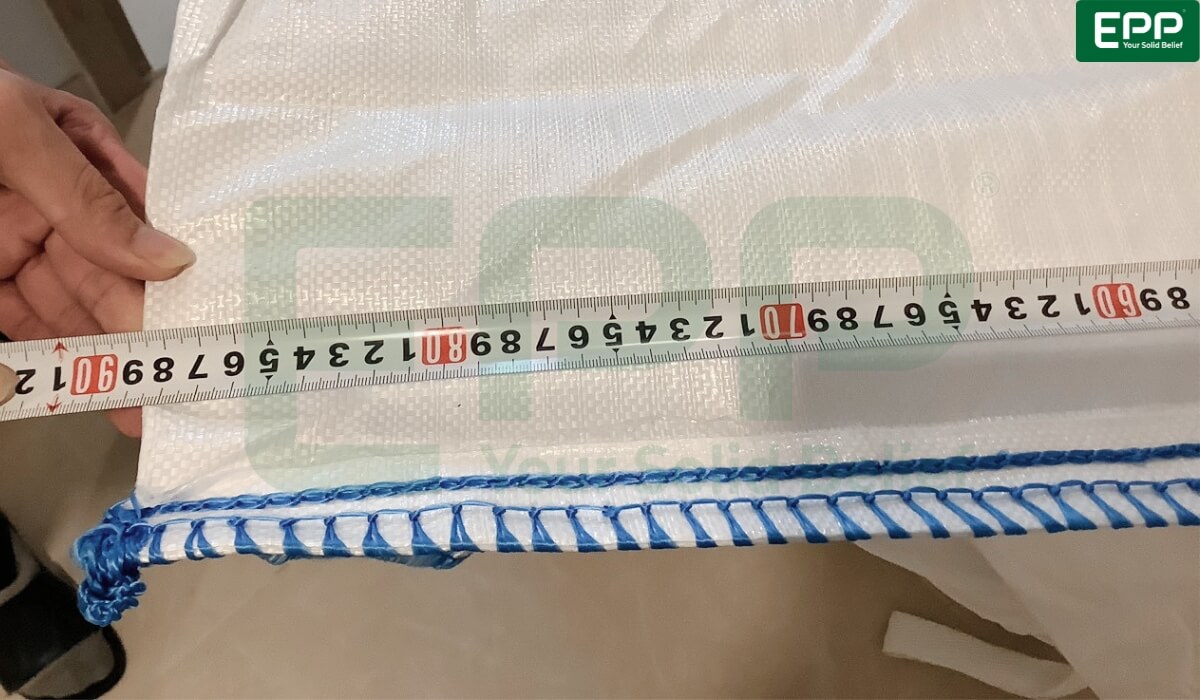
Overlock and safety stitch for Bulk bags
Modern Automation in Sewing technology
1. Long Arm Sewing Machines
Standard industrial sewing arms lack the clearance needed to rotate heavy bulk bag bodies during assembly.
- Technical Capability: Features extended clearance space underneath the needle arm, allowing operators to easily maneuver large, bulky tubular, U-panel, or baffled jumbo bag panels without bundling or distorting the fabric.
- Application Impact: Ensures uniform seam alignment across full-length vertical panels and heavy bottom-spout attachments, preventing irregular tension distribution along the load-bearing seams.
2. Programmable Loop Seaming (Modern Automation)
Anchoring lifting loops to the main body fabric represents the highest stress point on any FIBC, requiring exact geometric accuracy to pass international load testing.
- Technical Capability: Employs computerized, automated servo-controlled pattern sewing heads to execute high-density geometric stitch patterns (such as heavy-duty box-x or square-plus-cross configurations) with zero human error.
- Application Impact: Ensures 100% consistent thread density and tension across every loop attachment point. By eliminating manual stitching variance, programmable loop seaming maximizes SF reliability and eliminates premature loop failure during overhead crane hoisting.
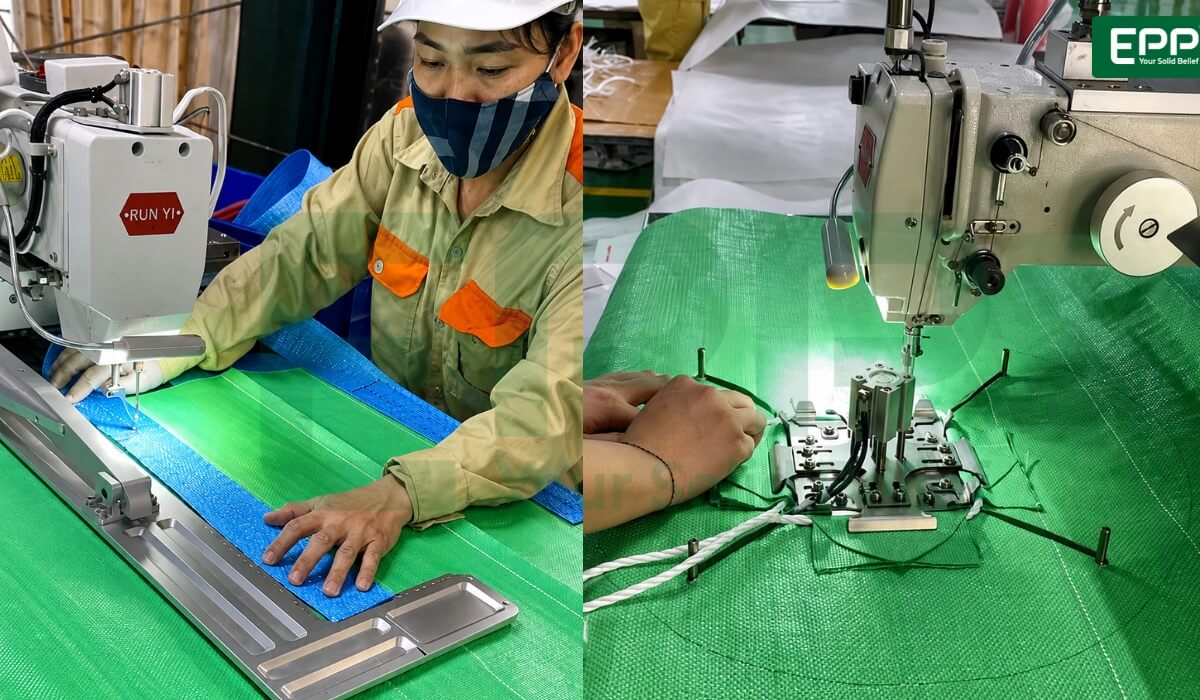
Programmable loop & bottom seaming delivers precise geometric stitch patterns for maximum strength
Technical Comparison Matrix FIBC sewing technology
Evaluating stitching options across mechanical parameters ensures your procurement team selects the correct specification without over-engineering costs:
| Parameter / Criteria | Single-Needle chain stitch | Double-Needle Chain Stitch | Overlock + Chain Stitch |
| Tensile Strength | Moderate | High | Superior |
| Edge Fraying Protection | Low | Moderate | Complete Edge Wrapping |
| Sift Resistance | Basic (Gaps present) | Moderate | Highest (with Filler Cord) |
| Dynamic Load Flex | Low | High (Elastic Chain) | High |
| Recommended Load (SWL) | 500kg – 1.000kg | 1.000 kg – 2.000 kg | 1.500kg – 2.500 kg |
| Primary Material Match | Aggregates, Pellets, Scrap | Ores, Heavy Granules | Fine Powders, Starch |
How to Select the Right sewing technology for Your Products?
Matching Particle Size with Seam Construction
Selecting seam technology depends heavily on product physical characteristics:
- Fine Powders (<100 microns): Products like calcium carbonate, titanium dioxide, starches, or fine APIs require an Overlock + Chain stitch combined with single or double filler cord sift-proofing.
- Granular Solids (>2 mm): Products like plastic resin pellets or corn kernels perform reliably with standard Double-Needle Chain stitching without additional filler cords.
Special Considerations for Printing & Safety Compliance
Custom seam construction must complement additional bag modifications and environmental requirements:
- Custom Printed Fabrics: High-tension stitching on printed panels requires precise needle selection to avoid tearing coated surfaces. Review our breakdown of the flexo printing process on jumbo bags to see how ink coatings interact with needle heat.
- Electrostatic Safety (Type C / Type D): Static-protective bags require conductive thread networks integrated directly into the structural seams to maintain grounding continuity. Check compliance details in our technical guide on safety labeling for FIBC.
Sourcing High-Performance Bulk Bags from EPP Vietnam
At EPP Vietnam, our automated production lines feature heavy-duty industrial sewing systems equipped with automatic thread-tension monitors and laser-guided alignment. Operating under ISO 9001:2015 and BRCGS Packaging cleanroom standards, we supply custom-engineered containers tailored to your exact equipment parameters.
Whether you need heavy-duty chain stitching or specialized anti-sift overlock seams, partner with EPP Vietnam to source high-grade wholesale bulk bags directly from our manufacturing facilities. Contact our technical team today to discuss your machinery requirements or request custom sample testing.
Frequently Asked Questions about FIBC sewing technology
What is a filler cord (sift-proofing) in FIBC seams?
A filler cord is a soft yarn or felt strip sewn directly along the seam line during stitching. When the needle penetrates the woven fabric, the filler cord swells to plug the needle hole, preventing fine powders from leaking through during vibration and transit.
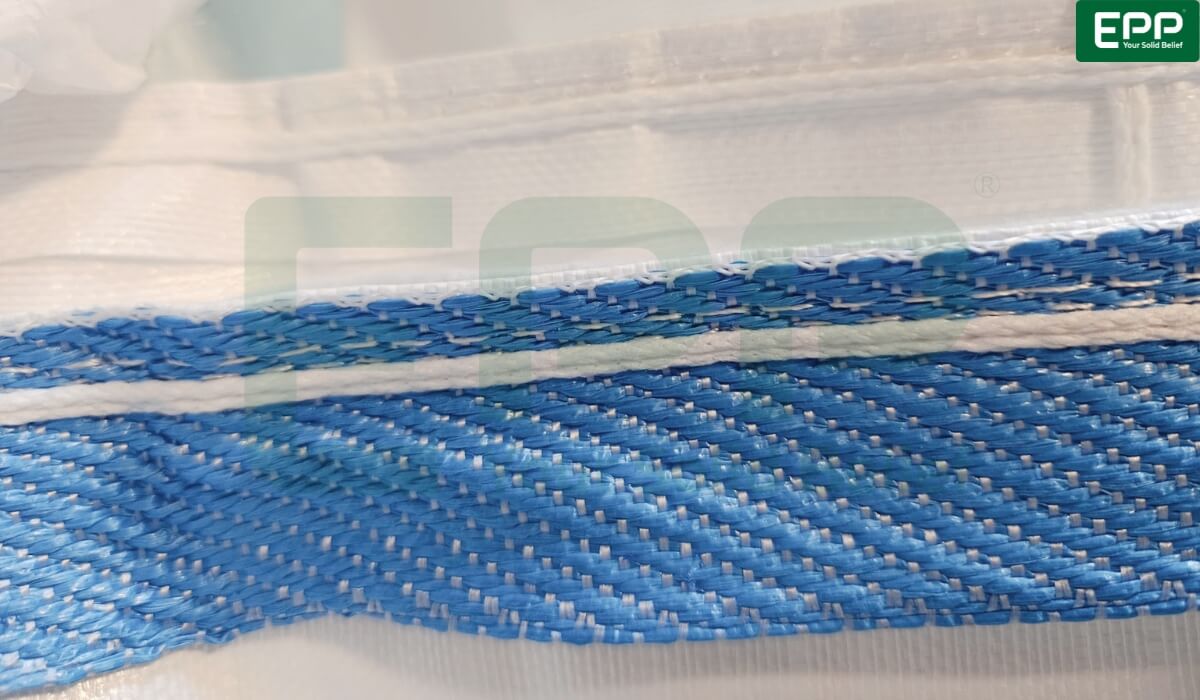
Anti-sift filler cords seal needle perforations to prevent fine powder leakage
Why is a chain stitch preferred over a standard lockstitch for bulk bags?
A lockstitch uses a rigid interlocking knot that offers zero flex. When an FIBC expands under heavy load, a lockstitch tends to snap under tension. A chain stitch features a looped construction that expands under strain without breaking the sewing thread.
Can seam quality affect the Safety Factor (SF) rating of a jumbo bag?
Yes. The seam is almost always the weakest link in a bulk bag assembly. Using improper thread denier, incorrect needle gauge, or inadequate stitch density reduces the bag’s breaking strength, preventing it from passing the $5:1$ or $6:1$ load testing required by ISO 21898 standards.
Can standard sewing machines process laminated PP woven fabric?
While standard heavy-duty industrial machines can physically penetrate laminated polypropylene, processing coated fabric requires specialized needle geometries (such as ball-point or heavy-duty wedge needles) and pneumatic cooling systems. Without proper needle cooling and precise thread-tension control, needle friction generates high heat that can melt the thin polyethylene laminate, causing fabric tears and compromising the bag’s moisture barrier.
Engineering high-performance FIBCs requires balancing fabric specifications with the correct mechanical seam geometry. From baseline single-needle crochet seams for aggregates to advanced overlock safety stitches with integrated filler cords for fine chemical powders, your choice of sewing technology directly impacts payload security, plant hygiene, and worker safety.
By integrating modern automated machinery—such as long-arm sewing units and programmable loop seamers—EPP Vietnam manufactures industrial packaging that consistently meets strict ISO 21898 load factors and BRCGS hygiene standards. Matching your product’s physical properties with the right stitch type eliminates seam failure and optimizes your global logistics chain.