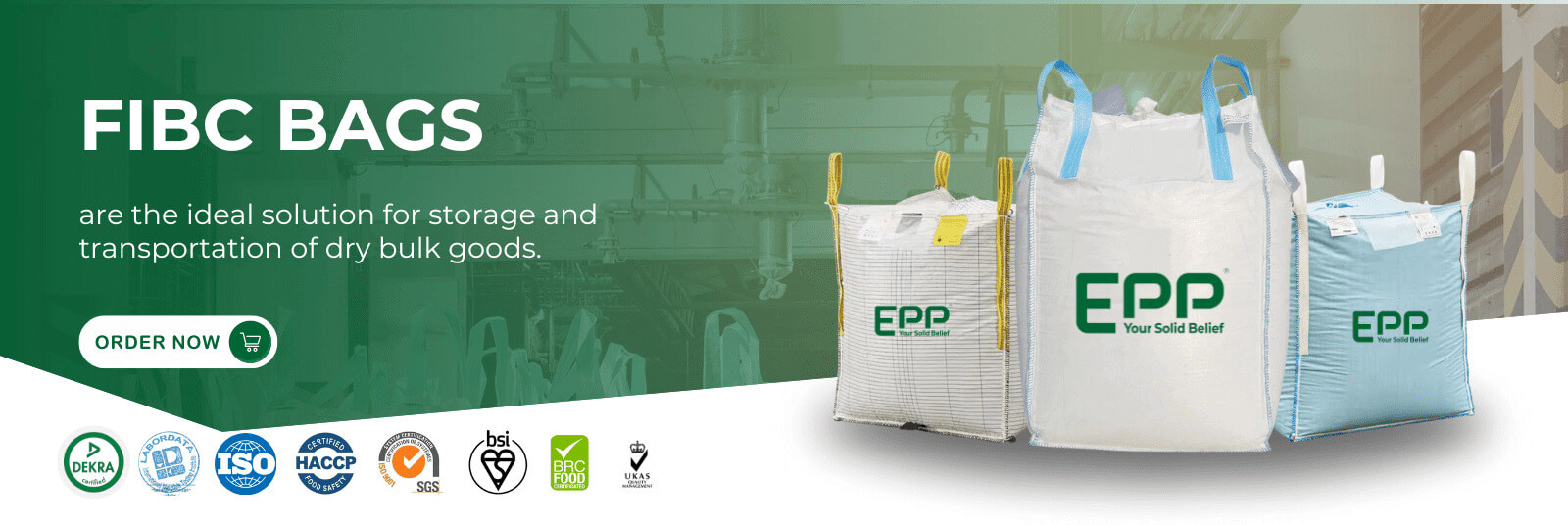
The global bulk packaging landscape has undergone a major transformation in recent years, driven by volatile logistics costs, tightening environmental regulations, and demanding cross-border supply chains. At the core of this shift is the FIBC industry, providing structural packaging infrastructure for high-volume solid materials worldwide.
Historically regarded as plain woven sacks, modern bulk containers have evolved into high-tech, engineered packaging solutions. By Fact.Mr, valued at approximately USD 6.38 billion in 2026, the FIBC market is projected to exceed USD 11.87 billion by 2036, expanding at a CAGR of 6.4%. This strong FIBC market growth reflects how bulk packaging has transitioned from a basic commodity to a strategic operational driver for agricultural exports, specialty chemicals, and pharmaceuticals.
How Has the FIBC Industry Developed Over the Years?
The FIBC industry development originated as a specialized response to heavy industrial transport challenges. Early containers were basic canvas sacks used for short-distance handling of construction materials. The adoption of polypropylene FIBC extrusion and circular weaving techniques revolutionized the sector, giving rise to lightweight, durable PP woven bulk bags optimized for ocean freight.
The current FIBC industry outlook highlights a clear shift from basic commodity production toward specialized packaging engineering. Modern industrial buyers demand precise Safety Factors (5:1 single-trip, 6:1 multi-trip), advanced electrostatic protection, and certified hygiene controls.
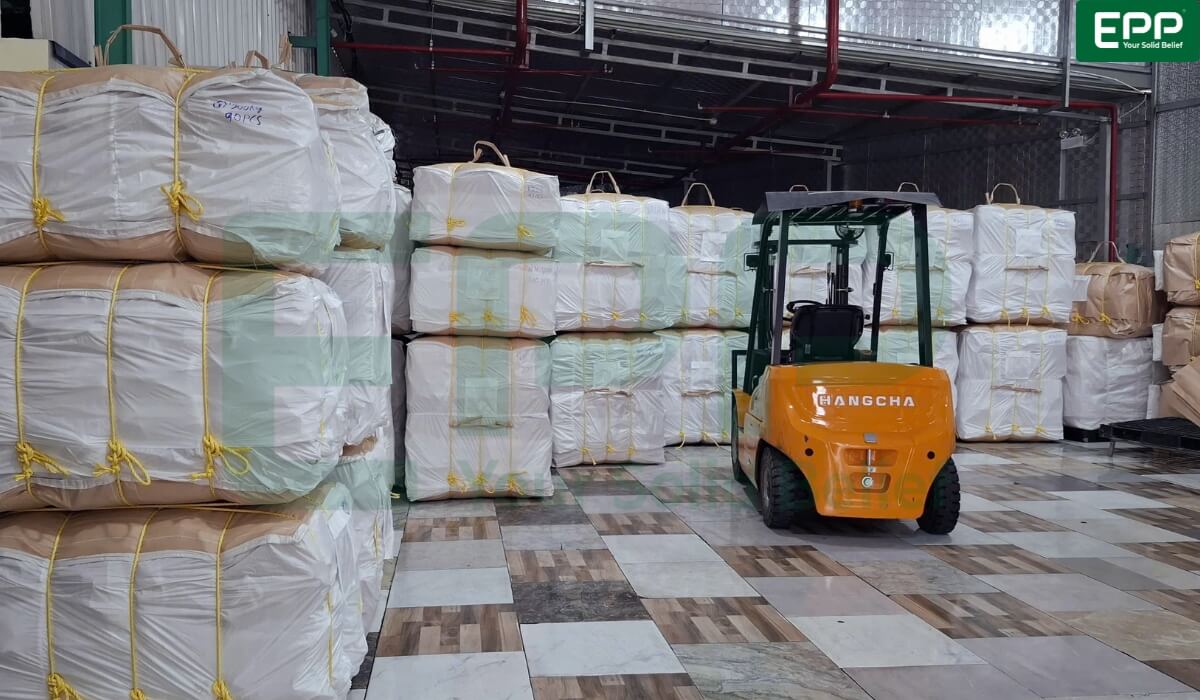
Modern FIBC jumbo bags stored in an industrial warehouse facility ready for global export.
Key Market Drivers Reshaping the Global FIBC Industry
Multiple economic and structural catalysts continue to drive key bulk bag market trends:
- Surging Global Bulk Trade: Chemical processing, mineral extraction, and agriculture rely heavily on heavy-duty bulk bags to move granular goods efficiently across global trade routes.
- Transition from Rigid to Flexible Packaging: Shippers are replacing rigid drums and rigid IBCs with super sacks to minimize tare weight and cut freight overheads. Unfilled empty ton bags fold completely flat, drastically reducing warehouse footprint and return logistics costs.
- Automation in 3PL Networks: Modern logistics hubs demand standardized jumbo bags designed for automated filling, discharging, and robotic forklift handling.
How Are FIBC Products Evolving?
Continuous product innovation enables top manufacturers to resolve critical operational pain points for international buyers:
Electrostatic Discharge Safety
Handling fine powders, flammable resins, or volatile chemicals requires strict static prevention to prevent dust explosions during rapid filling:
- Type C Bags: Interwoven with conductive carbon/silver threads that require grounding during operation.
- Type D Bags: Engineered with static-dissipative yarns that safely discharge static energy into the air without grounding.
Cleanroom Manufacturing Excellence
For food ingredients and active pharmaceutical ingredients (APIs), standard industrial environments are insufficient. Premium Food grade FIBC bags are manufactured inside ISO cleanrooms featuring ultrasonic cutting to prevent loose thread contamination, automated optical inspection, and specialized barrier liners to prevent moisture ingress.
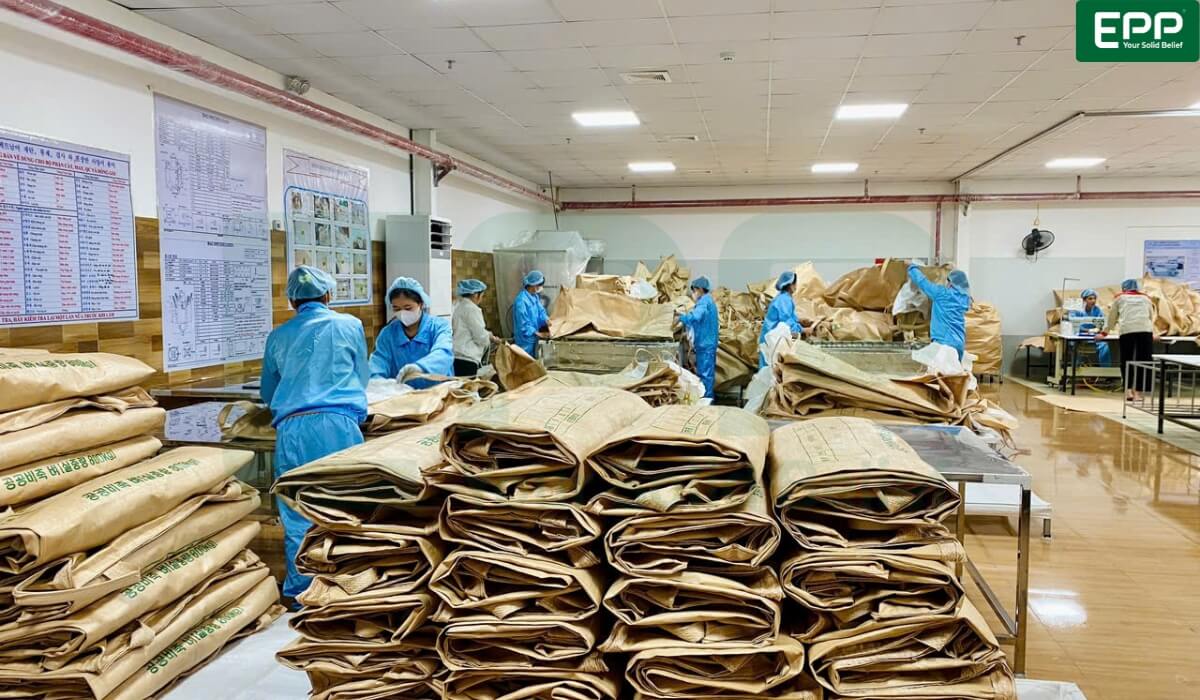
Cleanroom manufacturing and inspection floor at EPP Vietnam adhering to BRCGS food-safety standards
How Are Regional Markets Shaping the Global FIBC Industry?
Supply and demand dynamics across key global regions continue to reshape the FIBC export market:
- North America: High demand for specialized industrial bulk bags driven by advanced chemical processing, mining, and strict workplace safety mandates.
- Europe: Leads the adoption of circular packaging. Extended Producer Responsibility (EPR) regulations encourage buyers to source big bags containing post-consumer recycled polypropylene (rPP).
- Asia-Pacific: Represents the primary global manufacturing hub. Expanding production infrastructure in Southeast Asia provides competitive sourcing options for international procurement managers.
Regulatory Standards & Quality Certifications Buyers Must Know
Partnering with a reliable FIBC manufacturer requires verifying compliance with international quality standards:
| Certification / Standard | Application Area | Technical Benchmark |
| BRCGS Packaging Materials | Food, Pet Food & Pharma | Foreign body control, strict hygiene, end-to-end traceability. |
| UN Certification | Hazardous Goods | Drop, stacking, and top-lift testing per UN guidelines. |
| ISO 9001 / ISO 22000 | Quality & Food Safety Management | Systematic quality control and hazard management systems. |
| IEC 61340-4-4 | Flammable & Explosive Powders | Surface resistance and breakdown voltage compliance for static safety. |
How Is Technology Changing the FIBC Industry?
Technological advancements are driving higher precision and transparency across bulk packaging manufacturing:
Automated Weaving and Sewing Systems: High-speed circular looms and automated vision inspection systems detect fabric defects, pinholes, and weave inconsistencies in real time.
Smart Bulk Containers (IoT/RFID): Embedded RFID tags allow supply chain teams to monitor cargo location, ambient humidity, and temperature throughout international transit.
Ultrasonic Cutting: Replaces traditional thermal knives to eliminate frayed fabric edges and micro-plastic contamination in food-grade applications.
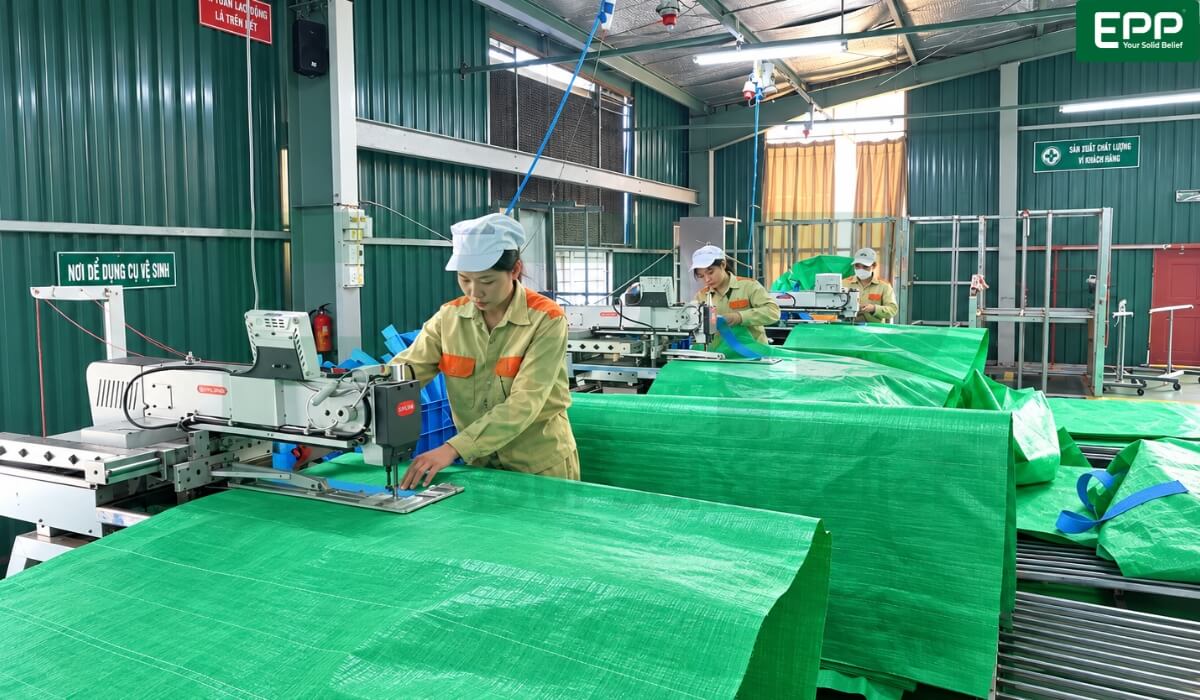
Automatic sewing machine for FIBC bags in EPP Vietnam factory partner
What Are the Next Trends in the FIBC Industry?
Looking ahead, three major developments will define the industry landscape:
- Circular Monomaterial Construction: Widespread transition toward 100% single-polymer designs (all-polypropylene loops, fabric, and liners) to simplify end-of-life recycling.
- Space Optimization via Baffle Bags: Increasing adoption of Q-bags (baffle bags) that maintain a rectangular profile after filling, optimizing shipping container payload space by up to 25%.
- Master Vendor Sourcing Models: Overseas buyers are mitigating supply chain risks by moving away from single-factory sourcing toward established Master Vendors capable of coordinating multi-factory production capacity.
FIBC Industry FAQ
How does recycled polypropylene (rPP) impact FIBC bag strength?
Incorporating post-consumer or post-industrial rPP can shorten polymer chains, affecting fabric tensile strength. However, using advanced extrusion technology and controlled virgin-to-recycled resin blends enables rPP-based bags to meet required Safe Working Loads (SWL) and 5:1 Safety Factors safely.
Why should overseas buyers import FIBC bags from Vietnam?
Vietnam has become a preferred hub for FIBC sourcing Vietnam due to modern weaving facilities, favorable trade tariffs, skilled labor, and direct access to major ocean shipping lines. Working with a dedicated jumbo bag supplier or bulk bag supplier in Vietnam ensures consistent quality control, flexible order volumes, and full compliance with BRCGS and UN packaging standards.
How do BRCGS cleanroom standards benefit food-grade FIBCs?
BRCGS certification ensures that big bag are produced in controlled cleanroom environments using ultrasonic fabric cutting, strict pest/foreign body control, and automated vision systems to guarantee zero contamination for food and pharmaceutical powders.
Strategic Bulk Packaging Solutions for Global Trade
The flexible intermediate bulk container industry is advancing toward sustainable materials, advanced static safety, and resilient supply chain models. Capitalizing on these developments requires a trusted manufacturing partner capable of delivering consistent quality across complex technical specifications.
As a premier FIBC supplier Vietnam, EPP Vietnam provides total sourcing management—from technical bag design to multi-factory quality assurance. Contact our technical team today to request custom quotes and optimize your bulk packaging procurement strategy.
Website: epp.vn
Alibaba website: https://eppvietnam.trustpass.alibaba.com/
Email: [email protected] Hotline/ Whatsapps: +84 986 002 888