The accelerating deployment of plastic in global agriculture—from expansive multi-season greenhouses to specialized mulch applications—has created a crucial environmental and logistical imperative. While plastic is indispensable for modern yield optimization, the volume of agricultural plastic waste and agricultural film waste generated globally demands a structured, closed-loop solution.
Understanding agricultural film recycling is no longer just an ecological necessity; it is a critical requirement for regulatory compliance and economic optimization within a true circular economy. This comprehensive guide details why this material is difficult to handle, the technical stages of the agricultural film recycling process, and the resulting high-value market applications for the final recycled plastic.
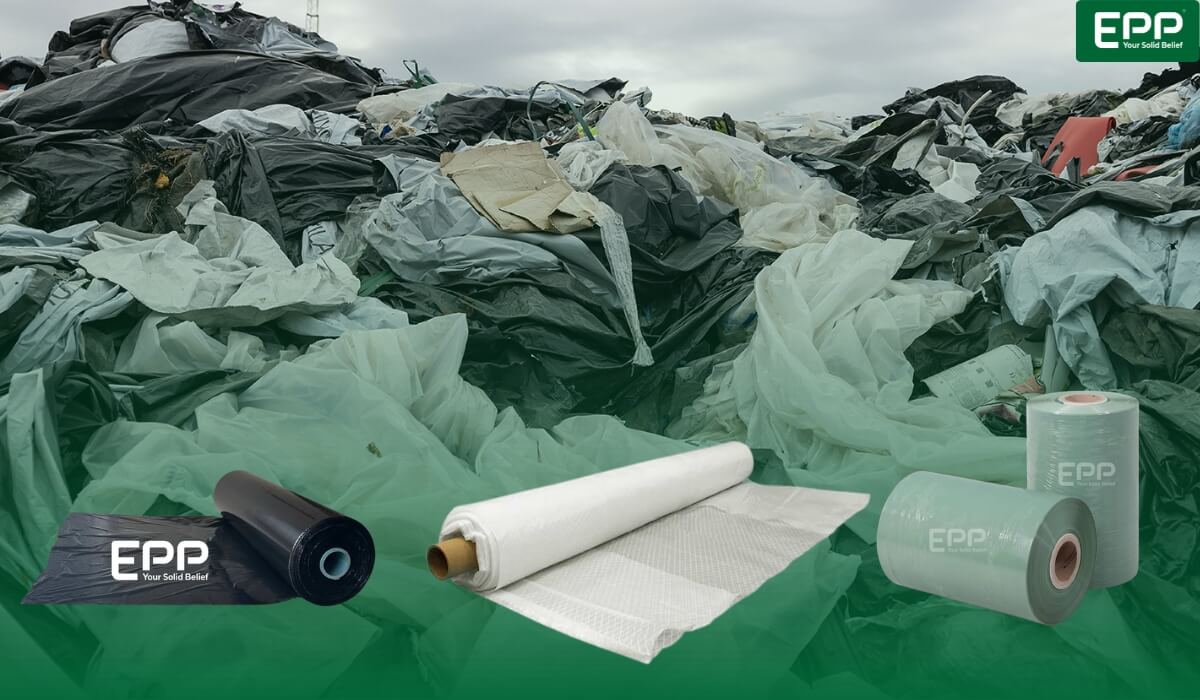
Global agricultural operations collect large volumes of used greenhouse, silage and mulch films
Why Is Agricultural Film Difficult to Recycle?
Handling waste and plastic film from agricultural sites often presents a difficult challenge: the heavy contamination and low density of collected materials complicate logistics and processing.
High Contamination from Soil, Moisture, and Residues
By far, the biggest barrier to efficient agricultural film recycling is contamination. Agricultural films are heavily burdened with soil contamination, embedded crop residue, and field debris. A significant problem is high moisture contamination, as the film absorbs and traps water directly from the ground.
Many films also carry hazardous chemical residue from pesticides and fertilizers used on crops. This severe agricultural film contamination causes excessive wear on recycling machinery and dramatically increases the difficulty and cost of modern agricultural plastic waste management.
Polymer Degradation from UV Exposure
Prolonged exposure to sunlight causes severe UV degradation in end-of-life agricultural film. This degradation attacks the polymer structure, making the used agricultural film brittle and difficult to process, directly reducing overall film recyclability and the quality of the resulting recycled resin. This necessitates careful on-site management of post-use agricultural film to minimize further degradation before processing.
Polymer Profiling: LDPE, LLDPE, and Mulch Film Dynamics
When EPP Vietnam works with large-scale agricultural projects, defining the polymer profile and material dynamics is essential. The vast majority of films are polyethylene agricultural film, but different types demand distinct mechanical and chemical properties.
Greenhouse and Silage Films (LDPE & LLDPE)
Greenhouse covers and silage wraps must provide high clarity, strong tensile strength, and excellent elongation. These requirements are met by specific polymer blends: LDPE agricultural film (Low-Density Polyethylene) for clarity and transparency—often involving a specialized LDPE film manufacturing process—and LLDPE agricultural film (Linear Low-Density Polyethylene) for toughness and puncture resistance. These are multi-year or heavy-duty single-season products, crucial for greenhouse film recycling and silage film recycling.
Mulch Films and the Fragmentation Challenge
Mulch films present the most extreme technical hurdles. Mulch film recycling are exceptionally difficult because these films are incredibly thin (sometimes under 20 microns) and tend to tear into small fragments while embedded in the soil. To understand the composition behind these ultra-thin layers, explore what mulch films are made of. Their thin profile and heavy dirt adhesion require specialized technological solutions to enhance plastic film recovery and maximize yields from mechanical recycling.
As an alternative to mechanical recovery, many growers are evaluating advanced biodegradable plastic film formulations that naturally decompose in the soil, eliminating the need for post-harvest film collection altogether.
How Does Agricultural Film Recycling Work?
Converting dirty post-use agricultural film into high-purity recycled PE (recycled Polyethylene) pellets demands a rigorous, structured 3-step agricultural film recycling process. This sequence turns a low-density, messy aggregate into a structured, high-value raw material.
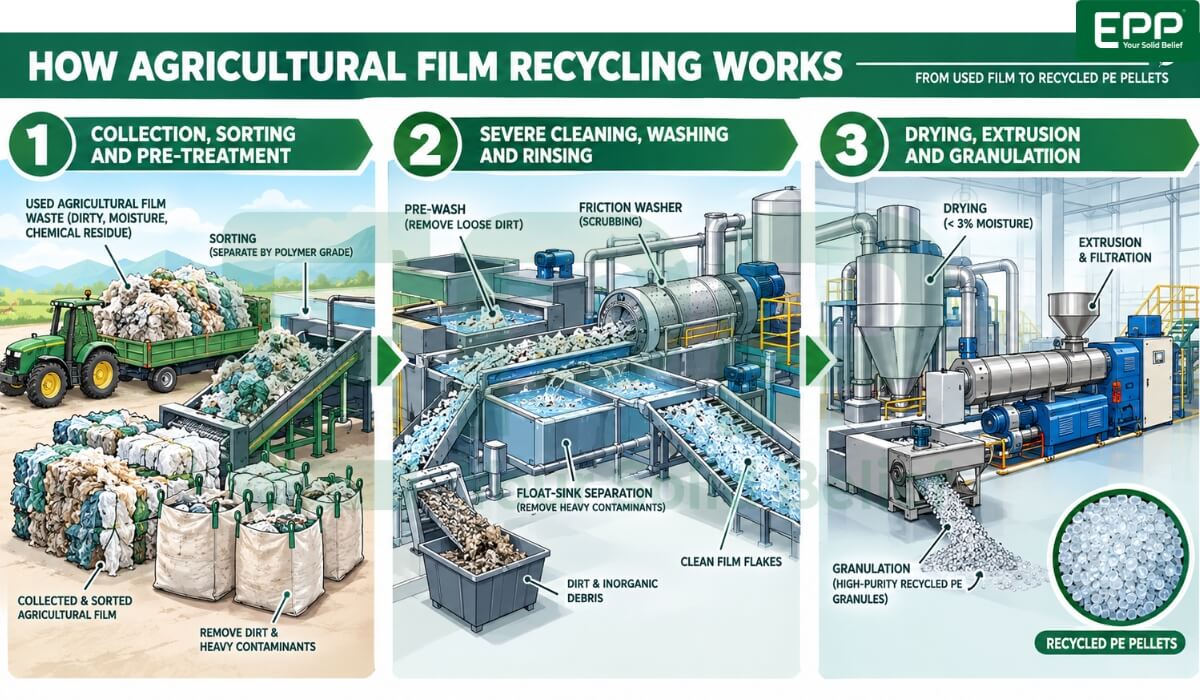
Complete 3-Step Agricultural Film Recycling Process diagram
Step 1: Collection, Sorting, and Pre-Treatment
Successful agricultural plastic waste management begins at the source with structured agricultural film collection. Efficient collection separates heavy dirt clumps from plastic, stacking film neatly to prevent rainwater buildup. This critical pre-treatment is followed by rigorous agricultural film sorting at the facility to segregate polymer grades and maximize agricultural film recovery rates.
Step 2: Severe Cleaning, Washing, and Rinsing
After sorting, the material must undergo intensive cleaning. Agricultural film cleaning and agricultural film washing involve severe mechanical scrubbing and float-sink separation. These systems scrub away extreme agricultural film contamination, high moisture contamination, and hazardous chemical residue. High-speed friction washers and specialized separation tanks isolate light plastic film from heavy inorganic debris.
Step 3: Drying, Extrusion, and Granulation
Once the film flakes are clean, they are dried thoroughly to drop moisture content below 3%—a technical imperative prior to melt processing. They are then melt-extruded and filtered in an advanced pelletizer. The resulting product is high-purity recycled PE granules, ready to be reintroduced into manufacturing as a sustainable substitute for virgin plastic, driving agricultural plastic circularity.
Market Applications for High-Purity Recycled Agricultural Plastic
The quality and application potential of the resulting recycled agricultural plastic depend directly on the effectiveness of sorting and washing, which minimizes final chemical residue and soil contamination.
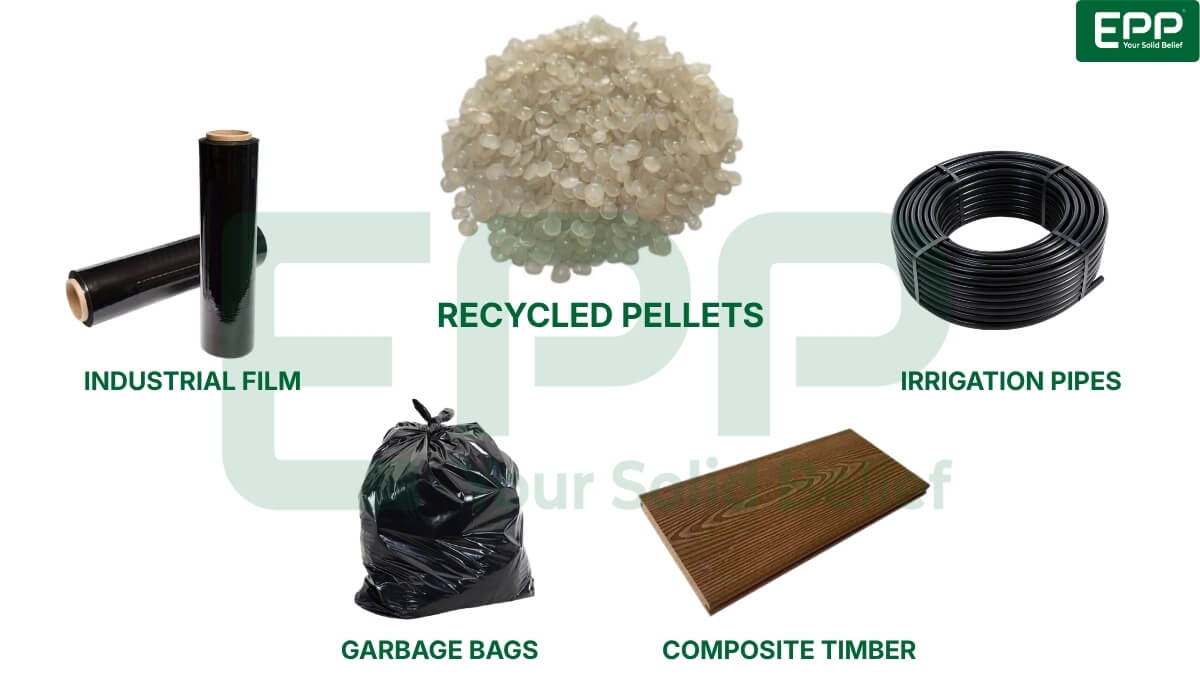
High-purity recycled PE pellets repurposed into industrial plastic applications
| Material Grade | Primary Source | Technical Requirement | Market Application / Reuse |
| High-Class Recycled LDPE | Clear Greenhouse Covers | >98.5% PE Content | Transformed into new utility films, garbage bags, or construction sheeting. |
| Recycled LLDPE Granules | Silage Wraps & Heavy Covers | Low Melt Flow Index (MFI) | Ideal for irrigation pipes, agricultural containers, and heavy industrial packaging. |
| Mixed Recycled Polyolefins | Black Mulch Films | High UV Stabilizer Content | Converted into composite timber, fence posts |
Frequently Asked Questions About Agricultural Film Recycling
Should agricultural film be washed before processing?
Yes. Pre-washing or intensive multi-stage industrial washing is non-negotiable. Agricultural films can carry up to 40–50% of their total weight in soil, dirt, and moisture. Removing these abrasives protects recycling machinery from excessive wear and ensures high resin purity.
Can agricultural film become new film?
High-purity recycled PE derived from clean greenhouse covers (LDPE) can be co-extruded into new utility films, thick agricultural sheeting, or trash bags. However, due to slight polymer degradation from sunlight exposure, it is often blended with virgin resin for high-stress applications.
What standard covers agricultural plastic recycling?
International standards such as ISO 15270 (for plastics waste recovery and recycling) and European standards like EN 15343 govern the traceability, quality assessment, and recycled content certification of processed agricultural plastics.
Which Agricultural Films Can Be Recycled?
Most conventional agricultural films made from standard polyolefins can be processed through mechanical recycling systems:
- Greenhouse Films (LDPE/LLDPE): Highly recyclable due to larger thickness and lower soil contamination.
- Silage Wraps & Bags (LLDPE): Recyclable when collected free of organic silage spoil.
- Tunnels & Covers: Easily processed if sorted by polymer type.
- Heavy-Duty Mulch Films: Recyclable if thickness exceeds 20–25 microns and soil contamination is under 30%.

Conclusion: Driving a Closed-Loop Supply Chain for Agriculture
Advancing agricultural film recycling is essential to solving the farm plastic waste crisis. Transitioning from used film to structured, high-purity recycled plastic creates the foundation of a sustainable, closed-loop supply chain that drives true circular agriculture.
Understanding how to recycle agricultural film requires a comprehensive approach that addresses the unique challenges of material contamination, technical specs, and logistical complexity. EPP Vietnam, a global master supplier with deep expertise in high-quality agricultural films, understands how these material characteristics interact with bulk packaging and logistics. We oversee strict international quality parameters to ensure our clients receive the exact specifications and volume required for their massive operations.
Start optimizing your industrial supply chain and sustainable material recovery today with expert global guidance. Contact EPP Vietnam for high-volume solutions and comprehensive logistics support:
Website: epp.vn
Alibaba website: https://eppvietnam.trustpass.alibaba.com/
Email: [email protected] Hotline/ Whatsapps: +84 986 002 888