
Essential FIBC bags uses are the backbone of modern industrial procurement, serving as the critical link between efficient production and safe global distribution. For procurement professionals, understanding the specific applications of these flexible containers is not just about ordering packaging; it is a core function of risk management and supply chain optimization.
These Flexible Intermediate Bulk Containers—or super sacks—are far more than simple storage units. They are engineered tools designed to protect a ton or more of high-value goods while navigating complex, sometimes hostile, logistics environments. From protecting sensitive food ingredients to safely containing volatile chemicals, the FIBC is the unsung hero of bulk transport.
My experience in supply chain logistics has taught me that cutting corners on bag specification inevitably leads to costly failures. The lowest unit price is rarely the best value. True value lies in matching the technical design of the FIBC to the precise requirements of the material being shipped.
Role of the FIBC in Global Supply Chains

The sheer scale and versatility of the FIBC make it foundational to modern manufacturing and trade. A single bulk bag, often holding between 500 kg and 2,000 kg, replaces dozens of smaller sacks, drastically reducing labor, accelerating loading times, and maximizing shipping container efficiency.
This shift to mechanized bulk handling is not just about saving money; it’s about establishing resilience. When correctly specified, the FIBC provides a portable, durable, and highly traceable unit that maintains product integrity from the production line all the way to the final discharge point. This makes mastering the core FIBC bags uses paramount for any serious industrial buyer.
Heavy Industry FIBC Bags Uses
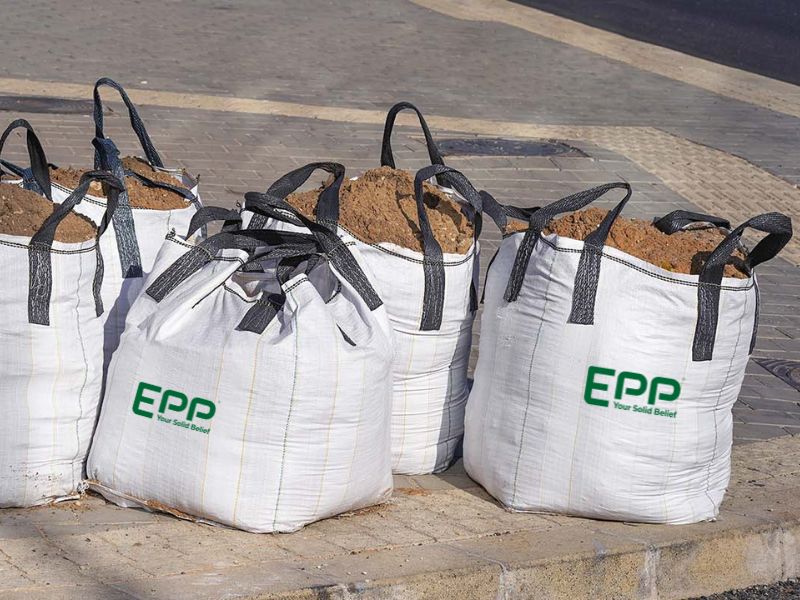
This category is defined by the need to manage massive weights, high material densities, and the risk of loss due to moisture or sifting—a common scenario across Construction, Mining, and bulk raw materials.
Protecting Fine Powders from Moisture and Sifting
Materials like fine-grind cement, flour, titanium dioxide pigments, and fine chemicals are highly susceptible to environmental damage. Cement, for instance, is hygroscopic and will harden if it absorbs ambient moisture. The meticulous containment of these materials represents a critical category of FIBC bags uses due to the risk of product loss (sifting).
For procurement, the key specifications here are Coated/Laminated bags or the inclusion of a heavy internal Polyethylene (PE) Liner to act as a complete moisture barrier. Crucially, specify Sift-Proof Seams—extra felt or specialized thread sealing the minute holes created during the stitching process—which are mandatory for ensuring containment of micro-particles.
High-Density Transport and Space Optimization
When shipping materials like iron ore, mineral concentrates, heavy aggregates, or sand, the weight and density demand structural integrity above all else. Procurement must prioritize Heavy-duty U-panel or 4-panel bags engineered with reinforced fabric and lifting loops to reliably hold Safe Working Loads (SWL) typically between 1,000 kg and 2,000 kg.
Furthermore, maximizing transport volume is a major cost driver. This is where Baffle Bags (Q-Bags) provide a crucial logistics advantage. Their internal stabilizing fabric panels prevent the bag from rounding out into a cylinder when filled. They hold a neat, square shape, allowing for up to 30% more product to be loaded into a shipping container and significantly improving warehouse stacking stability.
Sensitive FIBC Bags Uses
FIBCs are fundamental to agrologistics and food manufacturing, but the requirements shift from mere durability to environmental control and hygiene.
Handling Perishable Fresh Produce
Storing living or high-moisture products like seed potatoes, onions, and garlic demands constant airflow. Packing them in a standard, sealed FIBC would cause immediate heat buildup, condensation, and rapid microbial spoilage.
The solution lies in Ventilated (Breathable) FIBCs. These include bags with Ventilated Strips for robust root vegetables or Mosquito Mesh sides for maximum airflow and drying, ideal for highly perishable crops. This engineering eliminates the “sweating” that quickly spoils produce when stored in non-breathable containers.
Meeting Non-Negotiable Food Grade Standards
When FIBC bags uses involve human consumption goods—flour, sugar, coffee, or milk powder—they must meet non-negotiable standards for cleanliness. Food-Grade Baffle Bags must be sourced from suppliers with certified clean rooms (like ISO 22000 or BRC) and pass checks for metal and foreign bodies. The sealed inner PE Liner acts as the final contamination barrier, making it critical for compliance.
Isolating Hygroscopic Fertilizers
Agricultural inputs like urea and other fertilizers are highly moisture-sensitive. They must be isolated from humidity to prevent clumping and hardening. For these agrochemicals, procurement should only accept Laminated Bags or those with a heavy PE Liner, which effectively seals the product against the environment.
Critical Safety FIBC Bags Uses
In the chemical and pharmaceutical industries, the bag’s function is not just storage—it is explosion and hazard prevention, driving specialized FIBC bags uses.
Mitigating Static Discharge Risk
The friction created during the rapid filling or emptying of fine powders (like resins and volatile pigments) can generate significant static electricity. In an environment with flammable dust, this discharge can cause a dust explosion.
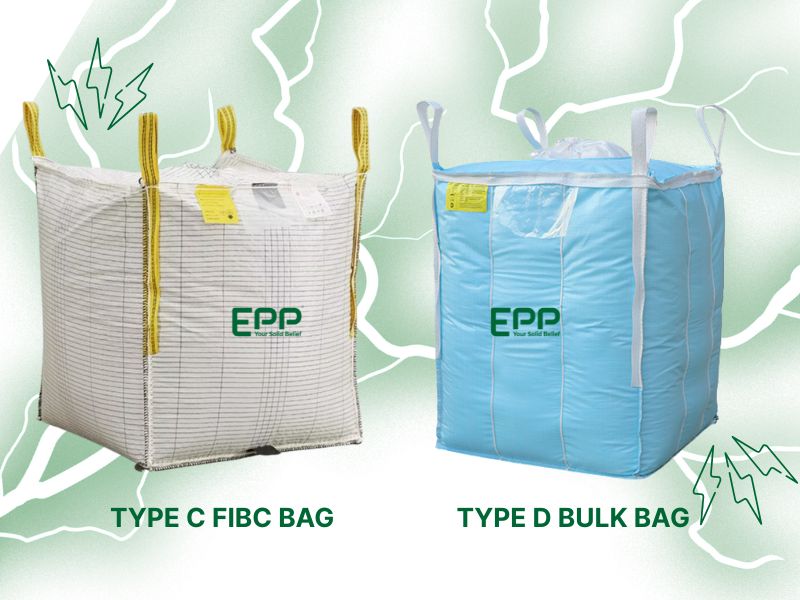
The most vital specification here is the Anti-Static FIBC (Type C or Type D). Type C bags are conductive and must be correctly grounded via a wire connection during use, whereas the specialized fabric of Type D bags safely dissipates the charge into the atmosphere without grounding, making them ideal for highly volatile operations.
High-Purity and Legal Compliance
For the highest-value or most dangerous materials,
For the highest-value or most dangerous materials, specialized FIBC bags uses must meet strict regulatory standards. For materials like asbestos or specific chemical waste, UN-Certified Bags are legally required. These bags have undergone rigorous testing (drop tests, tear tests) and guarantee safe containment for transport and disposal.
Industrial Recycling and Volume Management
FIBCs are heavily used for voluminous, low-density materials in the recycling sector. For plastic flakes, shredded film, or pellets (resins), the focus is purely on volume containment and ease of handling. Standard Circular Bags or Sleeve/Tunnel Lift Bags are often preferred for their cost-efficiency and adaptability to mechanical handling systems.
Strategic Sourcing when Buying FIBC Bags
The procurement manager’s role is to look beyond the cost per unit and evaluate long-term risk. Achieving genuine wholesale value requires a focus on two non-negotiable technical specifications.
Raw Material Integrity
The foundation of a reliable FIBC for all FIBC bags uses is the use of 100% Virgin Polypropylene (PP) resin. Beware of suppliers offering deep discounts; they often substitute virgin PP with recycled fillers, which severely compromises the bag’s tensile strength and dramatically lowers its UV Stabilization. A failure in UV protection means the bag may degrade and burst within weeks if stored outdoors, negating any initial cost savings.

Safety Factor (SF) and Reusability
Every bag must have a certified Safety Factor (SF). Procurement must clearly differentiate the use case:
- 5:1 (Single-Trip): The industry standard for bags that are filled once and discarded upon discharge (e.g., export).
- 6:1 (Multi-Trip): Essential for bags used repeatedly within a closed-loop system. This higher rating guarantees stronger fabric and loops designed for repeated wear and handling, offering substantial savings in internal logistics.
Conclusion
The strategic use of FIBC bags uses is not merely a packaging decision—it is a critical investment in supply chain resilience. The right bag transforms packaging from a cost center into a core element of supply chain security.
By aligning the bag’s technical specifications—from airflow needs for fresh produce to anti-static requirements for chemicals—with your exact operational needs, procurement professionals can maximize efficiency, reduce waste, and safeguard their most valuable asset: the product inside the bag. The best bulk purchase is always the one that successfully minimizes risk.
