
Spout top and discharge bottom jumbo bags represent the pinnacle of technical design in the FIBC industry, offering a fully enclosed, gravity-fed system for bulk material handling. As supply chains move toward, the demand for precision-engineered packaging has shifted from generic “one-size-fits-all” sacks to highly customized solutions. For procurement managers and plant engineers, understanding the synergy between the filling inlet and the discharge outlet is the key to reducing labor costs, eliminating dust contamination, and preventing expensive product loss during transit.
As a leading FIBC supplier based in Vietnam, we have seen firsthand how minor adjustments to a bag’s spout architecture can transform a facility’s efficiency. In this guide, we will break down the technical anatomy of spout top and discharge bottom jumbo bags and explain how to customize them for maximum operational ROI.
How Spout Top and Discharge Bottom Jumbo Bags Work
The core mechanism of spout top and discharge bottom jumbo bags is designed to facilitate a “closed-loop” handling process. Unlike an open-top bag that requires manual leveling or a flat-bottom bag that must be slashed open to empty, this design features two distinct cylindrical tubes: one at the top for filling and one at the bottom for discharging.

The process begins at the filling station, where the top spout is attached to the factory’s discharge pipe. Once the material is loaded, the spout is tied off, creating a hermetic seal. When the bulk bag reaches its destination, it is suspended over a hopper or mixer. The operator then releases the bottom spout’s safety tie, allowing the material to flow out via gravity. This dual-spout system ensures that the product—whether it be fine chemicals, food ingredients, or minerals—never comes into contact with the outside environment, maintaining 100% product purity.
Customizing the Spout Top
When ordering filling top and discharge spout jumbo bags, the filling spout is your first line of defense against dust and “back-pressure” during high-speed filling. Customization here is critical for matching your specific machinery.

Size and Diameter
The standard diameter is often 14 inches (35 cm), but custom diameters ranging from 10 to 20 inches are common. If the spout is too narrow for your fill-pipe, you risk clogging; if it is too wide, the inflatable seal on your machine may not hold.
Petal Closures and Ties
High-performance spout top and discharge bottom jumbo bags often utilize a “petal closure” (also known as a star closure) on the top. This is an additional fabric flap that folds over the spout after it is tied, providing an extra layer of protection against moisture.
The “Tie-to-Spout” Distance
A critical technical detail often overlooked is the distance between the tie-string and the top of the spout. For automated systems, we typically recommend a distance of 25 cm from the spout’s edge. This allows enough “fabric neck” for the machine’s clamps to grip the bag securely before the tie is applied.
Customizing the Discharge Bottom
The discharge mechanism is where most operational errors occur. Customizing the bottom of your spout top and discharge bottom jumbo bags ensures a safe, controlled, and complete empty.
Closure Types: Iris vs. Star

- Iris Closure with B-Lock: This is the “gold standard” for safety. An iris closure uses a drawstring that cinches the spout like a camera lens. By using a B-Lock (a heavy-duty plastic cord lock), the operator can partially open the spout to control the flow rate, which is essential when filling small hoppers.
- Star Closure: This features a reinforced fabric X-cut or petal design that protects the spout during transit. It is the preferred choice for heavy minerals where the weight of the product puts immense pressure on the bottom seal.

Base Types: Conical vs. Flat
- Conical Bottom: In a custom spout top and discharge bottom jumbo bag, a conical (tapered) base ensures that “sticky” or non-free-flowing materials (like wet sand or fine powders) are directed toward the spout, eliminating “dead zones” where product gets stuck in the corners.
- Flat Bottom: Best for standard free-flowing pellets or grains where the bag needs to sit perfectly square on a pallet.
Shared Experiences from a Vietnam Manufacturing Hub
Vietnam has become a global center for high-precision FIBC manufacturing due to advanced weaving technology and skilled labor. At our facility, we recently worked with a global pharmaceutical client who was struggling with “dust migration” in their cleanroom.
They were using standard spout top and discharge bottom jumbo bags, but the fine powder was leaking through the needle holes at the spout seams. Our solution was a “Triple Dust-Proof” custom design. We integrated a felt-cord filler into the seams and customized the discharge spout with a double-layered B-Lock system.
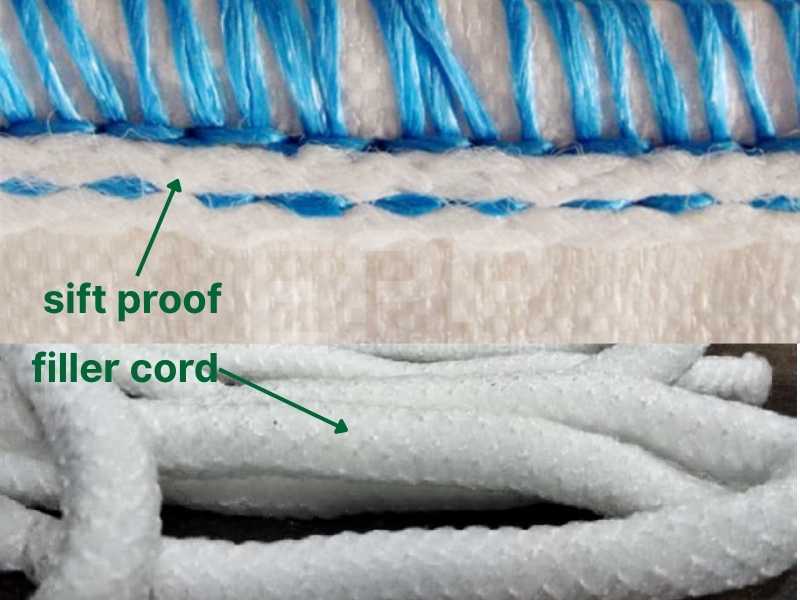
The result? The client reported a 95% reduction in airborne particulates and a significantly faster unloading time. This “shared experience” highlights that the value of spout top and discharge bottom jumbo bags isn’t just in the fabric, but in the engineering of the closures. Sourcing from Vietnam allows for this high level of customization at a cost-to-quality ratio that is currently unmatched in the global market.
Expert FAQ
Q: What is the most common size for a discharge spout?
A: While 14″ x 18″ (35cm x 45cm) is the industry standard for spout top and discharge bottom jumbo bags, custom lengths up to 24″ are used when the bag must reach deep into a receiving hopper to prevent splashing.
Q: Can I reuse a jumbo bag with a discharge spout?
A: Yes, provided the bag is rated with a 6:1 Safety Factor (SF). Bags with a 5:1 SF are intended for single-trip use only. The discharge spout allows the bag to be emptied without damaging the fabric, making 6:1 multi-trip bags highly sustainable.
Q: What is a B-Lock and why is it used on the discharge bottom?
A: A B-Lock is a spring-loaded or manual cord-locking device. It is used on the discharge spout of spout top and discharge bottom jumbo bags to allow operators to stop or start the flow of material mid-way through emptying, increasing safety and precision.
Q: How does a conical bottom improve discharge?
A: A conical bottom eliminates the 90-degree corners found in standard bags. This prevents “product bridging,” where materials get trapped in the corners, ensuring that the spout top and discharge bottom jumbo bags empty completely.
Conclusion
Choosing the right spout top and discharge bottom jumbo bags is an exercise in technical optimization. By customizing the diameter of the inlet, the closure mechanism of the outlet, and the geometry of the base, you can create a packaging solution that acts as a seamless extension of your factory’s machinery.
Whether you are looking for the safety of an iris closure or the hygiene of a petal top, our Vietnam-based manufacturing team specializes in translating these technical requirements into high-performance FIBCs. In the competitive landscape of 2026, a custom-engineered bag is no longer a luxury—it is a foundational requirement for a lean, efficient, and safe supply chain.
