
Application of FIBC bulk bags for agricultural products has revolutionized the way modern farms, co-ops, and processing plants handle logistics. In an industry where margins are tight and product integrity is paramount, moving away from labor-intensive 50kg sacks to mechanized bulk handling is no longer a luxury—it is a necessity.
Whether you call them jumbo bags, super sacks, or big bags, these flexible containers serve as the backbone of global agrologistics. They bridge the gap between the harvest field and the consumer, ensuring that everything from fine grain flour to rugged seed potatoes arrives in pristine condition.
This guide explores the critical roles these bags play and provides expert advice on selecting the right specifications for your specific crop.
Key Applications of FIBC Bulk Bags for Agricultural Products
The agricultural sector is diverse, and a “one-size-fits-all” approach rarely works. Different crops have distinct physical properties—some need air to breathe, while others need total isolation from moisture.
1. Grains, Seeds, and Pulses
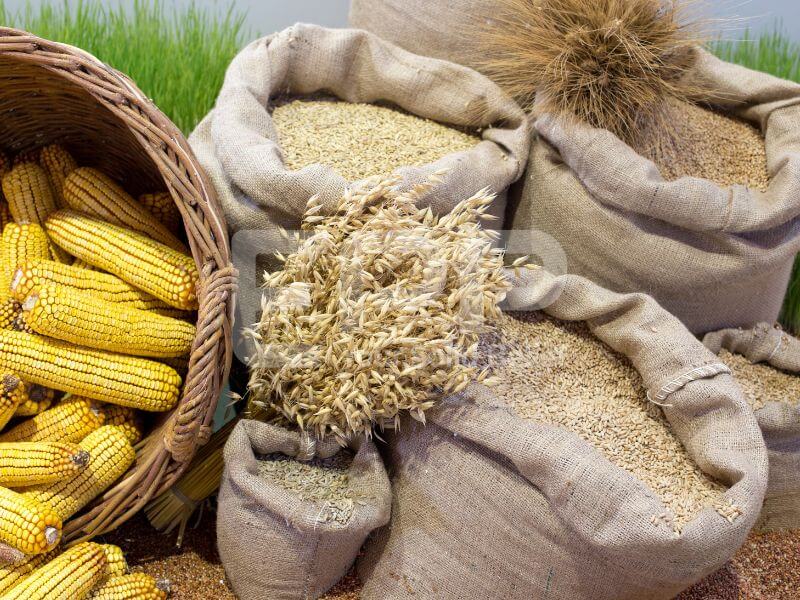
For flowable dry goods like wheat, corn, barley, soy, and coffee beans, standard FIBC bulk bags are the industry standard. These crops require protection from moisture, rodents, and contamination.
- The Challenge: Grains are heavy and can be abrasive.
- The Solution: Heavy-duty, tight-weave polypropylene bags (often with sift-proof seams) prevent fine particles from leaking out and contaminants from getting in. For high-value seeds, growers often opt for FIBC bulk bags with a Safe Working Load (SWL) of 1,000 kg to 1,250 kg to match standard hopper sizes.
2. Fresh Produce (Potatoes, Onions, and Vegetables)
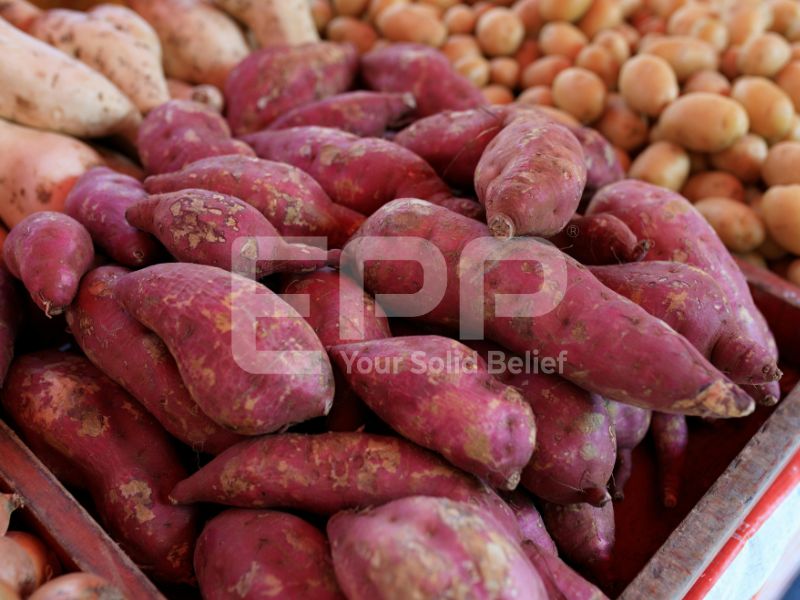
This is where specialized ventilated big bags shine. Root vegetables are living organisms even after harvest; they respire and release moisture.
- The Challenge: Storing potatoes or onions in a sealed bag leads to heat buildup, condensation, and rapid rotting.
- The Solution: Ventilated or “breathable” FIBC bulk bags utilize fabric with air stripes or mosquito-mesh sides. This allows air to circulate freely through the stored product, drying the skin of the vegetables and preventing mold growth during storage and transport.
3. Fertilizers and Agrochemicals
Handling urea, phosphates, and other chemical inputs requires a focus on safety and moisture control.
- The Challenge: Many fertilizers are hygroscopic (they attract water). If they absorb moisture from the air, they turn into unusable hard rocks.
- The Solution: These super sacks are almost always equipped with a polyethylene (PE) liner or are made from laminated fabric. This creates a hermetic seal that keeps chemicals dry and prevents hazardous fine powders from dusting out during handling.
4. Animal Feed and Fodder
From poultry feed to cattle supplements, bulk delivery is essential for efficiency.
- The Application: Feed mills use jumbo bags to deliver rations to farms that may not have large silos but have forklifts. These bags act as mini-silos, often suspended over a hopper to discharge feed as needed.
Specialized Design Features of FIBC Bulk Bags for Agriculture
To handle the diverse physical properties of crops, manufacturers have engineered specific features into agriculture bulk bags. Understanding these designs is critical to ensuring your product arrives in the same condition it left the farm. Below is a detailed breakdown of these features and a quick reference table to help you match the design to your crop.
Ventilated Strips vs. Mesh fabric
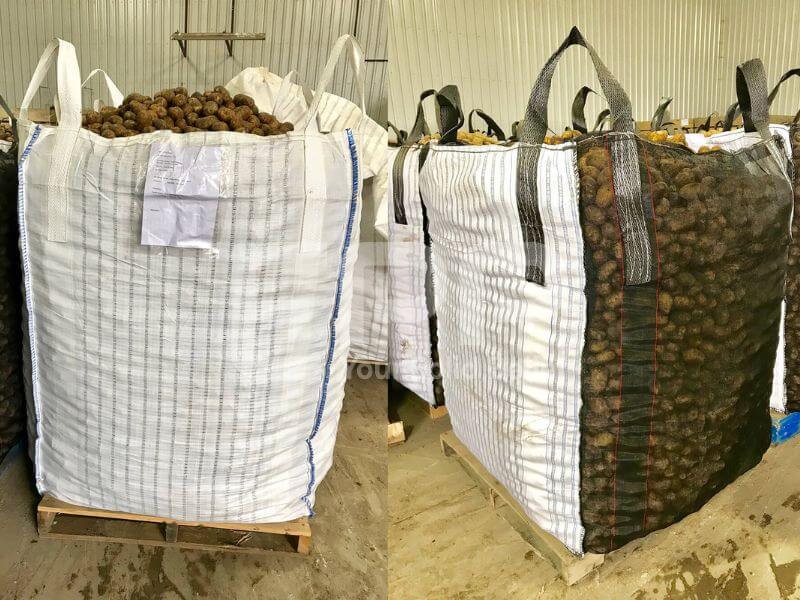
For produce that requires respiration, standard bags are insufficient. You will typically encounter two main breathable designs. Ventilated Strips consist of standard woven fabric with specific gaps left in the weave, creating a durable container that offers approximately 40-50% airflow. This design provides structural rigidity while allowing enough air circulation to prevent rot in robust root vegetables. Alternatively, mesh fibc bulk bags are constructed almost entirely of netting material. While less rigid than strip bags, they offer maximum airflow, making them the superior choice for crops that require rapid drying or have high moisture content.
Baffles (Q-Bags) for Stability
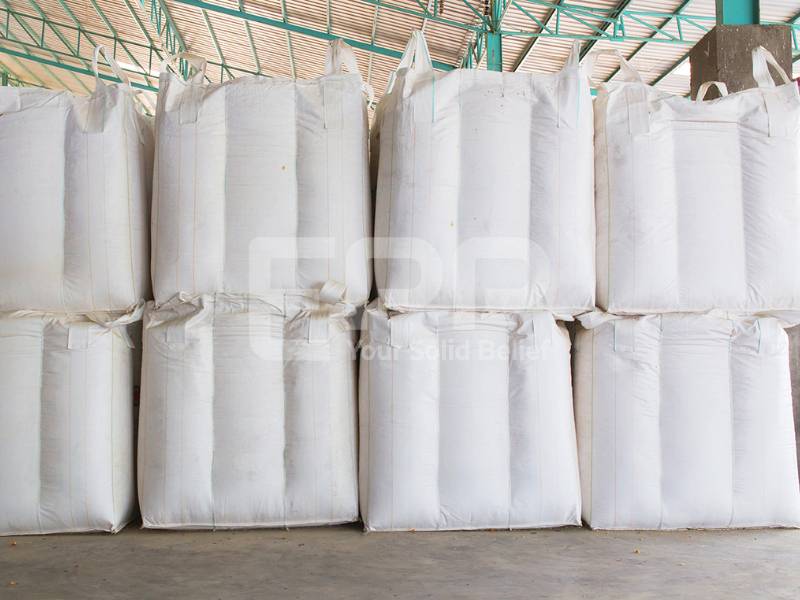
Standard FIBC bulk bags naturally round out into a cylinder when filled, which can waste valuable corner space in tight barns or shipping containers. To address this, Baffle bags (often called Q-Bags) feature internal fabric panels sewn across the corners. These panels prevent the bag from bulging, holding it in a neat square shape even when fully loaded. If you are exporting crops in 20ft or 40ft containers, utilizing baffle bags is an expert strategy that can allow you to load up to 30% more product compared to standard bags, as they stack neatly without gaps.
Food Grade Liners and Protection
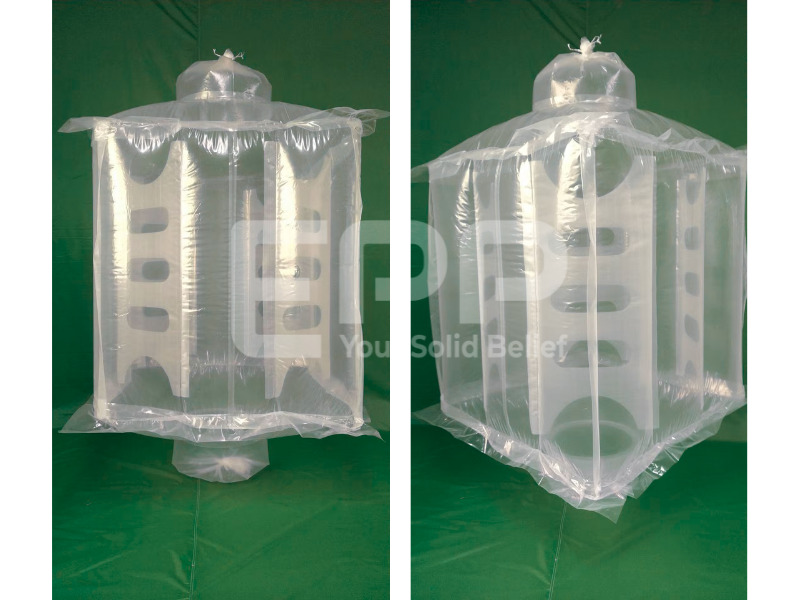
For crops intended for human consumption, such as flour, sugar, or specialty grains, the FIBC bulk bags must meet strict hygiene standards to prevent contamination. Food-grade bags are manufactured in certified clean rooms (ISO 22000 or BRC) to ensure no loose threads, dust, or pathogens are present. These bags often feature specific Food Grade Liners—polyethylene inserts that are either loosely inserted or glued (tabbed) into the outer bag—to provide a hermetic seal against moisture and pests.
Design Recommendation Table
| Design Feature | Key Benefit | Recommended Agricultural Products |
|---|---|---|
| Ventilated Strips | Structural durability with moderate airflow (40-50%). | Potatoes, Firewood, Carrots, Turnips |
| Mosquito Mesh | Maximum airflow for drying and high-respiration crops. | Onions, Garlic, Peanuts, Walnuts, Ginger |
| Baffles (Q-Bags) | Space-saving square shape; maximizes container load. | Grains (Wheat, Soy), Seeds, Pulses (Export) |
| PE Liners / Lamination | Hermetic moisture and dust seal. | Fertilizers, Urea, Sugar, Fine Flours, Milk Powder |
| Sift-Proof Seams | Prevents leakage of fine powders without a liner. | Seeds, Grain, Animal Feed |
The Benefits of FIBC Bags for Agriculture
Why should a farm or distributor switch to FIBCs? The advantages go beyond simple storage.
- Labor Reduction: It takes the same amount of time for a forklift operator to lift a 1,000 kg super sack as it does for a laborer to lift a single 50 kg sack. The math is simple: one movement moves 20x the product.
- Pest and Waste Control: Unlike piles of grain left in an open shed, sealed jumbo bags provide a first line of defense against rodents and birds. Furthermore, because the FIBC bulk bags are mechanically handled, there is significantly less spillage compared to handling small sacks.
- Traceability: Each bag can be tagged with a document pouch containing harvest dates, field origin, and batch numbers. This is crucial for modern food safety compliance and organic certification tracking.
- Space Efficiency: When empty, big bags are lightweight and foldable, taking up minimal space in the barn. When full, they can be safely stacked 2 or 3 high (depending on stability), maximizing vertical storage without the need for permanent racking systems.
How to Choose the Right Agricultural FIBC Bulk Bags
As an expert in the field, I often see farmers overpaying for features they don’t need, or worse, buying bags that fail because they are under-specced. Here is my checklist for your procurement:
1. Determine the Safety Factor (SF)
- 5:1 (Single Trip): If you are filling the bag and shipping it to a customer who will cut it open and discard it, buy a standard 5:1 bag. It is cost-effective and designed for one fill and one discharge.
- 6:1 (Multi-Trip): If you are using the bags internally—for example, moving seed from the warehouse to the planter and back—invest in 6:1 heavy-duty FIBC bulk bags. They are built with thicker fabric and stronger loops to withstand repeated handling.
2. Match the Fabric to the Crop
- Potatoes/Onions/Firewood: You must specify “Ventilated” or “Mosquito Mesh.”
- Fertilizer/Cement/Fine Powder: You must specify “Coated” or “With PE Liner.”
- Grains/Seeds: Standard uncoated fabric is usually fine, but ensure the seams are “Dust Proof” (sift-proof) to prevent leakage.
3. Check the Loop Design
For agricultural use, Cross Corner Loops or Tunnel Loops are often preferred. Tunnel loops are excellent because they allow forklift tines to slide easily into sleeves at the top of the bag, which is safer for operators working on uneven field terrain.
In conclusion, the decision to use FIBC bulk bags is a clear strategic investment in the future of your farming or distribution business. The efficiency gains are substantial, with mechanized handling translating to lower labor costs and faster turnaround times during peak season. However, true value comes from meticulous product selection. By prioritizing the correct technical specifications—whether it’s the structural rigidity of a Baffle bag for container loading, the essential airflow of a Ventilated bag for root crops, or the moisture barrier of a PE Liner for fertilizer—you safeguard your product’s quality and, ultimately, your bottom line.
Don’t fall into the trap of purchasing based solely on the cheapest unit price; instead, view your FIBC bulk bags as specialized assets designed to protect thousands of pounds of valuable inventory. By following the checklist provided in this guide, you ensure maximum protection, optimal logistics, and sustained profitability.