
IEC 61340-4-4 is essentially the “safety bible” for anyone involved in the bulk packaging industry, especially when dealing with hazardous or flammable environments. If you are moving powders, chemicals, or even fine food ingredients across borders, you probably already know that static electricity is a silent but deadly threat.
One tiny spark in a dusty warehouse can lead to a massive explosion. At EPP Vietnam, we’ve seen how following this international standard isn’t just about ticking a box for compliance—it’s about protecting lives and ensuring your cargo actually makes it to its destination without a catastrophe.
In this article, we’ll break down what this technical standard really means for your business and how it shapes the way we design high-performance antistatic jumbo bags.
What is IEC 61340-4-4?
At its core, IEC 61340-4-4 is the international standard that specifies the requirements for flexible intermediate bulk containers (FIBC) intended for use in hazardous explosive atmospheres. It was created to provide a universal language for safety, ensuring that a bag manufactured in Vietnam meets the exact same safety rigors as one used in a chemical plant in Germany or the USA.
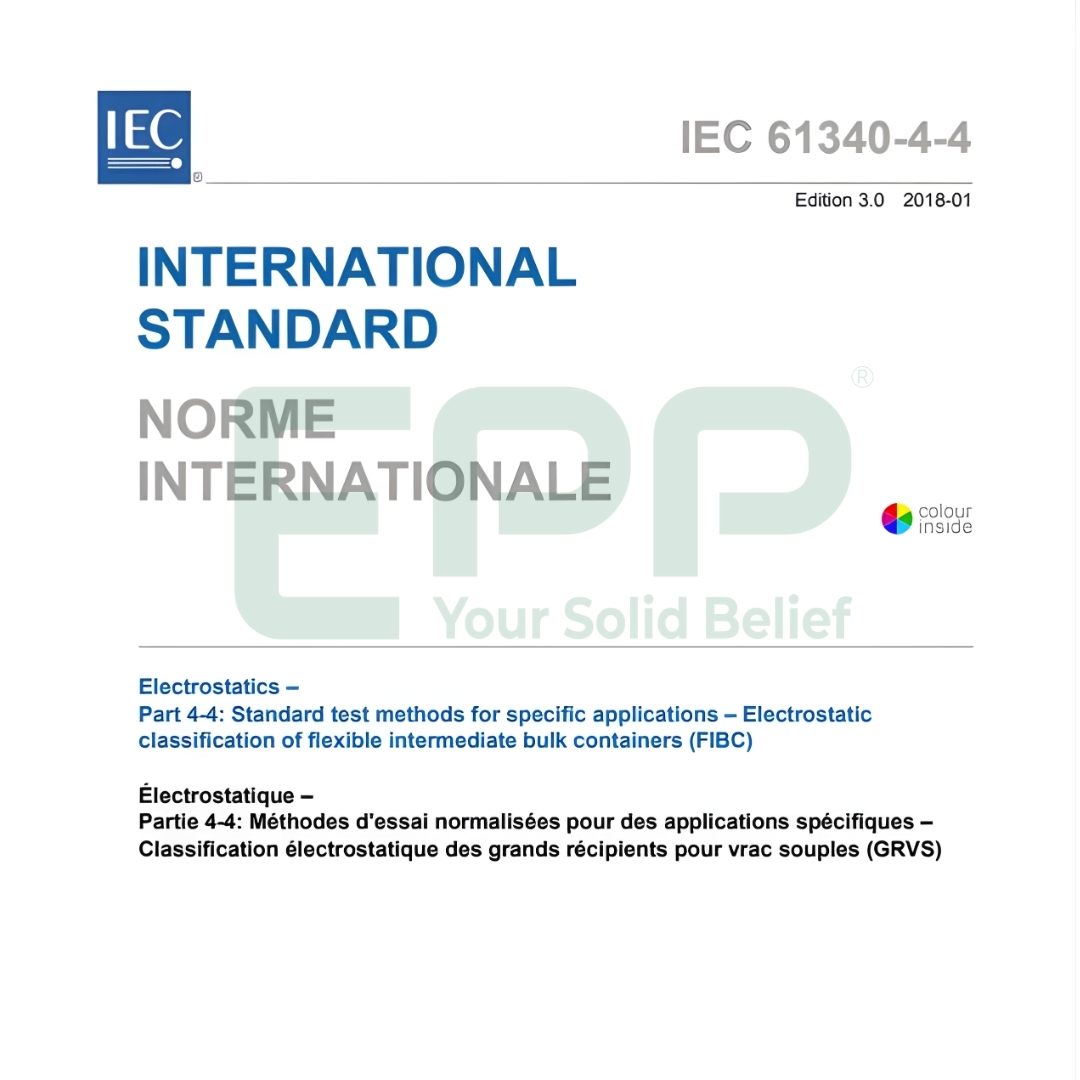
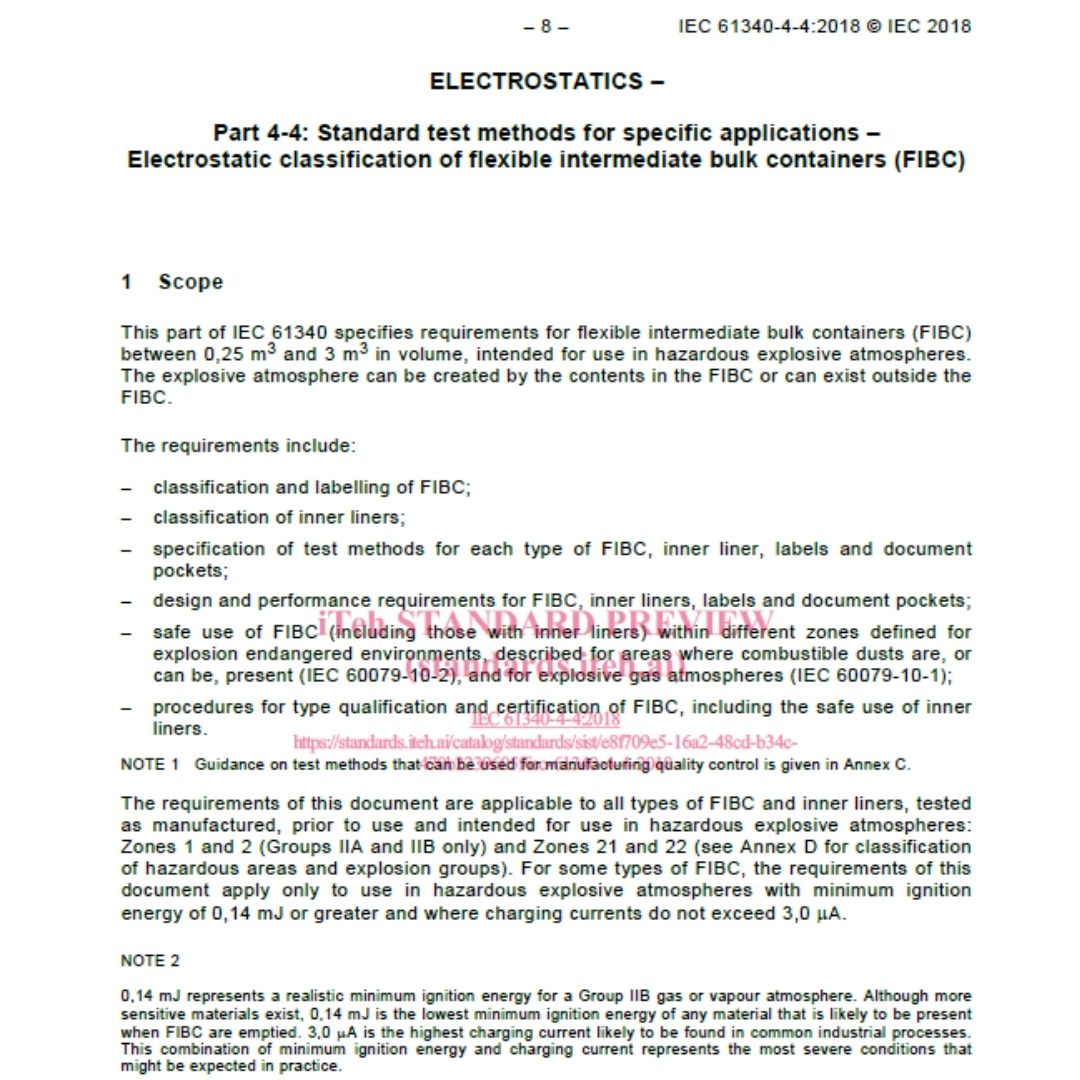
The standard covers bags with a volume between 0.25m3 and 3m3. It doesn’t just look at the bag itself, but also how the bag interacts with the product inside and the environment around it. Whether you are dealing with “MIE” (Minimum Ignition Energy) levels of dust or flammable vapors, this standard tells you exactly which bag type you need to stay safe.
How are FIBC Bags Classified Under IEC 61340-4-4?
The most famous part of IEC 61340-4-4 is the classification system. It divides bulk bags into four categories: Type A, B, C, and D. Understanding these is the first step to a safe export strategy.
Type A and Type B: The Basics
Type A Jumbo bags are made of plain woven polypropylene and have no static protection at all. They are fine for sand or stones but should never be used for anything flammable. Type B bags are a bit better; they have a low breakdown voltage (less than 6 kV), which prevents “propagating brush discharges,” but they still won’t stop a spark if flammable vapors are present.
Type C: The Conductive Solution
Type C big bags are designed to be grounded. They have a grid of conductive threads woven into the fabric. According to the latest 2018 update of IEC 61340-4-4, the resistance to the grounding point must be less than 1.0 x 10⁸Ω . These are incredibly safe, but they have one “human” weakness: if the operator forgets to attach the grounding clamp, the bag becomes a major hazard.
Type D: The Dissipative Innovation
Type D bulk bags are the “smart” bags of the industry. They use specialized dissipative fibers to release static energy into the atmosphere through a process called “corona discharge.” The best part? They don’t require grounding. This makes them a favorite for busy ports where workers might move too fast to remember a grounding cable.
Which Testing Methods are Required for IEC 61340-4-4?
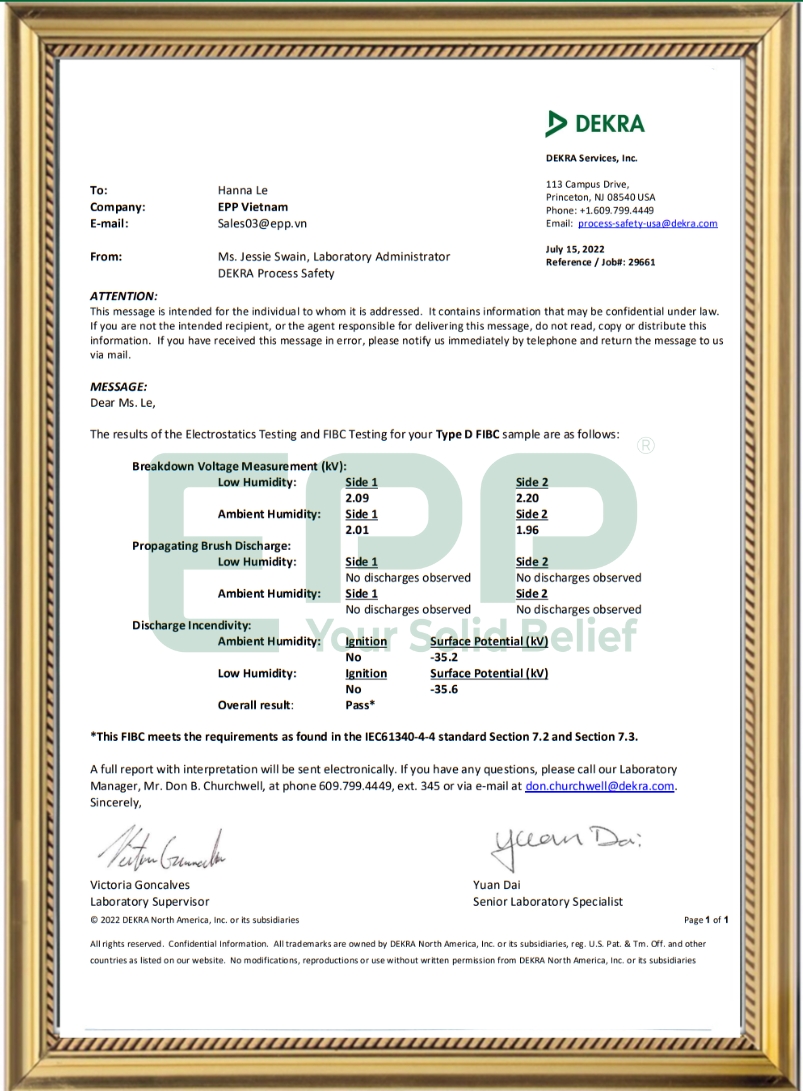
IEC61340-4-4 STANDARD SECTION 7.2 AND SECTION 7.3.
You can’t just claim a bag is antistatic; you have to prove it through rigorous testing defined by IEC 61340-4-4. EPP Vietnam takes these tests very seriously because we know the stakes.
- Breakdown Voltage Test: This is critical for Type B bags and inner liners. We use electrodes to see at what point the fabric “fails” and allows electricity to punch through. To pass, it must stay below 6 kV.
- Resistance to Ground Test (Rg): For Type C bags, we measure the electrical resistance between any point on the bag and the grounding loop. If the resistance is too high, the static won’t flow away safely, and the bag fails the standard.
- Ignition Testing: This is the “ultimate” test for Type D bags. The bag is placed in a chamber filled with a flammable gas (usually a methanol-air mixture) and filled with pellets to create high static. If the bag discharges and the gas doesn’t explode, it passes.
Why is IEC 61340-4-4 Essential for Global Export Momentum?
If you want to move your products into the “Big Leagues” of global trade, compliance with IEC 61340-4-4 is your passport.
Navigating ATEX Zones
In Europe and many other regions, industrial sites are divided into ATEX zones (Zone 1, 2, 21, 22) based on the risk of explosion. You cannot legally bring a non-compliant bag into these zones. By using certified jumbo bags, exporters can confidently bid on contracts for major chemical and pharmaceutical giants who demand these safety ratings.
Reducing Liability
Accidents are expensive. Beyond the loss of life and property, an explosion caused by a non-compliant bag can lead to millions in lawsuits and a ruined brand reputation. Following the IEC standard is the best insurance policy an exporter can have. It proves that you followed “best-in-class” safety protocols.
Best Practices for Exporters
As a leading supplier, we’ve learned a few things about how to manage these high-spec bags in the real world. Here are a few “pro-tips” from the EPP Vietnam team:
- Check the Labels: Every IEC 61340-4-4 compliant bag must have a visible yellow and black safety label. If the label is missing or unreadable, do not use the bag in a hazardous zone.
- Training is Key: If you are using Type C bags, your staff must understand that no ground = no safety. A simple training session can save a warehouse.
- Watch the Humidity: Very dry environments can make static worse. While Type D bags work well in most conditions, it’s always good to monitor your facility’s climate.
- Don’t Reuse Without Testing: Antistatic properties can degrade over time, especially if the bag is dirty or contaminated with oils. For hazardous zones, we almost always recommend using “Single-trip” (5:1 SF) bags to ensure the safety features are at 100%.
People also ask about IEC 61340-4-4
Q: Can I use an inner liner with an antistatic bag?
A: Yes, but the liner itself must also comply with IEC 61340-4-4. We classify these as L1, L2, or L3 liners. Using a standard plastic liner in a Type C bag can “insulate” the static and cause a spark, so always match your liner to your bag type.
Q: Is Type D better than Type C?
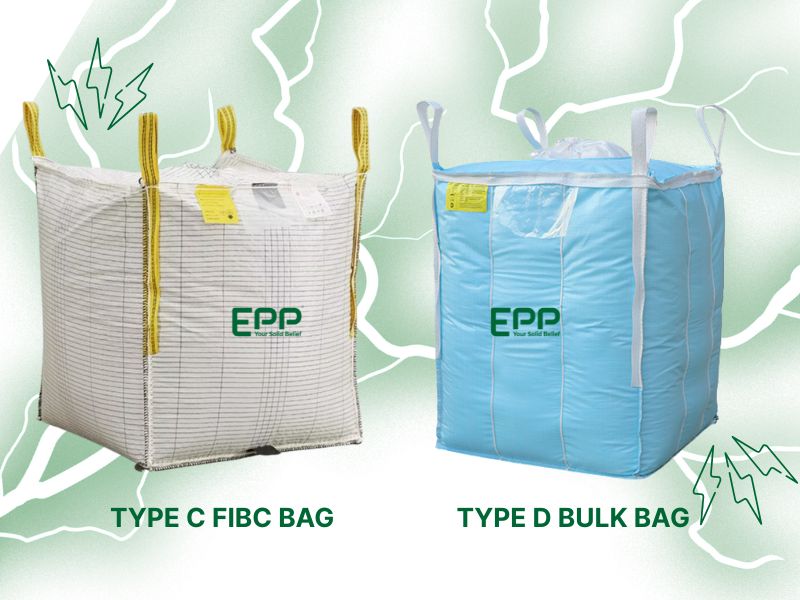
A: Not necessarily “better,” just different. Type C is cheaper but requires grounding. Type D is more expensive but eliminates the risk of human error (forgetting the ground wire). It depends on your budget and your operational discipline.
Q: How do I know if my supplier is really compliant?
A: Always ask for a third-party test report from an accredited lab like Dekra or Swissi. At EPP Vietnam, we are happy to provide our certifications to give our customers full peace of mind.
Q: Does the standard apply to small 25kg bags?
A: No, IEC 61340-4-4 is specifically for FIBCs (Intermediate Bulk Containers) between 0.25 and 3 cubic meters.
Conclusion
In the fast-moving world of global exports, it’s easy to focus only on the price. But when it comes to hazardous materials, the IEC 61340-4-4 standard is what keeps the wheels of trade turning safely. At EPP Vietnam, we pride ourselves on being more than just a manufacturer—we are your safety partners. We make sure that every super sack we ship is engineered to handle the pressures of international logistics.