
In the global commodity market, rice is one of the most handled and transported goods. For exporters in major hubs like Vietnam, Thailand, or India, the choice of packaging can make or break a shipment’s profitability. Large-scale transport requires more than just a container; it requires a specialized solution. This is where FIBC packaging, commonly known as jumbo bags, comes into play.
Choosing the right FIBC is not just about holding weight; it is about protecting the “white gold” from moisture, contamination, and the physical stresses of international logistics. Drawing from years of industry experience, this guide covers everything you need to know to select the perfect bag for your rice export business.
Key Considerations for Selecting Rice Export FIBC Packaging

When selecting a bag for rice, you aren’t just buying a plastic sack. You are investing in a logistical tool. Here are the non-negotiable factors:
1. Food-Grade Certification and Safety
Rice is a direct-consumption food product. Therefore, the FIBC Packaging must be produced in a Food-Grade facility. This means the manufacturer must adhere to strict hygiene standards like BRC (British Retail Consortium) or ISO 22000.
- Virgin Polypropylene (PP): Never use bags made from recycled material for rice. Recycled PP can leach chemicals or odors. Always insist on 100% virgin PP resin.
- Dust-Free Production: The facility must have ultrasonic cutting and specialized vacuum systems to ensure no loose threads or plastic fragments end up inside the rice.
2. Moisture Control and Breathability
Rice is highly sensitive to humidity. If the moisture content within the bag rises, you risk mold growth or fermentation.
- PE Liners: For most white rice exports, a PE (Polyethylene) liner is inserted inside the FIBC packaging. This acts as a moisture barrier, protecting the rice from “container rain” (condensation) during long sea voyages across different climate zones.
3. Safety Factor (SF) and Loading Weight
Rice is dense and shifts during transit.
- 5:1 Safety Factor: Most rice exports use “Single Trip” bags with a 5:1 ratio, meaning a bag rated for 1,000kg is tested to hold 5,000kg before breaking.
- Weight Capacity: The most common sizes are 1,000kg (1 Ton) and 1,250kg. Ensure the bag’s fabric weight (GSM) is thick enough to handle the specific density of your rice variety.
What is the Best FIBC Packaging for Rice?

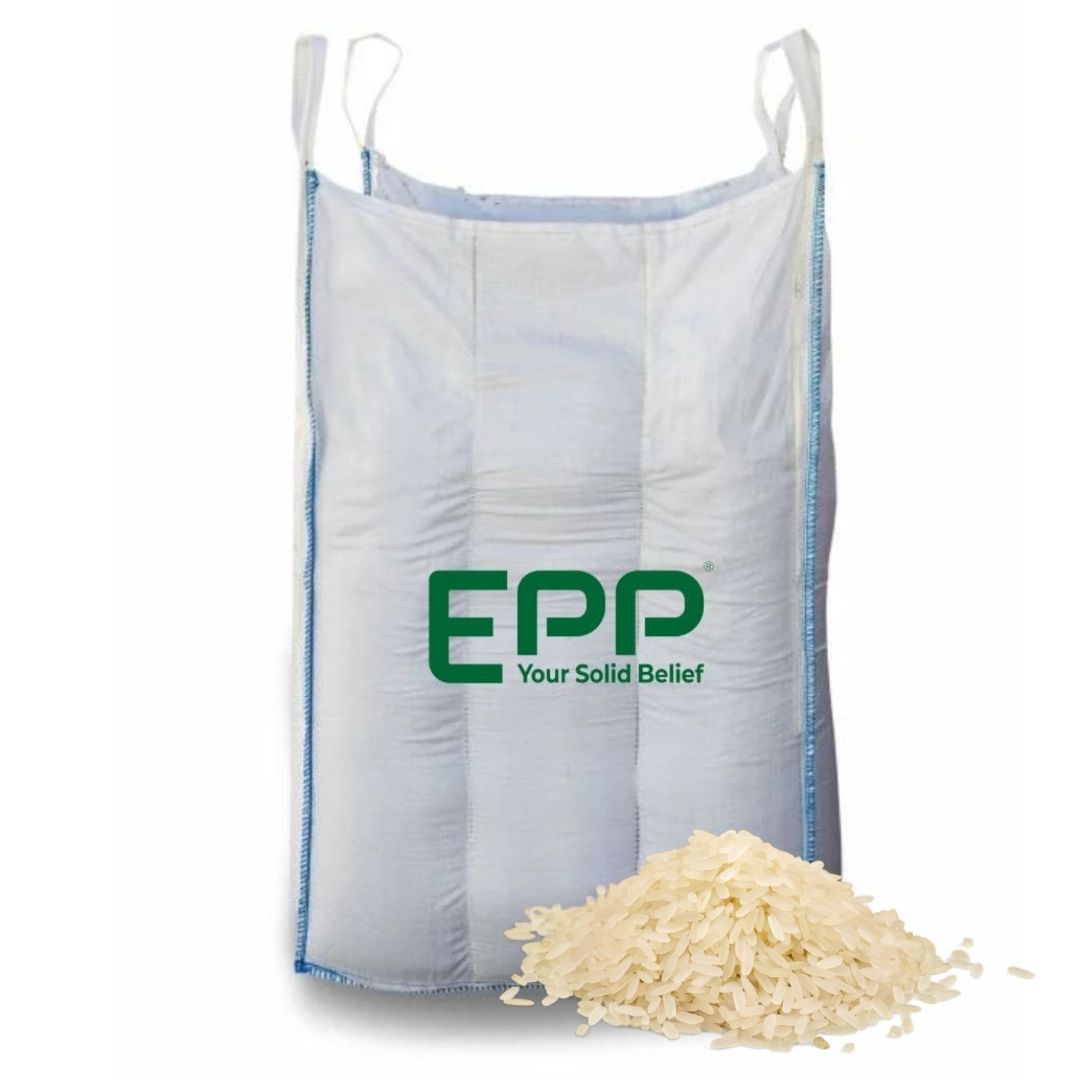
While there are many types of jumbo bags, one specific design stands out as the industry gold standard for rice: The Baffle Bag (Q-Bag).
Standard jumbo bags tend to “belly” or bulge out into a cylindrical shape once filled. This creates wasted space in the corners of a shipping container.
- Space Optimization: Baffle bulk bags have internal fabric panels (baffles) that keep the bag square after filling. This allows you to fit more bags into a 20ft or 40ft container, significantly reducing your freight cost per ton.
- Stability: Square bags are much more stable when stacked in a warehouse or inside a vessel’s hold.
- Top Fill: Spout top (for closed-system filling) or Duffle top (for easy access).
- Bottom Discharge: A discharge spout with a “star petal” or “iris” closure to ensure the rice can be unloaded safely and without spillage at the destination.
Operational Tips for Using FIBC packaging for Rice Export
Even the best bag will fail if handled incorrectly. Based on field experience, here are three tips to ensure a smooth export process:
- Check Your Filling Tension: Ensure the bag is properly suspended during filling. If the fibc packaging sits unevenly on the floor while being filled, it may lean, making it difficult to load into a container later.
- Monitor Moisture Levels: Never pack rice with a moisture content higher than 14%. Even with a liner, “internal moisture” can cause spoilage if the rice is packed too warm or too damp.
- Use Proper Lifting Equipment: Ensure forklift tines are rounded. Sharp edges on forklift blades are the leading cause of “ear” (loop) damage, which can lead to dangerous accidents during loading.
FAQ about FIBC Packaging for Rice Export
Q: Can I reuse FIBC bags for rice export?
A: It is not recommended for food-grade products. Reusing bags (6:1 SF) increases the risk of cross-contamination. For rice, a 5:1 Single-Trip bag is the safest and most hygienic choice.
Q: How many 1-ton bags fit in a 20ft container?
A: Typically, you can fit 20 bags (20 tons) if using standard bags. However, with high-quality Baffle Bags, you can often optimize the layout to ensure maximum weight capacity is reached without damaging the bags during stuffing.
Q: Is UV protection necessary for rice bags?
A: Yes. Even if rice is shipped in containers, bags are often left on docks or in open-air warehouses during transshipment. UV-stabilized fabric prevents the PP from becoming brittle and tearing under sunlight.
Partner with the Experts: EPP Vietnam
Choosing the right FIBC packaging is a strategic decision. If you are looking for high-quality, food-grade FIBC solutions, EPP Vietnam is your premier partner.
As a leading manufacturer and supplier from Vietnam—one of the world’s top rice-exporting nations—we understand the unique challenges of this industry. Our bags are produced in state-of-the-art facilities that meet international food safety standards, ensuring your rice reaches its destination in perfect condition.
Why choose EPP Vietnam?
- Strict compliance with BRC and ISO standards.
- Customized Baffle Bag designs for maximum container utilization.
- Competitive pricing directly from the source in Vietnam.
Contact EPP Vietnam today to discuss your rice export requirements and get a technical consultation on the best FIBC packaging configuration for your business. Let us help you carry your success to the world!