In international trade and bulk commodity export, selecting the right packaging is much more than a routine purchasing task—it is a core engineering decision that safeguards your cargo across thousands of miles. Polypropylene woven sacks serve as the primary packaging layer for millions of tons of dry bulk goods moved globally every year.
However, even a minor miscalculation in bag measurements can cause severe operational bottlenecks, from split seams on high-speed filling lines to wasted space in shipping containers. Designed specifically for procurement heads and packaging engineers, this guide breaks down everything you need to know about measuring, specifying, and customizing polypropylene sack dimensions for maximum supply chain efficiency.
How PP Bag Size and Dimensions Are Defined?
In global industrial packaging and B2B bulk sourcing, defining precise pp bags sizes is a fundamental engineering requirement. Polypropylene (PP) woven sacks are measured primarily by flat width and overall length (Width × Length), usually expressed in centimeters or inches. Flat width refers to the lay-flat measurement of the seamless tubular fabric produced on circular looms before any side folds or gussets are formed. When measuring polypropylene bag dimensions, length is determined from the top cut mouth down to the bottom seam stitch line.
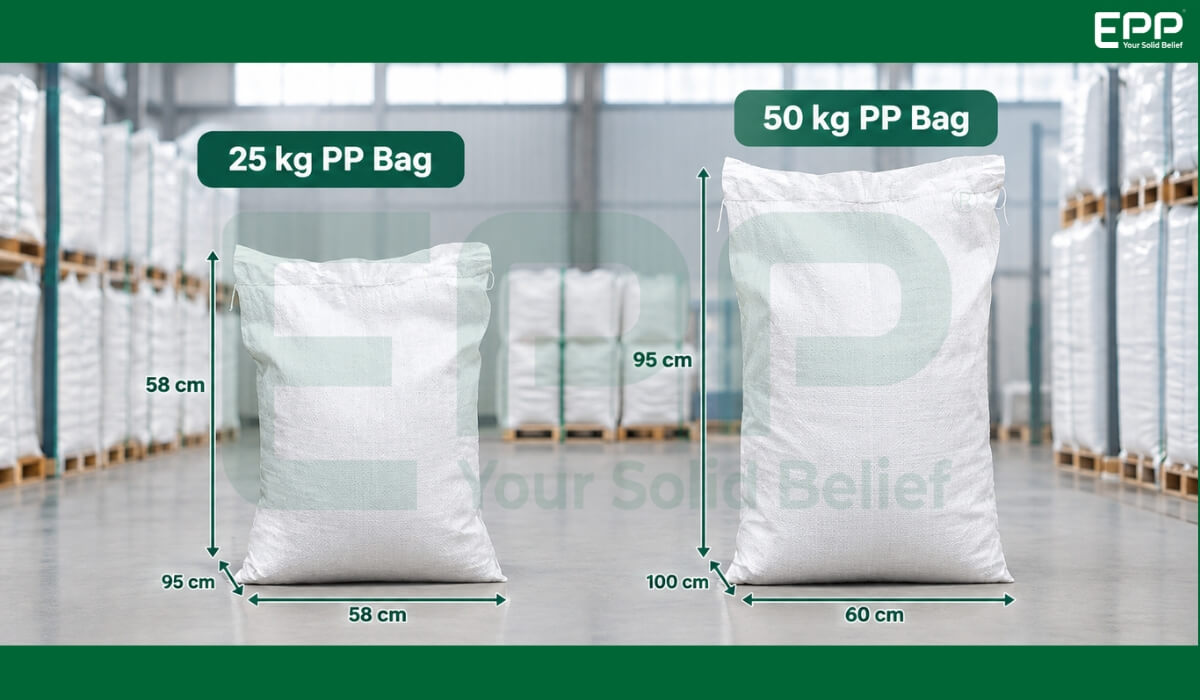
Standard 25 kg and 50 kg PP bag sizes provide consistent stackability and safe manual handling.
For complex packaging needs, additional measurements such as side gusset depth, bottom fold allowance, and top hem width must be factored in. For example, a bag with a lay-flat width of 50 cm and a 10 cm side gusset offers a significantly different volume capacity compared to a standard flat bag. As a leading packaging supplier in Vietnam, EPP Vietnam ensures that every production batch strictly adheres to international manufacturing tolerances, providing exact custom PP woven bag dimensions tailored to automated filling systems and global shipping standards.
Why PP Bags Sizes Depend on Product Weight and Density?
A common mistake in packaging procurement is assuming that product weight alone dictates the required pp bags sizes. In reality, bulk density (kg/m³ or lbs/ft³) plays the primary role in determining physical bag volume. High-density materials like cement (1300 kg/m³) require much smaller PP sack sizes to hold 50 kg compared to low-density materials like animal feed or wheat bran (500 kg/m³).
| Material Type | Bulk Density | Recommended Dimensions |
| Portland Cement | 1300 – 1500 kg/m³ | 50 cm × 80 cm (Flat) |
| Milled Rice / Sugar | 800 – 850 kg/m³ | 58 cm × 95 cm (Standard) |
| Animal Feed / Bran | 450 – 550 kg/m³ | 65 cm × 105 cm (Gusseted) |
Packing low-density goods into undersized bags forces operators to over-pressurize the sack, placing severe stress on bottom seams. Conversely, putting dense material into an oversized bag results in excess fabric, loose shifting during transit, and higher logistics fees. Choosing the correct polypropylene fabric dimensions ensures that the bag retains its structural integrity without premature tearing or seam failure.

Common PP Bags Sizes and Dimensions
Selecting standard pp bags sizes helps streamline purchasing across agriculture, construction, and chemical manufacturing.
Overview of Standard Bag Dimensions Chart
Standard woven sack dimensions generally correspond to targeted payloads, ranging from small retail options up to commercial export bags:
| Dimensions (W × L) | Capacity / Payload | Common Industry Applications |
| 30 cm × 45 cm (12″ × 18″) | 5 kg | Retail rice, seeds, pet food |
| 40 cm × 60 cm (16″ × 24″) | 10 kg – 15 kg | Specialty grains, flour, charcoal |
| 50 cm × 80 cm (20″ × 31″) | 25 kg pp bag size | Grains, seeds, feed, chemicals |
| 58 cm × 95 cm (23″ × 37″) | 50 kg pp bag size | Rice, sugar, fertilizer, cement |
| 60 cm × 100 cm (24″ × 39″) | 50 kg heavy-duty | Low-density feed, bulk minerals |
Commercial 25 kg Section
The 25 kg pp bag size is widely used in global markets due to ergonomics and manual lifting safety limits. The standard dimensions for a 25 kg sack typically range around 50 cm × 80 cm (20″ × 31″) or 18″ × 30″. You can review our current 25kg PP rice bag price and specs to explore detailed technical configurations for agricultural sourcing.
Heavy-Duty 50 kg Section
For heavy-duty bulk exports, 50 kg pp bag size parameters are critical. Standard 50 kg pp bags dimensions generally measure 55 cm × 100 cm (22″ × 39″) or 58 cm × 95 cm. When handling voluminous or fluffy contents, 50 kg pp bags dimensions pp bags sizes may be expanded up to 60 cm × 100 cm with side gussets. Browse our complete premium woven bags collection for commercial bulk packaging options.
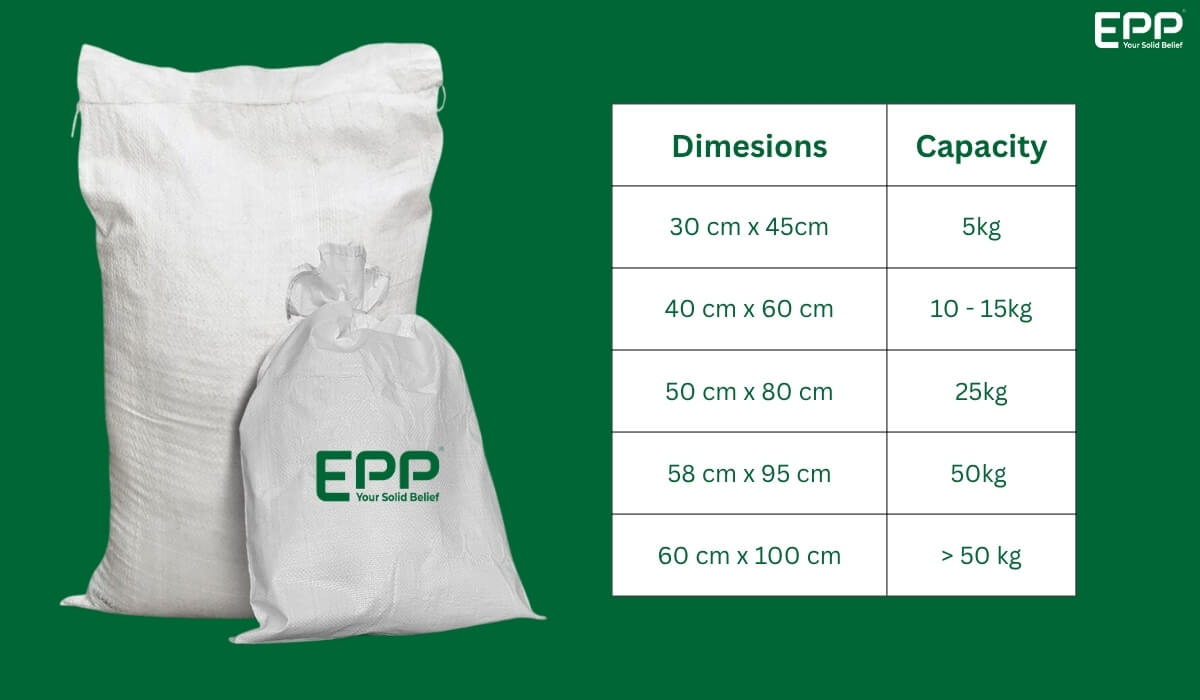
Standard PP woven bag dimensions and capacity guide by EPP Vietnam
PP Woven Bag Sizes by Application
Different industries require specific pp bags sizes to suit their unique filling lines and distribution networks:
- Agricultural & Rice Export: A standard sack of rice size for retail export ranges from 30 cm × 45 cm (5 kg) to 50 cm × 80 cm (25 kg). For large-volume commodities, 58 cm × 95 cm (50 kg) is the global standard.
- Chemicals & Fertilizers: Fertilizer bags usually demand 50 cm × 80 cm or 55 cm × 90 cm dimensions with an inner PE liner or PE lamination layer to block moisture ingress.
- Building Materials & Cement: Dense cement and dry-mortar products utilize compact 50 cm × 80 cm or 50 cm × 60 cm block-bottom valve bag styles to prevent dust leakage. Discover our range of heavy-duty PP woven bag styles designed for demanding industrial applications.

How Filling, Construction and Logistics Affect PP Bag Dimensions?
Choosing the right pp bags sizes involves analyzing operational factors beyond simple lay-flat length and width.
Filling Equipment and Top/Bottom Closures
Automated high-speed packaging lines require exact neck openings and seam allowances. An open-mouth bag needs extra length for top stitching or heat sealing after filling. Conversely, valve bags require precise top hem construction to fit filling spouts cleanly without spillage.
Bag Construction: Flat vs. Side Gusset
Adding a side gusset (8 cm – 12 cm) reduces the flat width of the bag while increasing its volumetric fill capacity. A gusseted bag forms a square box-like structure when filled, providing enhanced stability during palletization.
Pallet Optimization and Shipping Container Fit
Properly engineered pp bags sizes prevent pallet overhang when loading onto standard EUR pallets (80 cm × 120 cm) or ISO pallets (100 cm × 120 cm). Eliminating overhang prevents tearing during transport and maximizes container space in 20ft and 40ft shipments. Working with top PP woven bag manufacturers and suppliers in Vietnam guarantees engineered bag dimensions that lower overall ocean freight costs.
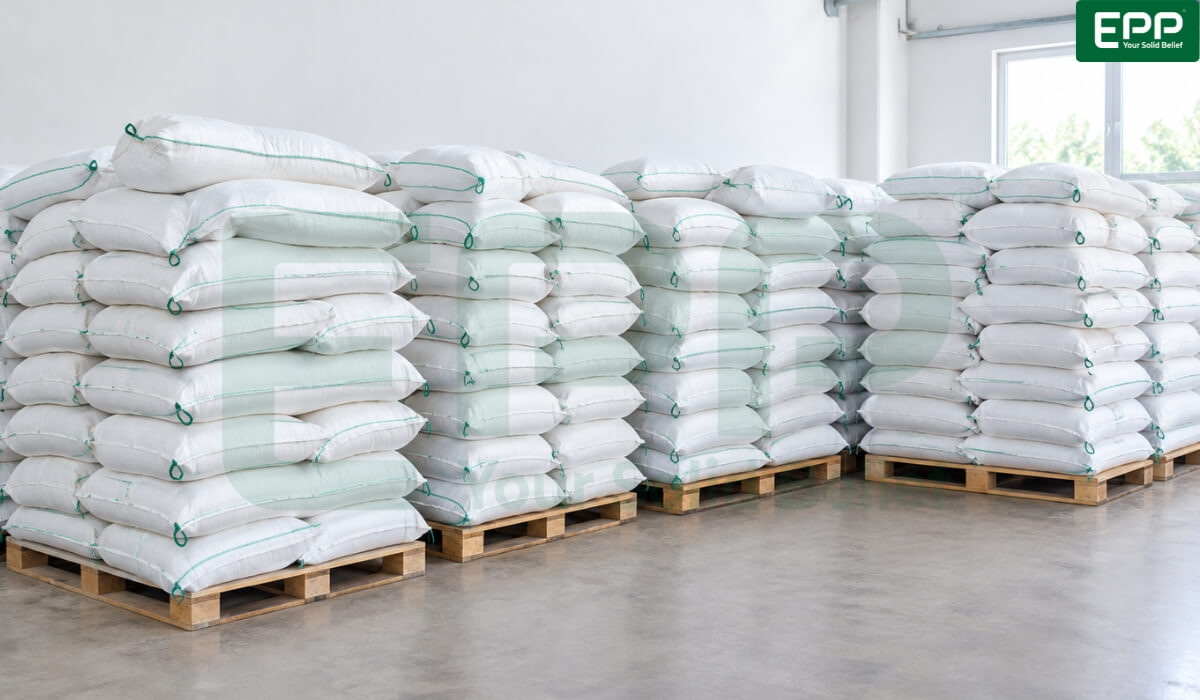
Optimizing PP bags sizes ensures perfect pallet alignment and prevents transit damage.
Frequently Asked Questions for PP bag size
How do I calculate the right PP bag size?
To calculate correct pp bags sizes, divide your target product weight by its bulk density to get the required volume (m³ or Liters). Then, add 10% – 15% additional length allowance to account for seam folding, top closures, and natural fabric expansion during filling.
Does product density affect PP bag dimensions?
Yes, product bulk density directly impacts required bag volume. A dense product like mineral ore requires smaller pp bags sizes, whereas lightweight goods like corn flakes or animal feed need much larger dimensions for the exact same payload weight.
What information should I send when requesting a PP bag quotation?
When requesting a quote from EPP Vietnam, specify your target product weight, material bulk density, required flat dimensions (Width × Length), fabric GSM, lamination preference, and filling equipment setup.
Selecting exact pp bags sizes ensures seamless automated filling, zero product waste, and maximum shipping efficiency. Contact the technical packaging experts at EPP Vietnam today to request custom bag samples and optimize your bulk supply chain.
Website: epp.vn
Alibaba website: https://eppvietnam.trustpass.alibaba.com/
Email: [email protected] Hotline/ Whatsapps: +84 986 002 888