
Top 1 bulk bags aggregate supplier in Vietnam is a title that carries heavy responsibility. As global construction projects demand faster delivery and higher safety standards, the choice of your jumbo bag partner determines the success of your entire supply chain. In the world of sand, gravel, and stone, the bulk bags aggregate—often called Big bags or tonne bags—must be engineered for extreme durability, abrasive resistance, and absolute safety.
Vietnam has recently emerged as the global “Resilience Hub” for high-performance packaging. With advanced automation and strategic trade advantages, the country now leads the market in producing “Stone-Rated” bags. This guide will walk you through why these bags are the backbone of modern logistics and why one specific supplier stands at the peak of the industry.
Why Bulk Bags Are Essential for Aggregates?
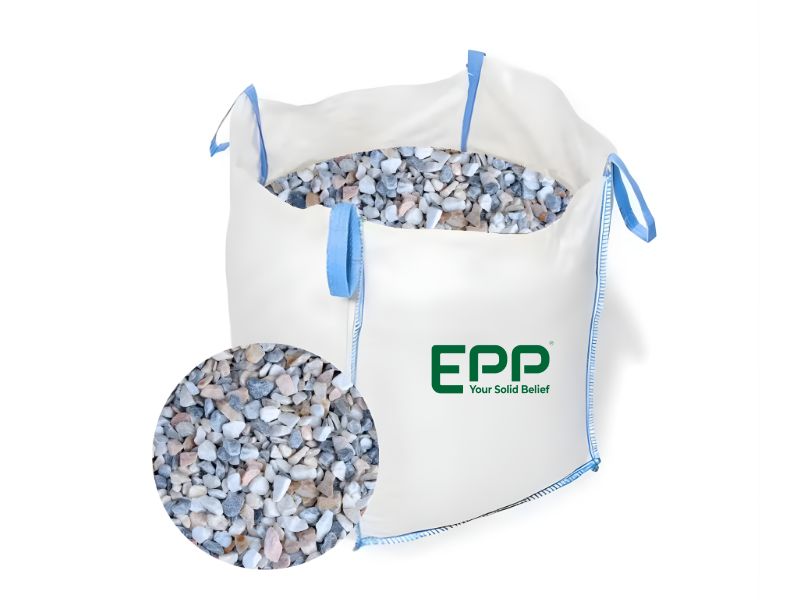
If you’ve ever managed a large-scale construction site, you know that loose piles of stone are a logistical nightmare. Bulk bags aggregate solve the “three losses” of aggregate management: material loss, space loss, and time loss.
Bulk bags aggregate eliminate material migration. In a traditional loose pile, wind and rain can wash away up to 10% of your fine sand or gravel. By containing the material in a high-tensile woven bag, you ensure that 100% of the product you pay for at the quarry actually reaches the mixer. In an era where sustainability and cost-control are paramount, this zero-waste approach is no longer optional.
These Super sacks allow for vertical logistics. In recent year, urban job sites are tighter than ever. A bulk bags aggregate allows you to stack your inventory two or three high, effectively tripling your storage capacity without increasing your footprint. The ease of handling with a simple forklift or crane means you can place a ton of stone exactly where the crew needs it—whether that’s on a fifth-floor balcony or over a garden fence—saving hours of manual wheelbarrowing.
Key Qualities of a Top Bulk Bags Aggregate Supplier
Finding the right bulk bags aggregate isn’t just about comparing prices; it’s about auditing the technical integrity of the bag. A “Top 1” supplier in Vietnam will always prioritize these four pillars:
- 100% Virgin Polypropylene: Many budget suppliers mix in recycled “reground” plastic, which makes the bag brittle. A top-tier supplier uses 100% virgin PP, which provides the molecular elasticity needed to handle the “dynamic load” (the swinging motion) of a crane lift.
- 6:1 Safety Factor (SF): While a 5:1 bag is standard for single trips, the best aggregate bags are now moving toward a 6:1 rating. This means a bag rated for 1,000kg has been lab-tested to survive a 6,000kg load, providing a critical safety buffer for high-risk lifts.
- High-Level UV Stabilization: Aggregates often sit in sun-drenched yards for months. A top supplier ensures a UV treatment of at least 150–200 KLY, preventing the lifting loops from becoming brittle and snapping under the sun’s rays.
- Abrasive-Resistant Fabric: Because stone is jagged, the fabric weight (GSM) must be significant. Look for suppliers offering 180g to 220g/m² fabric to prevent “pinhole” punctures from crushed granite or slate.
Types of Bulk Bags Aggregate

The “shape” of your bulk bags aggregate determines how well it stacks and how fast it fills. In 2026, the industry has standardized on a few high-performance designs:
- U-Panel and 4-Panel Structures: These are the most stable designs. A U-Panel bag uses one continuous piece of fabric for the base and two sides, creating a “cradle” of strength that resists bulging. 4-Panel bags use four separate pieces to create a perfect square, which is ideal for maximizing space in shipping containers.
- Open Top with Flat Bottom: This is the most popular choice for quarries. It allows for lightning-fast filling under an overhead hopper and provides a rock-solid base that won’t tip over on uneven construction soil.
- Duffle Top (Skirt) Bags: Essential for sand or fine gravel, the duffle top allows you to tie the bag shut, protecting the aggregate from rain contamination or wind-blown loss during highway transport.
- Side-Seam Loops: By sewing the loops into the vertical seams, the bag maintains a square, boxy shape even when lifted. This makes it much easier for forklift operators to maneuver in tight spaces compared to “cross-corner” loops.
EPP Vietnam – The Top 1 Bulk Bags Aggregate Supplier
When international procurement managers search for the Top 1 bulk bags aggregate supplier in Vietnam, the name EPP Vietnam consistently leads the discussion. With over 20 years of experience, EPP has transitioned from a standard manufacturer to a high-tech engineering hub.
Based in Hung Yen, EPP Vietnam produces over 6 million bags annually. They have earned their “Top 1” status by focusing on the “Extreme-Duty” aggregate market. While other factories try to cut costs by thinning the fabric, EPP has doubled down on quality, utilizing Industry 4.0 automated cutting and sewing lines to eliminate human error. Their bags are ISO 9001 and ISO 21898 certified, ensuring every bulk bags aggregate that leaves their facility is a fortress for your materials. Furthermore, their strategic proximity to major ports like Hai Phong means they can deliver custom orders to global markets in a record-breaking 4 to 6 weeks.
Buyer Tips for Selecting the Right Supplier
If you are ready to source your bulk bags aggregate from Vietnam, keep these professional tips in mind:
- Request the Test Report: Never take a “Safety Factor” at face value. Ask for the official laboratory test report (Top Lift and Cyclic Test) for the specific batch you are buying.
- Audit the Lead Times: A true manufacturer like EPP Vietnam should provide a quote within 24 hours and a lead time of under 6 weeks.
- Inquire about Duties: Vietnam’s network of Free Trade Agreements (FTAs) is a goldmine. Ensure your supplier can provide the proper Certificate of Origin to secure 0% import duties in the EU or Pacific regions.
- Custom Printing: Use the bag as a billboard. A top supplier will offer 4-color printing, allowing you to turn a simple bulk bags aggregate into a marketing tool for your brand.
FAQ
How big is a bulk bag of aggregate? The standard bulk bags aggregate footprint is 90x90cm, with a height usually between 80cm and 90cm. This creates a volume of approximately 0.75m³, which perfectly accommodates one metric ton of most stone types.
How many kg is 1 m3 20mm aggregate? A single cubic meter of 20mm aggregate typically weighs between 1,500kg and 1,600kg. Since a standard bag holds about 0.75m³, you will generally need two bags to move a full cubic meter of stone safely.
Can I reuse a bulk bag for aggregate? Only if the bag is specifically rated as 6:1 Multi-Trip. Standard 5:1 Single-Trip bags are designed to be filled and emptied once. Reusing a single-trip bag for heavy aggregate is a major safety violation, as the fibers may have already reached their elastic limit.
Why is UV stabilization so important for aggregate bags? Aggregates are almost always stored outdoors. Without UV protection, the lifting loops (the most critical safety point) will degrade in the sun, leading to a “loop snap” failure that can cause a ton of stone to fall unexpectedly.
Conclusion
Sourcing from the Top 1 bulk bags aggregate supplier in Vietnam isn’t just about finding a container; it’s about securing your operation. In a high-speed construction world, you cannot afford the delays, safety risks, or product losses that come with inferior packaging. By choosing a partner like EPP Vietnam, you are investing in “Stone-Rated” technology that keeps your materials secure and your project on schedule.
Would you like EPP Vietnam to provide a customized technical blueprint and a price list for a high-strength, “Extreme-Duty” bulk bag of aggregate designed for sharp-edged volcanic stone?
